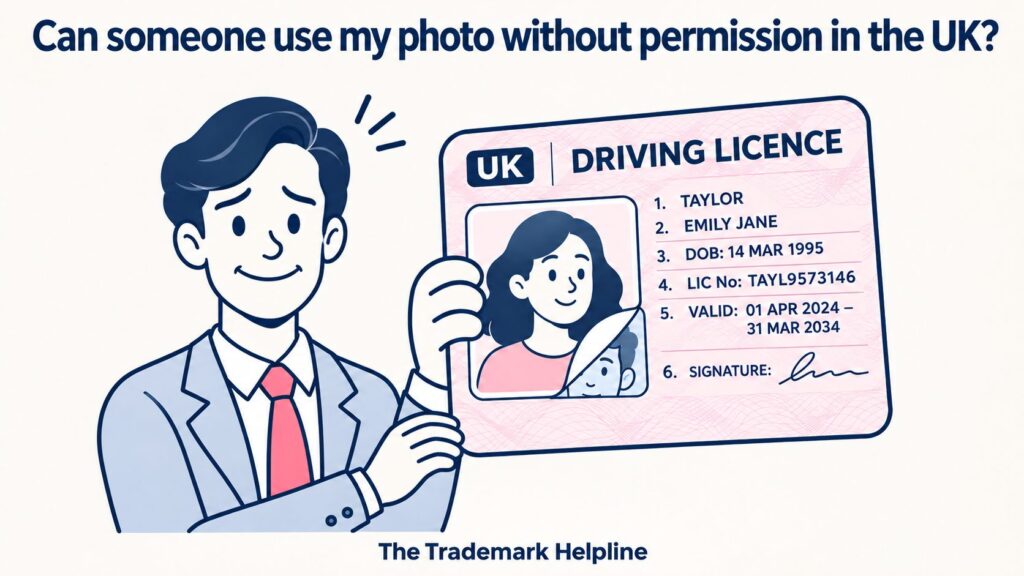
Sometimes. Whether someone can use your photo without permission mostly depends on who owns it, and that’s usually whoever took it, not the person in it. What you can do about it depends on how it’s being used: a holiday snap on a friend’s page is very different from your face in someone else’s advert. When it’s being used to trade on your name, that’s where our personal brand protection work comes in.
A photo of you is a bit like a letter written about you: you’re the subject, but the letter belongs to whoever wrote it.
Who owns the photo?
- You took it, a selfie say: you’ll usually own the copyright, unless you took it as part of your job or you’ve signed the rights away.
- Someone else took it: they usually own it, even though you’re in it. That includes a friend, an event photographer or a colleague.
- You paid for it: paying for a portrait doesn’t automatically transfer ownership. That needs to be agreed.
A photo being online doesn’t make it free to use. Whoever uses it generally needs the owner’s permission, a licence or a legal exception, and giving a credit doesn’t replace permission.
When can you object, even if it isn’t your photo?
- Adverts and endorsements: using your face to suggest you back a product can be passing off, where you have a reputation people recognise and they’re misled. It doesn’t need you to own the photo.
- Fake profiles: a profile using your photos to pretend to be you can be reported to the platform as impersonation. See Someone is impersonating me online, what can I do?
- Organisations using your photo: a business, employer or school using an identifiable photo of you is handling your personal data. You can ask why and, in some cases, ask them to remove it. That right isn’t absolute.
- Private moments: a photo that exposes something private may give you a privacy claim.
- Private commissions: if you commissioned a photo for private and domestic purposes, such as a wedding, you have a right not to have it made public.
There’s no general UK image right, so simply appearing in a photo you don’t like isn’t enough on its own. We explain that gap in Does UK law protect your likeness from deepfakes?
What to do
Save the image, its web address and the words around it. Then work out whether your complaint is about copying, privacy, a fake endorsement or impersonation, because each has its own route. Only claim copyright if you own it.
If fake endorsements keep appearing, trademark monitoring helps you catch them early. One thing to know: registering your name as a trademark doesn’t give you ownership of photos of your face.
Want to talk it through? Book a free 15 minute call, email enquiries@thetrademarkhelpline.com or call 0161 833 5400.
Related questions
- Does UK law protect your likeness from deepfakes?
- Can you trademark your face or your voice?
- Someone is impersonating me online, what can I do?
This answer is for information purposes only and does not constitute trademark advice or guidance. Last reviewed 3 November 2026.