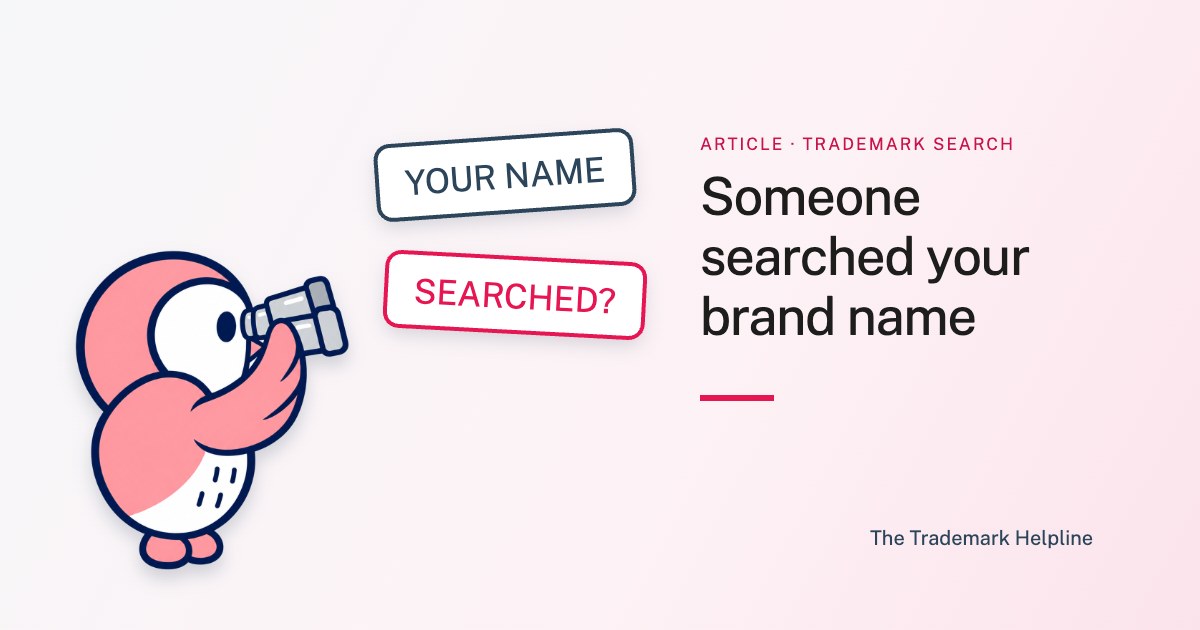
We don’t gain anything by saying “I told you so”, and frankly we’d rather never have to say it. Every week, people use our free trademark search to check a name without leaving their contact details. Occasionally we look a little further and find an existing business already trading under that exact name, in exactly the same industry. If we can find a business contact, we sometimes send a short email.
“Just wanted to check whether this was you. We’ve had a search for your brand name and thought you might want to know.”
That’s it. No pressure and no obligation. This article explains why we do it, what a search for your name can mean, and how to check that an email like that really comes from us.
Why would someone search for my brand name?
If it was you or someone in your team, there’s nothing to worry about. Plenty of business owners check their own name, and so do their designers, accountants and marketing agencies.
If it wasn’t, it raises a question: who was searching for your brand, and why? It could be completely innocent. A supplier, a student or someone with a similar idea in a different part of the country. But it could also be a competitor, or someone thinking about registering the name before you do.
That matters because the UK trademark system works largely on a first-to-file basis. Using a name first can give you unregistered rights, but proving them means evidence of your goodwill, time and cost. If someone else registers your brand, you can end up opposing their application, defending a cease and desist letter or, in the worst case, changing your name. We’ve explained what can happen in more detail in can someone steal my business name?
What happens when the warning is ignored
Unfortunately, we’ve seen what happens when people dismiss these emails, or don’t take the time to ask the right questions. Months later, the same business comes back to us because someone has applied to register their name or, worse, has already registered it, and a letter has arrived asking them to stop using it.
By then the conversation is very different, and much more expensive than if they had looked at whether they needed a trademark in the first place. We would much rather have the first conversation than the second one.
What to do if you receive an email or call from us
- Ask around. Check whether anyone in your business, or working for it, has searched your name recently. If it’s a strong name, it may simply be that somebody else has had the same great idea and is looking to register it first.
- Check the register. Run your name through our trademark search to see whether anything similar is already registered or applied for.
- Consider registering it. If your name isn’t protected, UK trademark registration gives you a clear legal right to it. A trademark consultation and clearance audit gives you the information you need to decide whether to apply. Around a third of the clients we audit are advised not to file their application as originally planned, so it’s worth knowing before you spend any money on official fees.
- Keep watch. Trademark monitoring tells you when someone files something close to your name, and flags similar domains, social media accounts and companies as they’re registered. You hear about it while there’s still time to act and avoid an expensive dispute.
None of that has to be done through us. The point of the email is that you know. We hope it also shows we’re a partner you can trust with your brand, if and when you decide to research, register or protect it.
One request: if you do hear from us, please be patient with our team. They’re getting in touch because we think you’d want to know someone has searched for your brand, and that’s the only reason.
How can I tell if an email about my trademark is genuine?
I completely understand the scepticism, and I actively encourage it. Unsolicited approaches about trademarks are a well-known route for scams, and some of them now impersonate genuine solicitors. If you’re unsure about any email, ours included:
- Don’t use the phone number or links in the email. Look the business up independently and contact it that way. Our number is 0161 833 5400.
- Check the sender’s address. Ours come from an @thetrademarkhelpline.com address.
- Be wary of deadlines, threats and payment requests. Our email about a search is just a heads-up. It doesn’t set a deadline or ask for payment.
- Check who you’re dealing with. We have been an established representative at the UK Intellectual Property Office since 2008, and the 4,176 UK trademarks we registered between 2008 and 2026 are on the public register.
Our guide to how to spot trademark scams covers the warning signs in more detail, and our trademark scams page lists the ones we’ve investigated.
Why we publish scam warnings
We regularly publish warnings about scams targeting businesses. We research them carefully, report the facts and make the information public, because people, including some of our own clients, are falling victim to them, and the number seems to be growing.
We know that makes us a target. Scammers visit our website, watch what we publish and sometimes actively create problems for us. We carry on anyway, because it’s the right thing to do. When budgets are tight, it’s hard to watch people lose hundreds or thousands of pounds to companies that have nothing to do with protecting their brand, and it gives the whole industry a bad name.
So when someone replies to a genuine heads-up and suggests we’re part of the scam, I’ll admit it’s frustrating. Occasionally someone even suggests that if they don’t act on our warning, we’ll register their trademark ourselves and try to sell it back to them. We wouldn’t. That’s not what we’re about. The whole point of the email is that we don’t want somebody else to do that to you. We don’t benefit from businesses getting into trouble. We would much rather help them avoid it, and that’s what our brand protection work is built around.
We’re not asking anyone to trust us blindly. But once you’ve established that someone is genuinely trying to help, a little consideration goes a long way. I’d much rather hear “thank you for letting me know” than ever have to say “I told you so.”
One last thought on trademark scams
Just because they’re scams doesn’t mean the people behind them aren’t clever. If someone has gone to the trouble of targeting you, they’ve usually spotted that you have a brand worth protecting, and often that it isn’t registered yet, or that a renewal is coming up.
They’re counting on fear to get your money. But if a letter like that worried you, it tells you something useful: you care about your brand. If we can help you turn a bad experience into a brand that’s properly protected, we’d be delighted to.
Want to know where your name stands?
Start with a free trademark search. If you’d like to talk it through, the first call is free for new clients: email enquiries@thetrademarkhelpline.com or ring 0161 833 5400.
Questions about this
Why has The Trademark Helpline emailed me about a search for my business name?
Someone searched for your name using our free trademark search without leaving contact details, and we found your business trading under that name. We sometimes send a short email so you know. If it was you or your team, you can ignore it. If it wasn’t, it’s worth checking whether your name is protected.
 Answered by Jonathan Paton, Founder & CEO
Is an email from The Trademark Helpline about my brand name a scam?
Our heads-up emails come from an @thetrademarkhelpline.com address and don’t set a deadline or ask for payment. If you’re unsure, don’t use the details in the email: look us up independently and ring 0161 833 5400. We have been an established representative at the UK Intellectual Property Office since 2008.
Answered by Jonathan Paton, Founder & CEOCan someone register my business name as a trademark if I’m already using it?
They can apply. The UK system works largely on a first-to-file basis, so someone else’s registration can put you in a difficult position. Earlier use may give you unregistered rights to challenge their application, but you’ll need evidence, and it’s slower and more costly than holding your own registration. Our guide can someone steal my business name? explains your options.
Answered by Jonathan Paton, Founder & CEOThis article is for information purposes only and does not constitute trademark advice or guidance. Last reviewed 27 October 2026.