Sky is one of the most ordinary words in the English language. It’s also one of the most valuable trademarks in the UK. Those two facts sit together more comfortably than most people expect, and Sky’s run of court cases shows exactly where the line falls between owning a word and owning the brand built on it.
I’ve picked three of them: SkyKick, Skyscape and NOW TV. They’re often lumped together as a big brand leaning on smaller ones, and that isn’t what they show. Each answers a different question, and each has a lesson for a business a fraction of Sky’s size. The full detail of every judgment is in our Sky trademark cases feature. Here, I want to talk about what they mean in practice.
A dictionary word can still be a strong brand
A trademark doesn’t have to be an invented word. It has to tell customers who’s behind the goods or services. “Sky” says nothing about television or broadband, so for those services it works as a brand, in the same way “Apple” works for computers and “Shell” works for fuel.
The mistake runs both ways. Some founders assume nobody can stop them using an everyday word. Others assume a big brand owns that word outright, and walk away from a good name. Neither is right. What matters is what the registration actually covers, what the other business actually does, and what customers would make of the two side by side. That’s why a trademark consultation and clearance audit looks at the register and the market, not just the dictionary.
SkyKick: when the list gets too long
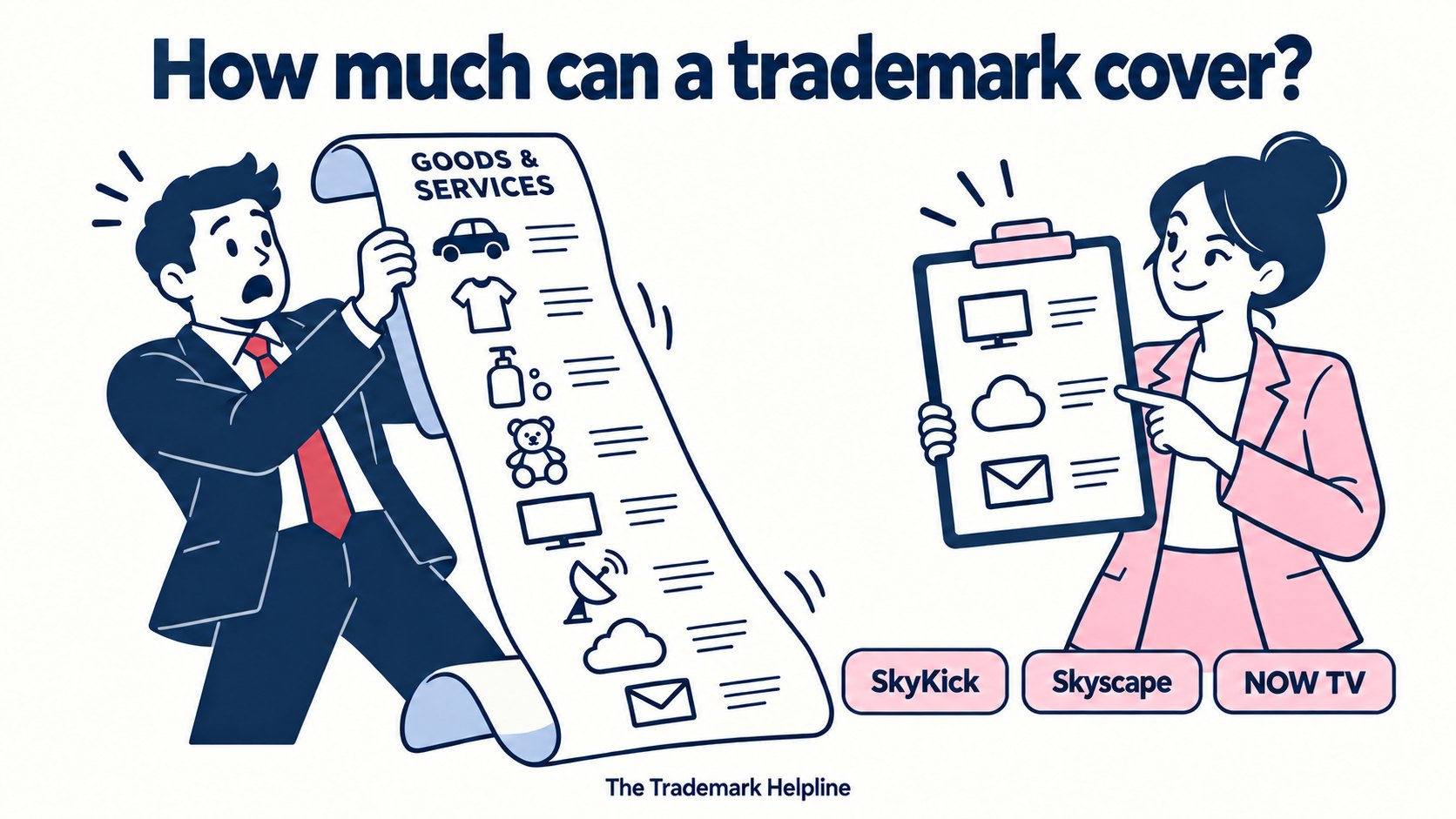
Sky held SKY registrations covering enormous categories, including “computer software” as a whole. When it sued SkyKick, a business offering email migration and cloud backup, SkyKick hit back. Its argument was that Sky’s registrations were far too broad, and that Sky had never intended to use the mark across everything it had claimed.
In November 2024 the Supreme Court agreed with that point. Applying for a trademark across goods and services you have no intention of offering can be bad faith (filing in a way that isn’t honest commercial practice), and parts of Sky’s registrations were cut back. That’s not the same as Sky losing. SkyKick’s cloud backup service was still found to infringe, while its email migration product wasn’t. Anyone who tells you one side simply won hasn’t read past the headline.
It’s a bit like reserving every table in a restaurant in case some friends turn up. Nobody minds you booking the table you’ll sit at. Booking the whole room, with no plan to fill it, is what gets you asked to leave.
The practical point is about the specification, the list of goods and services a registration covers. Describe what you sell now and what you genuinely plan to sell next. Copying a competitor’s long list because it looks thorough can leave a weakness right at the centre of the registration, and it tends to surface at the worst moment: the day you need to rely on it.
The UKIPO has now built this into examination. Since 27 June 2025 its examiners can object to specifications that are “manifestly and self-evidently broad”, and an application claiming all 45 classes, or every item in Class 9, draws an automatic objection. When we handle a UK trademark registration, the specification is built around what the business actually does. And if a competitor’s registration looks wider than its business ever was, that can work in your favour: our cancellation and invalidation service looks at exactly that.
Skyscape: be careful what you ask a court for
Skyscape supplied cloud services to the UK public sector, and Sky objected to the name. Rather than wait to be sued, Skyscape went to court first and asked for a declaration that its use didn’t infringe. In 2016 it didn’t get one. Sky never brought its own claim. Skyscape, having asked the question, had to prove the answer, across a wide range of uses, and that’s a hard thing to do.
I’d take two things from that. First, a letter isn’t a verdict. It’s an opening position. Second, going in hard is a commercial decision, not just a legal one. Before anybody heads to court, it’s worth pinning down exactly what’s being complained about, which uses really matter to the business and whether narrowing use or agreeing coexistence gets you there for a fraction of the cost. Our cease and desist service starts with that question, whichever side of the letter you’re on.
NOW TV: being known isn’t the same as trading here
In a case the Supreme Court decided in 2015, a broadcaster based outside the UK, with a pay-TV service called NOW TV tried to stop Sky using the same name in the UK. Plenty of people here had heard of it, through clips online and in-flight entertainment. What it didn’t have was customers in the UK. The Supreme Court said that wasn’t enough: passing off protects goodwill, meaning a real customer base here, not just a reputation.
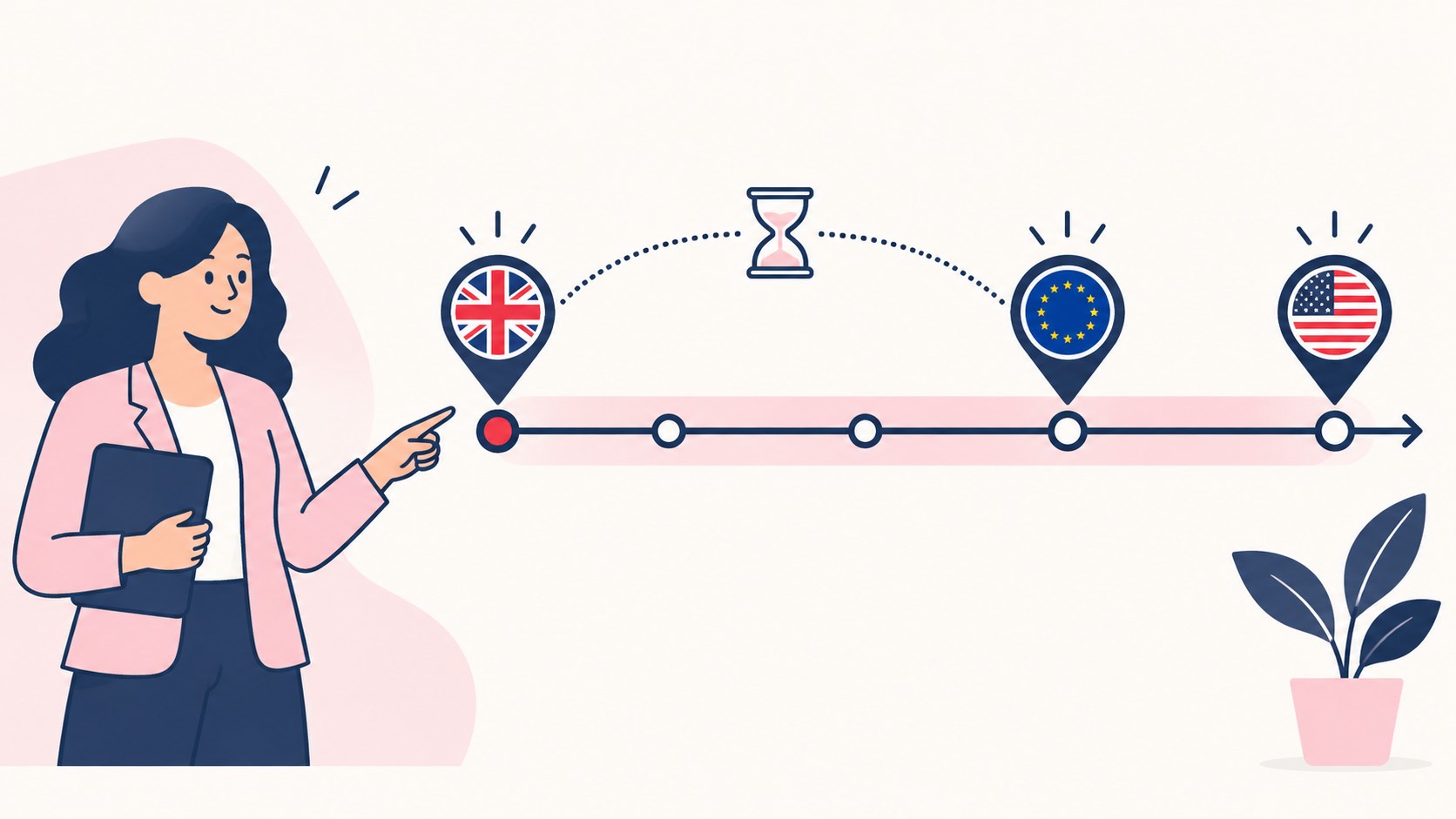
That cuts both ways too. A business coming to the UK can’t rely on being famous somewhere else. A UK business heading abroad can’t rely on being famous here. Fame doesn’t travel by itself. Registration in the countries you trade in, or plan to trade in, is what does, and it’s much simpler before you arrive than after somebody else has. Our international trademark registration service covers both directions.
The question I’d ask before you renew
This is where SkyKick comes closest to home for most of our clients. A renewal is a decision about what protection is worth keeping, not just a fee to pay. That’s why, through our Trademark Renewals service, we advise a fresh Trademark Clearance Audit before renewing automatically.
Start with what you sell now, what you genuinely plan to sell next, and the name, logo or tagline customers actually see. Then compare that with the owner, classes and wording on the register, and check for conflicting rights that have appeared since you first filed. Sometimes a straight renewal is right. Sometimes it’s a renewal alongside a new application for what’s changed. Occasionally a fresh application is the better route.
A renewal can’t add goods or services, and it can’t cover a redesigned logo. A new application can, and once registered it has its own five years from the date registration completes before anybody can attack it for non-use. It isn’t a trick to keep resetting the clock, though. A repeat filing made to dodge proving use can itself be evidence of bad faith, which takes us straight back to SkyKick. A fresh filing needs a genuine commercial reason.
What I’d take from it
- A common word can be a strong brand. The registration protects what you do with it, not the word everywhere.
- Claim what you sell and genuinely plan to sell. Broad lists can be cut back, and the UKIPO now checks at the door.
- Before you renew, respond to a threat or launch abroad, look at the actual rights involved, not the headline.
The application is the easy bit. Getting the specification right is where the value sits.
If you’d like to talk through a name you’re considering, a renewal coming up or a letter you’ve received, book a free call, email enquiries@thetrademarkhelpline.com or ring 0161 833 5400. Where regulated legal advice is needed, we coordinate help through our trusted panel of regulated partners.
This article is for information purposes only and does not constitute trademark advice or guidance. Last reviewed 31 October 2026.