There is one thing we hear more than almost anything else when somebody approaches us about protecting their brand: “I want to stop people from using my name, my logo or my tagline.”
And that is absolutely the right instinct. If you have spent years building a business, developing a reputation and creating goodwill around a brand, of course you don’t want somebody else coming along and trading off it. So can a trademark stop someone using your brand?
But there is one small problem with the word “stop”. You can’t actually stop somebody from doing something. That’s true of trademarks, and it’s probably true of life generally.
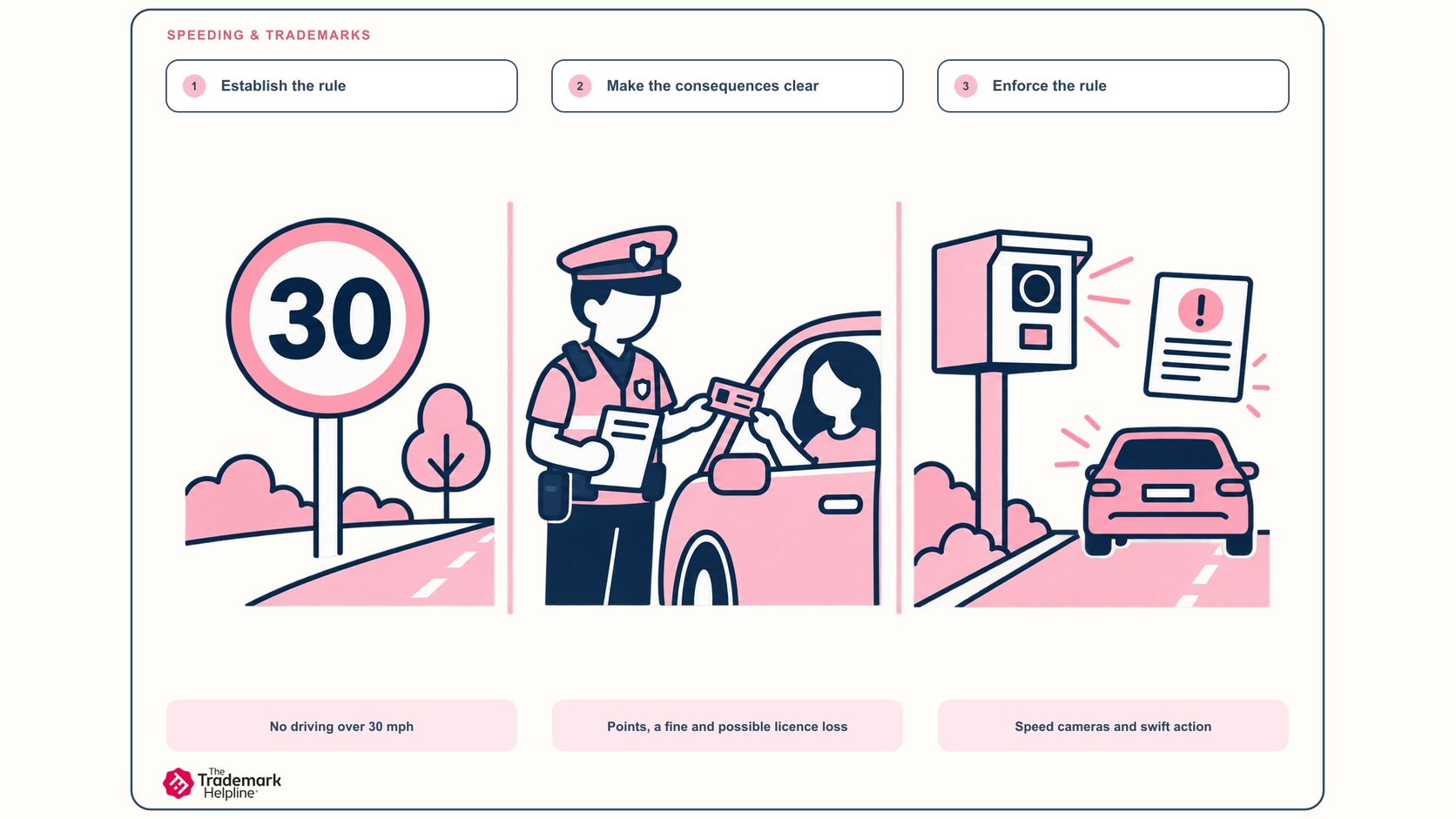
Think about a speed limit. The law says you must not drive at 50mph through a 30mph zone. There are signs telling you the limit. There may be cameras. There are penalties if you’re caught. But none of those things physically prevent you from putting your foot down. What they do is create a very strong deterrent.
And, in many ways, that is exactly what a trademark does.
A trademark isn’t a force field
Registering a UK trademark doesn’t magically make it impossible for somebody else to use your brand. What it does is establish your rights and put you in a much stronger position when somebody crosses the line.
And infringement doesn’t always happen because somebody is deliberately trying to copy you. Sometimes it is malicious. Someone knows about your business and deliberately adopts a similar name because they want to benefit from the reputation you have already built.
But very often, it is completely inadvertent. Someone registers a domain name. They incorporate a company. They open an Instagram account. They launch a business without ever realising that somebody else already has earlier rights in the name.
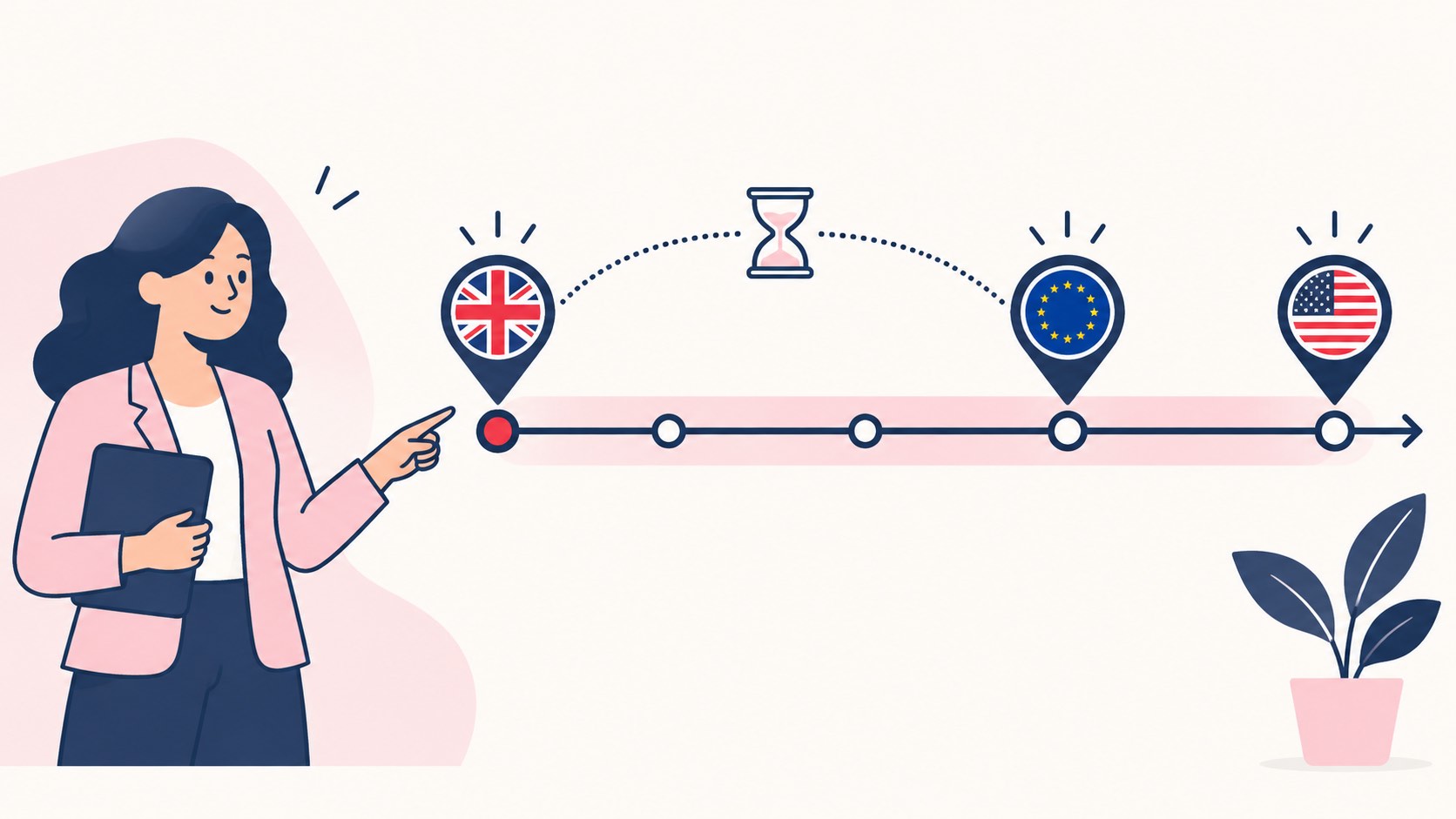
That is why spotting these things early matters so much. If somebody has only just started using a name and receives a clear explanation that it conflicts with an existing registered trademark, it is usually much easier for them to choose another name and move on. Six months later, after they’ve paid for signage, packaging, websites, uniforms and advertising, that conversation becomes much more difficult for everybody.
The trademark gives your warning weight
This is where registration becomes so valuable. If you need to tell somebody to stop using your brand, a registered trademark removes a great deal of uncertainty about the rights you are relying on.
It can also make enforcement through third parties considerably easier. If somebody is impersonating your brand on a marketplace, social media platform or website, one of the first questions you are likely to face is: what rights do you own?
A trademark registration gives you clear evidence of those rights. Without one, you may still have rights, for example under passing off, but proving them can be more complicated, more time-consuming and potentially more expensive.
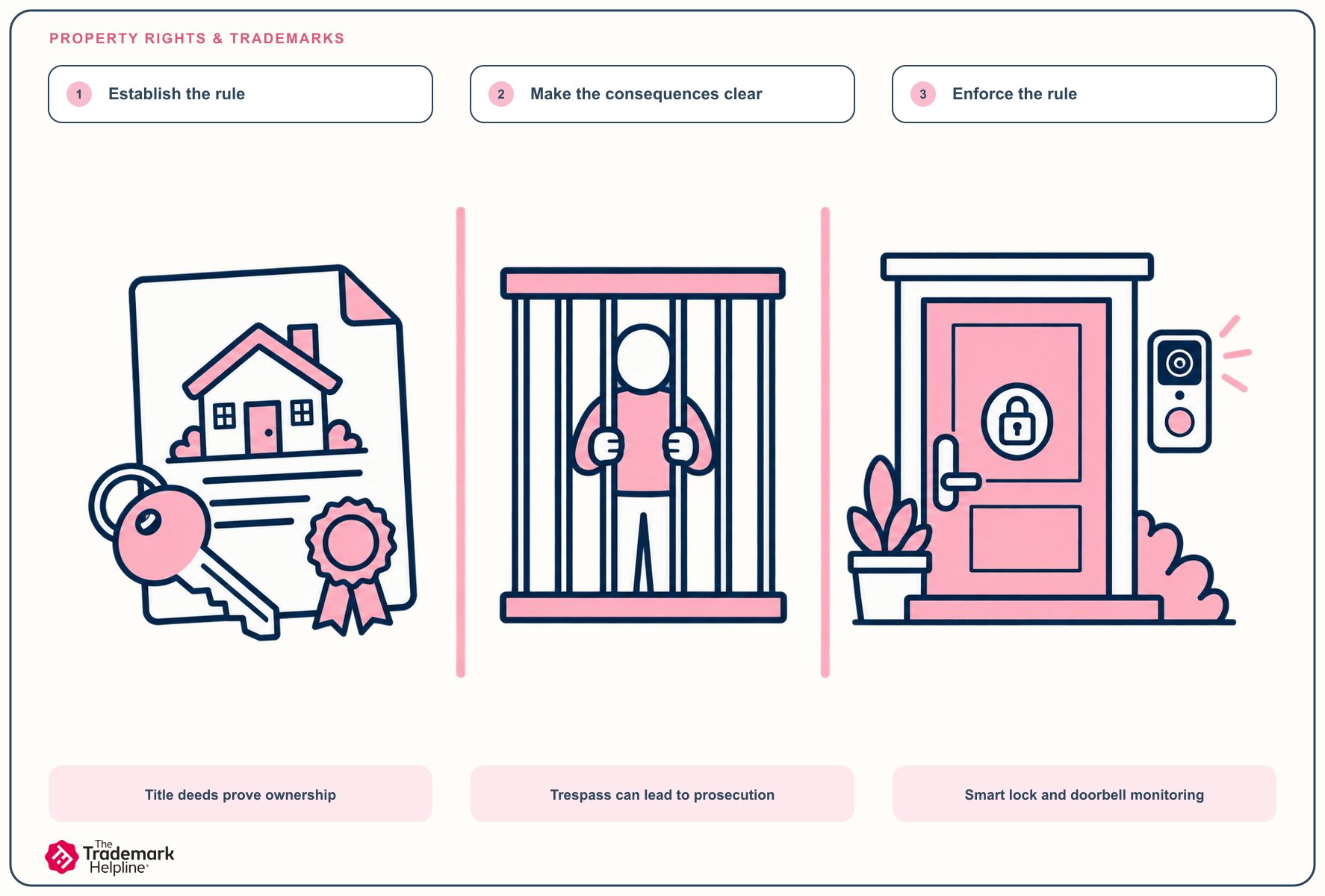
The trademark is therefore a tool in your arsenal. Hopefully, it is a tool you never actually have to use.
The best trademark dispute is the one that never happens
The perfect scenario isn’t winning a huge legal battle. It’s avoiding the battle altogether. Your brand becomes established. Your trademark is registered. Your competitors know it belongs to you and sensible businesses steer clear of it. The registration itself becomes part of the deterrent.
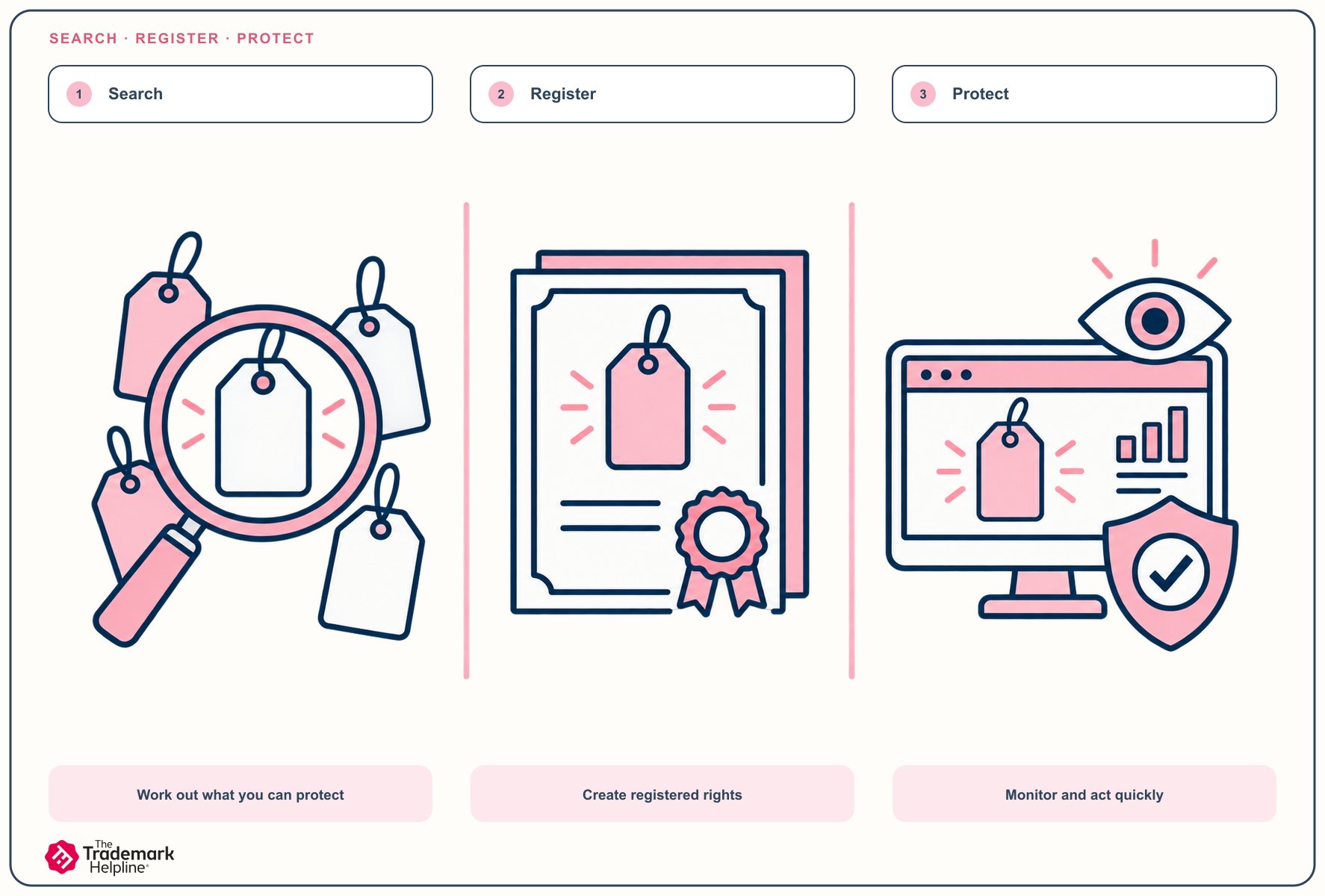
That is why we don’t see trademark registration as the end of the process. For us, brand protection has three stages: Search. Register. Protect.
- Search. Before applying for anything, establish whether you are actually entitled to the name. A Trademark Clearance Audit tells you who else has earlier rights. Finding that out isn’t always a pleasant conversation, but it is far better to know before investing heavily in a brand.
- Register. Secure the trademark properly, in the right classes and for the right goods and services. A certificate is only useful if the protection behind it actually covers what your business does and where it intends to go.
- Protect. Maintain some line of sight over what is happening around your brand. If someone starts using the same or a confusingly similar name, the earlier you know about it, the easier it generally is to address. That is what trademark monitoring is for.
Back to the speed limit
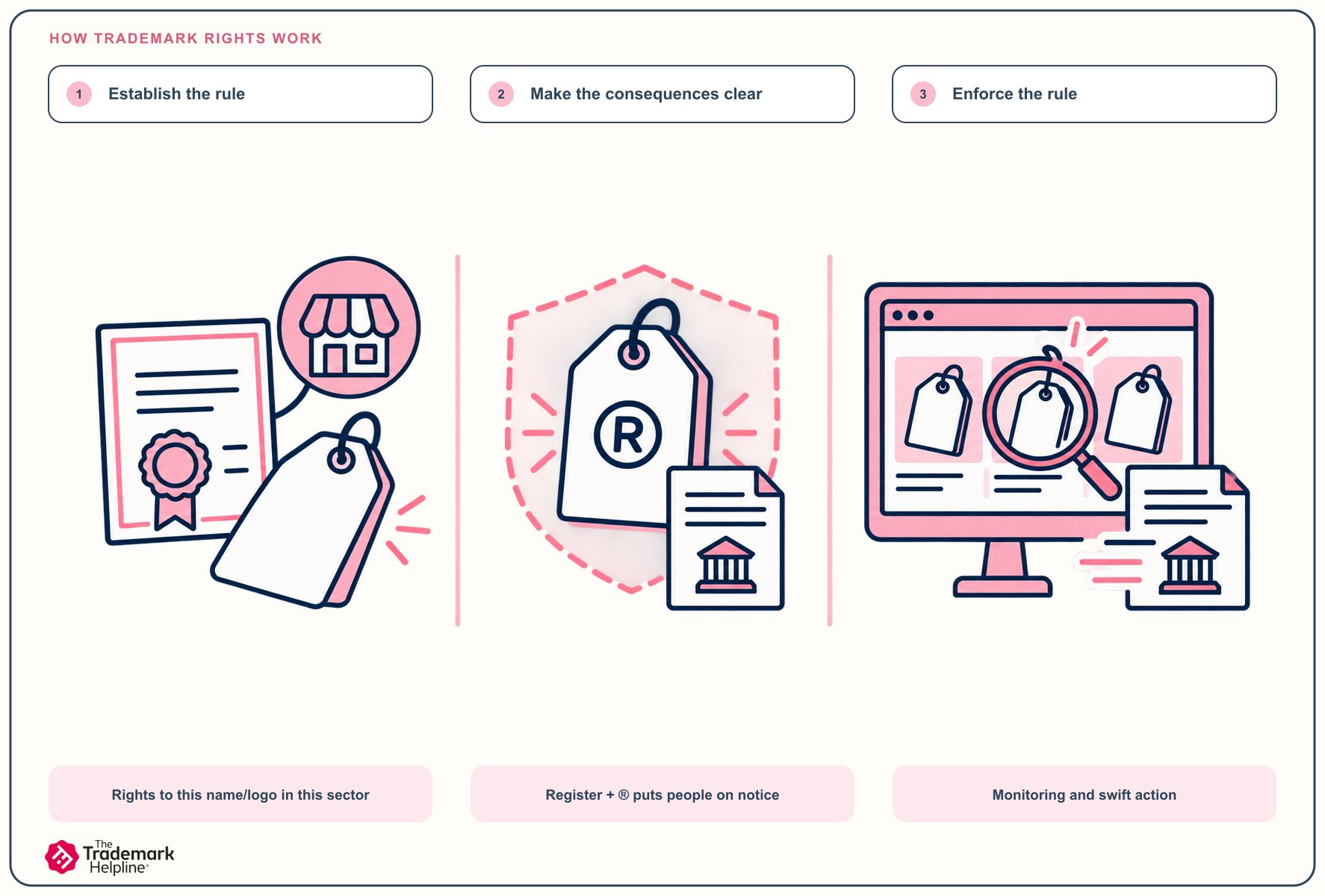
You can’t physically prevent every driver from speeding. But you can set the boundary, make the rules clear, monitor what is happening and have consequences available when someone crosses the line.
A trademark works in much the same way. You can’t control what everybody else does. But you can put yourself in the strongest possible position when somebody does something they shouldn’t.
That’s why trademark protection doesn’t end with registration. Search. Register. Protect.
Related questions
- How do I check if a name is trademarked?
- Can someone steal my business name?
- How do you remove fake social media accounts?
- Can you sue someone for copying your brand?
- What happens after your trademark is registered?
If you would like to talk through protecting your brand, book a call, email enquiries@thetrademarkhelpline.com or call 0161 833 5400.
This article is for information purposes only and does not constitute trademark advice or guidance. Last reviewed 28 September 2026. First shared as a LinkedIn post.