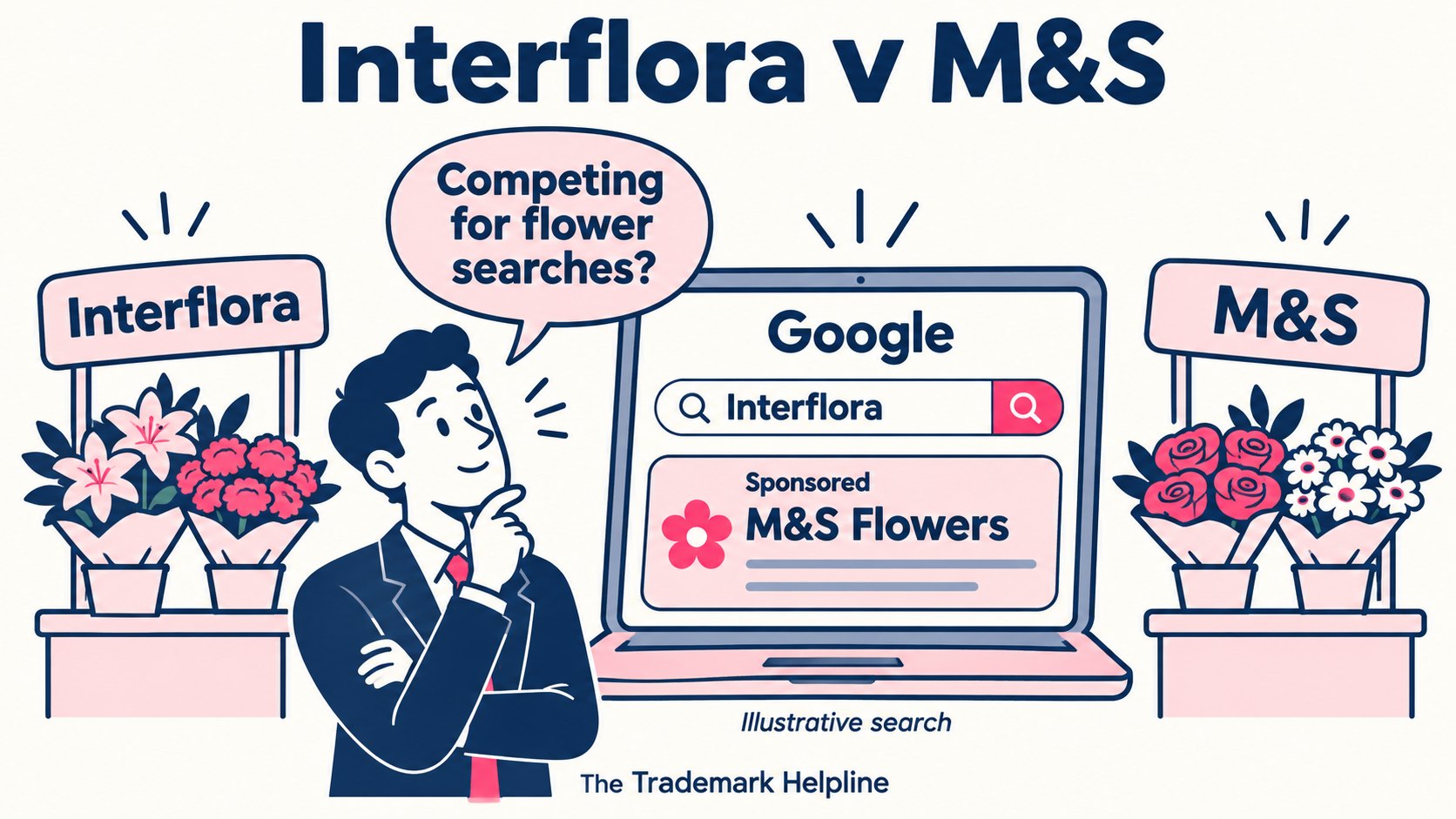
In 2008, if you typed “Interflora” into Google, one of the adverts you might have seen was for M&S flowers. Interflora took M&S to court over it, and the case went all the way to Europe’s top court and back. It’s still the case people reach for when they ask the question behind a lot of marketing budgets: can I advertise to people searching for my competitor?
The short answer is yes, in principle. The longer answer is where most of the risk sits, because the keyword is rarely what gets a business into trouble. It’s what the advert says once it appears. The full detail of every ruling is in our Interflora trademark cases feature. Here, I want to look at what it means if you’re the one writing the advert.
What the courts actually decided
The Court of Justice of the EU looked at the principles in 2011. Buying a competitor’s trademark as a keyword can be fair competition, offering customers an alternative. It crosses the line where the advert doesn’t let a reasonably well-informed internet user tell, without difficulty, whether the offer comes from the brand they searched for or from someone else.
Back in the English courts, the High Court found that M&S had infringed in 2013. In 2014 the Court of Appeal overturned that decision and sent the case back for a new trial. It found the trial judge had put the burden of proving no confusion on M&S, when proving confusion is the trademark owner’s job, and had leaned on an idea from US law that isn’t part of ours.
So anyone who tells you “Interflora proves bidding on a rival’s name is infringement”, or “Interflora proves it’s always fine”, has only read half of it.
The keyword isn’t the problem. The advert can be.
A keyword is part of the machinery that decides when your advert appears. The customer never sees it. What the customer sees is the advert, the display name, the images and the page they land on. That’s what the law looks at.
It’s a bit like opening a shop next door to a famous competitor. Nobody can stop you trading there, and plenty of passers-by will compare the two windows. Hanging their sign over your door is a different matter.
The question I’d ask of any competitor campaign is simple: can a customer tell, at a glance, whose offer this is? An advert that says “Considering [Competitor]? Compare our alternative” invites a comparison. An advert, display name or landing page that hints you’re part of their network, an approved partner or the official site does something else entirely. Interflora was a network of independent florists, which is exactly why that question mattered so much: customers already expected lots of businesses to sit under one name.
“Better” and “cheaper” are where adverts go wrong
Once your advert names or clearly points to a competitor and claims you’re better, cheaper or comparable, a second set of rules applies: the UK’s comparative advertising rules. In plain terms, a comparison has to compare like with like, use features that matter and can be checked, and not mislead.
For “cheaper”, that means being clear what’s being compared. Is it the same package, the same quantity, the same service level and the same contract length? Have you included the compulsory extras? A price you checked last month may not support a claim running today.
For “better”, name the feature. “Our delivery arrives in 24 hours, theirs in 48” can be backed up. “We’re better than [Competitor]” usually can’t.
A structure that tends to hold up looks like this: “Considering [Competitor]? Our equivalent bouquet is £X, theirs is £Y, checked on [date]. See what each includes.” The figures, the equivalence and the date still need evidence behind them, and somewhere a reader can check them.
“Just like theirs” is the line you can’t cross
There’s one more limit that catches people out. A comparison can’t present your product as an imitation or replica of a branded product. “Same features as [Competitor], at half the price” is a comparison. “Our version of [Competitor]’s famous bouquet” starts to look like selling a copy on the back of their name.
You can compete for a rival’s audience and compare honestly. What you can’t do is borrow their identity, make claims you can’t prove, or market a replica just because the advert calls itself a comparison.
If it’s your name being bid on
Interflora cuts both ways, so it’s worth knowing what it means when you’re the one being targeted. A registration doesn’t reserve the top spot in Google. It gives you rights against particular uses, and the question is always whether an advert confuses customers about who’s behind it. Our article Can You Stop Somebody Bidding On Your Brand Name? covers that side in more detail.
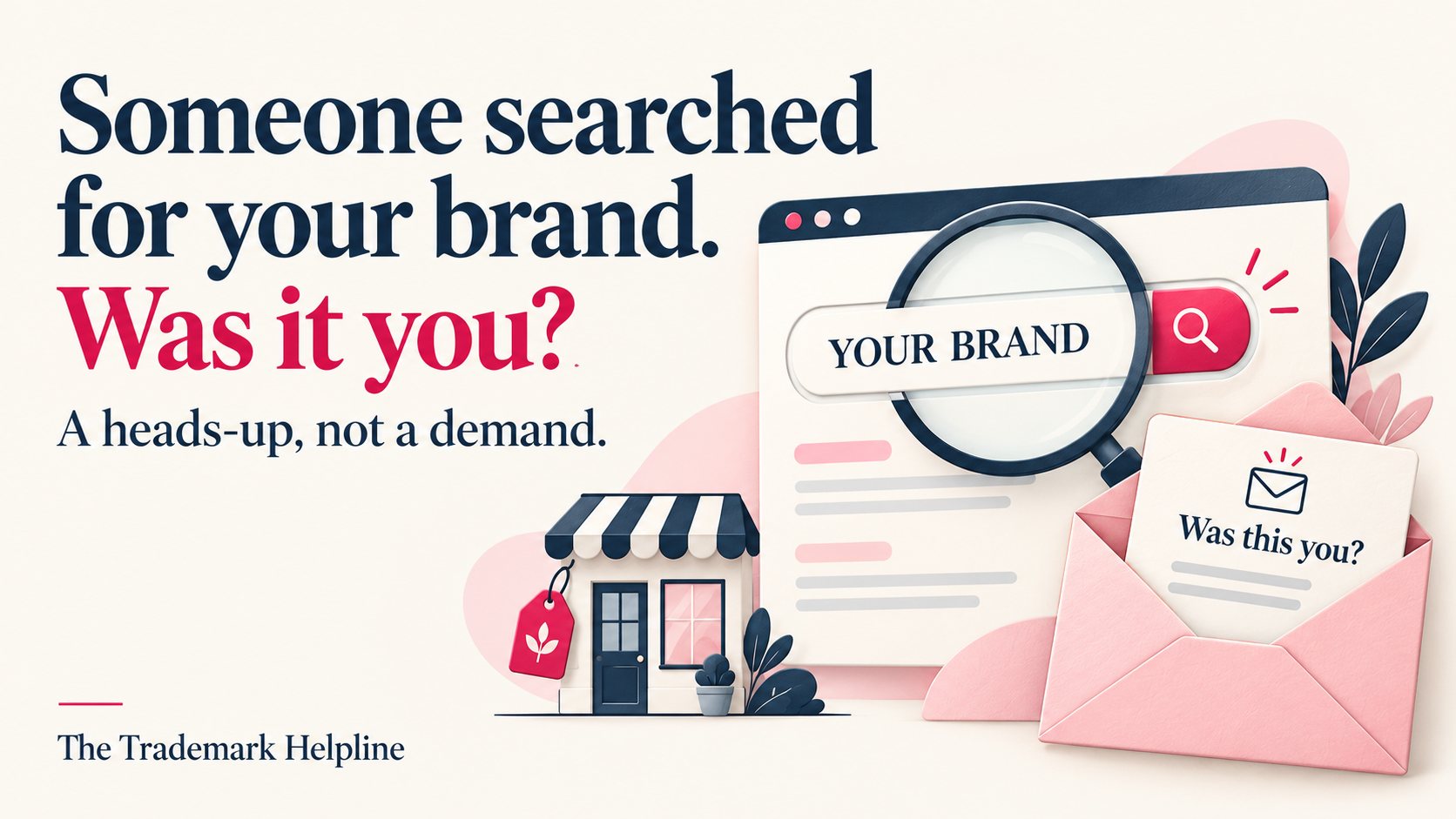
If you think an advert crosses the line, keep a proper record before anything changes: the search term, the date, the device and location, the full result including the “Sponsored” label, and the page it led to. A cropped screenshot rarely tells the whole story. Trademark monitoring can flag adverts worth looking at, and if one needs challenging, our cease and desist service starts with whether a letter is the right move at all.
What I’d take from it
- Bidding on a competitor’s name isn’t automatically infringement. The advert has to make it obvious the offer is yours.
- Watch the whole journey, not just the keyword: the advert copy, the display name and the landing page.
- “Cheaper” and “better” need a like-for-like comparison and evidence you could show tomorrow.
- Never sell yourself as a copy of their product.
- If you’re the brand being targeted, collect the evidence before you complain.
None of this works without a name that’s genuinely yours to defend. A trademark consultation and clearance audit is where I’d start, and if you’d like us on the record as your representative when these questions come up, that’s what our representation service is for.
If you’d like to talk through a campaign you’re planning or an advert that’s appeared against your name, book a free call, email enquiries@thetrademarkhelpline.com or ring 0161 833 5400. Where regulated legal advice is needed, we coordinate help through our trusted panel of regulated partners.
This article is for information purposes only and does not constitute trademark advice or guidance. Last reviewed 2 November 2026.