My son has been doing it since the first day he understood why he was being told off.
Me: “You didn’t do what I asked. Tidy your toys up.”
Him: “Well, you still haven’t addressed my legitimate concerns about the whereabouts of Rabbit, who did NOT make the suitcase journey from Mother’s house to yours.”
Before I know it, I’m defending the chain of custody of a stuffed rabbit, and the toys are still on the floor.
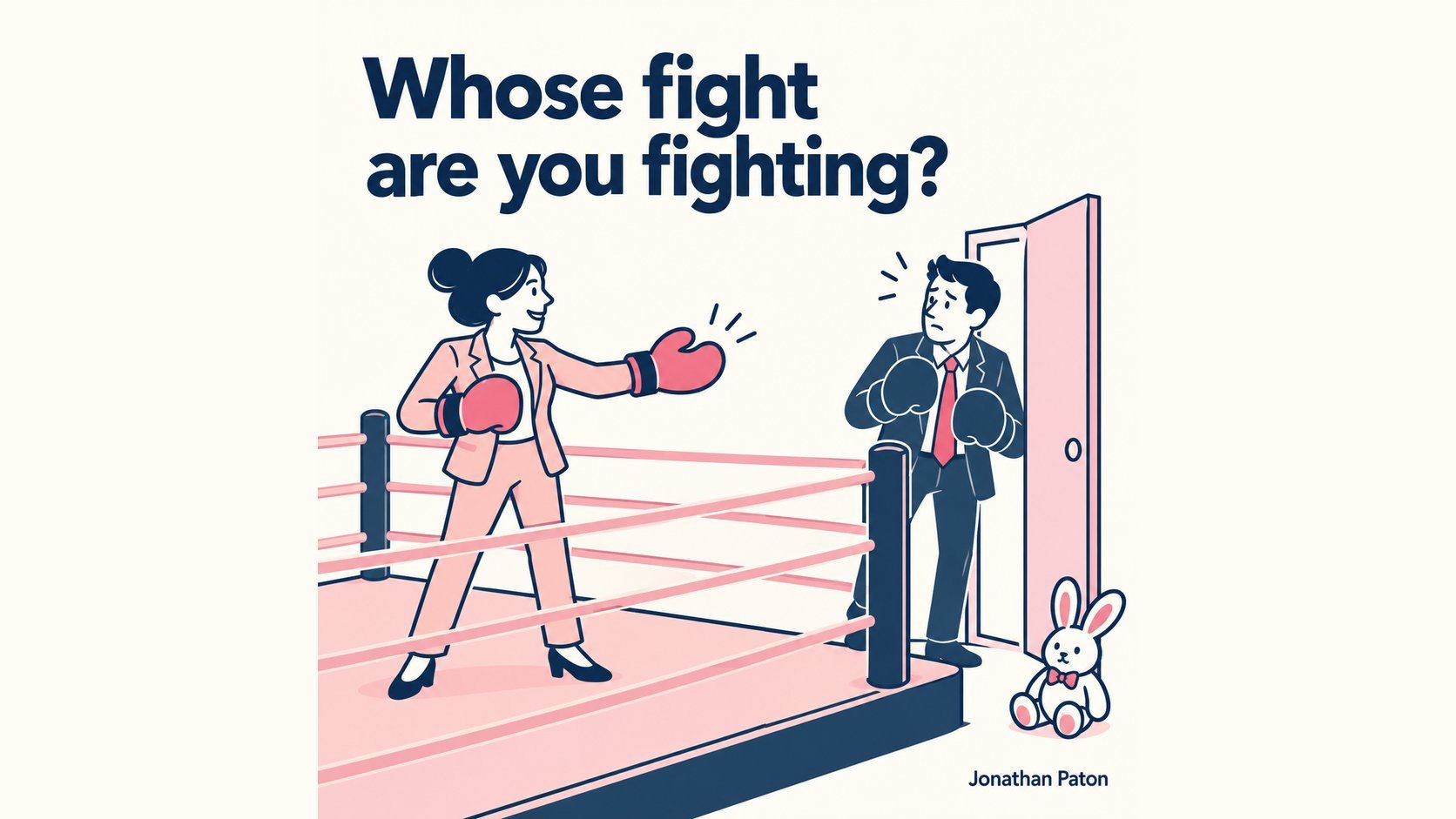
I’m fighting his fight.
It’s funny at home. It’s a lot less funny when the same thing happens in a business dispute.
What “opening the door” means
There’s a phrase in the legal world: “opening the door”. In simple terms, something that wasn’t relevant to an argument can become relevant because one side brought it up. Once the door is open, the other side has a legitimate reason to walk through it.
There’s a much broader lesson in that. When you find yourself arguing over inconsequential things, being dragged into the dirt, or defending points that had nothing to do with why the conversation started, there’s a good chance you’re fighting somebody else’s fight.
Most of us have been there. You raise one issue and end up discussing six others. You challenge somebody about something specific and suddenly you’re defending something you did three years ago. Eventually, you can barely remember what started it.
Sometimes that’s deliberate. Some people are very good at moving an argument onto ground where they feel comfortable. But it isn’t always calculated. For some people it’s an instinctive defence: when they feel criticised, they change the subject. Follow them there, and the original issue quietly disappears.
How it shows up in a business dispute
Imagine you write to a business that has started trading under a name very close to yours. The reply doesn’t deal with the name at all. Instead, it questions when you really started trading, criticises your website, accuses you of bullying a small business and brings up a review from years ago. If you’re not sure your own name is protected in the first place, a free trademark search is a quick place to start.
Or it works the other way round. A cease and desist letter lands on your desk, packed with allegations, deadlines and threats, and the only question that matters is buried in paragraph six: is there a real conflict between the two marks, for the goods and services involved?
Pressure is also the main tool of the fake trademark letters we warn about on our trademark scams page. The urgency is the point. It’s designed to make you react rather than think. Our guide on how to spot trademark scams covers the warning signs.
You don’t have to accept every invitation to argue
One of the hardest things to learn in any conflict is that refusing an irrelevant argument isn’t the same as being unable to answer it.
You may know they’re wrong. You may have the evidence. You may badly want to correct the record. But it’s worth asking a different question first: does winning this point help me get what I need?
If the answer is no, a calm return to the original issue is often stronger than any rebuttal: “We can talk about that separately, but it doesn’t answer the question I’m asking.”
In a trademark dispute, that usually means keeping the correspondence on the marks, the goods and services, the dates and the evidence. I believe truth and consistency generally win over time, and the calm, consistent party tends to be in a stronger position than the one who answered every jab.
One important exception: an irrelevant point can be ignored, but a formal deadline can’t. If you’ve received an opposition notice or a letter that sets a date for a response, the date still matters, even while you refuse to be distracted by everything around it.
When it feels like more than a disagreement
There’s a difference between an ordinary disagreement and a situation where somebody is using pressure, threats, repeated accusations or legal letters to wear you down.
If a dispute is making you uncomfortable, you don’t have to fight every round on your own. Often the most useful thing is perspective: somebody independent who can read what has actually been said, separate the parts that need an answer from the noise, and help you decide what to do next.
How we can help
We’re a trademark business, not a law firm, and we won’t pretend to be experts in something we’re not.
Where a dispute involves your name, logo or tagline, a cease and desist letter, or an opposition to your application, we can help directly through our brand protection service. Where you need regulated legal advice, we coordinate help through our trusted panel of regulated partners. If it’s outside what we do, we’ll tell you, and point you towards somebody better placed.
Many disputes can also be avoided altogether. A trademark clearance audit checks a name before you invest in it, and trademark monitoring flags a similar name early, while it’s still a conversation rather than an argument. If someone has already applied to register a name you use, can someone steal my business name? explains your options, and why we sometimes get in touch when someone searches your brand name explains one of the ways we try to warn you first.
And sometimes a friendly conversation with somebody who isn’t emotionally involved is enough to work out whether there’s a fight worth having at all. The first call is free for new clients: email enquiries@thetrademarkhelpline.com or ring 0161 833 5400.
Not every argument needs winning. And you never need to lower your standards just because somebody else lowered theirs.
Questions about this
What does “opening the door” mean in a dispute?
It means introducing a topic that gives the other side a legitimate reason to respond to it. Once you raise something, it becomes part of the argument, even if it had nothing to do with the original issue. Keeping your own points relevant keeps the dispute about what matters.
 Answered by Jonathan Paton, Founder & CEO
Do I have to reply to every point in a legal letter?
Not usually. Many letters mix the real issue with allegations and pressure. Focus your response on the points that matter, such as the marks, the goods and services and the evidence. Any formal deadline still needs meeting, so if you’re unsure what requires an answer, get help before the date passes.
Answered by Jonathan Paton, Founder & CEOCan The Trademark Helpline help with a dispute that isn’t about a trademark?
We’ll be honest about it. We help directly with disputes about names, logos, taglines and other trademarks. Where regulated legal advice is needed, we coordinate help through our panel of regulated partners, and if it’s outside what we do, we’ll point you towards somebody better placed.
Answered by Jonathan Paton, Founder & CEOThis article is for information purposes only and does not constitute legal or trademark advice or guidance. Last reviewed 28 October 2026.