
Class 25: Clothing
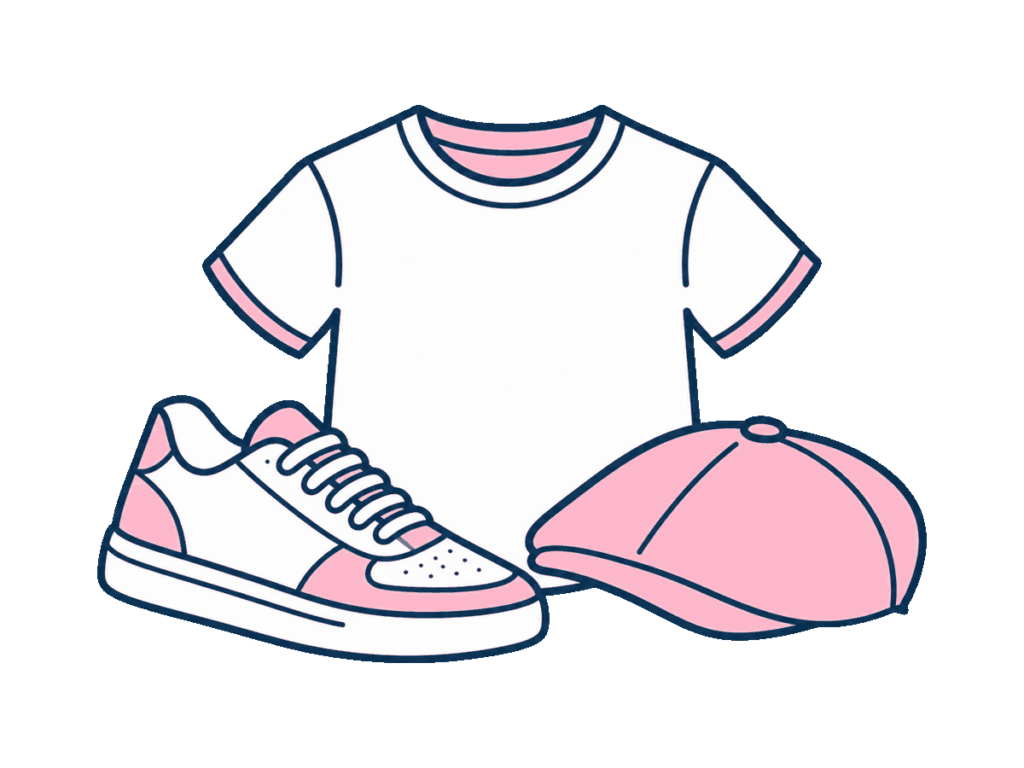
Class 25 covers clothing, footwear and headwear: garments of every kind, shoes, boots and trainers, hats and caps, sportswear, uniforms and babywear. It’s the fifth most used of the 45, with 88,659 UK registrations between September 2021 and September 2026, which is nearly three times as many registrations as the average class. A short heading, an enormous class, and a very crowded register.
What class 25 covers
This is the official Nice heading, in full:
Clothing, footwear, headwear.
That’s all of it. If it’s worn on the body as clothing, it’s here: garments, underwear, socks, shoes, hats, aprons, costumes and baby clothes. What isn’t here is anything worn for protection or as an accessory. Safety clothing, helmets, sunglasses, jewellery and bags all sit in other classes.
When you definitely need class 25
- You design, make or sell clothing under your own brand
- You sell footwear, such as shoes, boots, trainers or slippers
- You sell hats, caps or other headwear
- You produce sportswear, workwear, uniforms or babywear
When you might need class 25 without realising
Class 25 is the class almost every successful brand ends up needing, whatever it started out selling, because sooner or later the logo goes on a hoodie.
- Merchandise. A gym selling branded kit, a brewery selling t-shirts, a podcast selling caps, a club selling shirts. All of them are selling clothing, and none of them is protected by the class their main business sits in. Hoodies appear on 8,286 class 25 registrations and t-shirts on 15,166.
- Hospitality and salons. Branded aprons sold to customers, rather than just worn by staff, are class 25, on 3,046 registrations.
- Children’s brands. Babywear is often the second product line, with baby clothes on 3,258 registrations.
- Equipment brands. In cycling, climbing or fishing, apparel tends to follow the hardware.
Merchandise usually arrives after the brand is well known. By then the name has been public for a while, which is exactly when someone else can register it in the class you left open and sell clothing under it lawfully.
Not sure whether class 25 is enough on its own? The free class tools below show you where businesses like yours actually file, or you can give us a call.
What businesses actually claim in class 25
These are the terms that turn up most often in recent UK class 25 registrations:
| Term | Marks using it | Share of class 25 | How common |
|---|---|---|---|
| clothing | 49,618 | 56.0% | Essential |
| footwear | 20,120 | 22.7% | Most use this |
| clothes | 18,646 | 21.0% | Most use this |
| jackets [clothing] | 18,775 | 21.2% | Most use this |
| sports clothing | 17,023 | 19.2% | Most use this |
| gloves [clothing] | 16,301 | 18.4% | Most use this |
| casual clothing | 16,250 | 18.3% | Most use this |
| tops [clothing] | 16,161 | 18.2% | Most use this |
| hats | 16,203 | 18.3% | Most use this |
| shorts [clothing] | 15,430 | 17.4% | Most use this |
More than half of recent class 25 registrations claim the single word clothing, 49,618 of them. Footwear follows on 20,120, then jackets, sports clothing and hats on 16,203.
That tells you how crowded the class is. “Clothing” is accepted wording and it’s broad, but it puts you alongside tens of thousands of other marks with the same specification, so your protection rests on how distinctive your name is. Notice the bracketed terms too, such as gloves [clothing] and tops [clothing]. The brackets are there because those words mean other things in other classes.
What class 25 does not cover
Bags are class 18. This is the one that catches most fashion brands. Bags appear on 12,704 class 18 registrations, with handbags on 7,414, tote bags on 7,536 and backpacks on 7,047. Clothing for pets is class 18 too, on 2,818 registrations.
Jewellery and watches are class 14, and sunglasses are class 10. Jewellery appears on 12,403 class 14 registrations. Sunglasses and spectacles moved to class 10 from class 9 on 1 January 2026, so older advice still says class 9.
Protective clothing and helmets are class 9. Clothing worn to prevent injury, such as body armour, and sports and riding helmets sit with safety equipment, not fashion. Gardening gloves and gloves for household use are class 21, with gardening gloves on 2,849 registrations.
Selling other brands’ clothing is class 35. Making and selling your own line is class 25. Running a shop that stocks other labels is a retail service, with retail services connected with the sale of clothing and clothing accessories on 5,443 class 35 registrations.
Where these terms actually live
| Term | Belongs to | Marks using it |
|---|---|---|
| bags | Class 18 | 12,704 |
| tote bags | Class 18 | 7,536 |
| handbags | Class 18 | 7,414 |
| shoulder bags | Class 18 | 5,154 |
| gardening gloves | Class 21 | 2,849 |
| gloves for household purposes | Class 21 | 2,447 |
| retail services connected with the sale of clothing | Class 35 | 5,443 |
| online retail services relating to clothing | Class 35 | 4,157 |
Each of these is a separate registration. A mark in class 25 does not cover any of them.

The mistake I see most often
The gap I see most often is bags. A clothing brand registers class 25, launches, does well, and adds a tote bag. Then a branded water bottle, which is class 21. Then a candle, which is class 4. Merchandise expands in exactly the direction the classes don’t.
Because clothing brands are usually strong on social media, the name is widely known long before the second class is filed, which is exactly when someone else files it. The practical fix is to list what will carry your logo in the next few years, not just what you sell today. A UK application can’t have classes added later, so it’s worth getting the list right at the start.
Is class 25 the right class for you?
If you make or sell clothing, footwear or headwear under your own brand, class 25 is very likely yours. Whether it’s the only one depends on what else carries your logo: if you also sell bags, jewellery, eyewear, homeware or run a shop, look at classes 18, 14, 10, 24 and 35 as well.
Our free class tools build a specification from wording already accepted on real UK filings, so you can see what businesses like yours claim before you commit.
Common questions about class 25
Is “clothing” on its own enough?
It’s accepted and it’s broad, and 49,618 recent UK registrations use it. It’s still worth listing the specific items you sell as well, such as socks, on 14,199 registrations. It costs nothing extra within the class and makes the scope of your rights clearer.
I sell clothing and bags. Is that one class or two?
Two. Clothing is class 25 and bags are class 18. They’re separate rights with separate official fees. It’s the most common gap in fashion applications.
Does class 25 protect my prints and designs?
No. A trademark protects the brand name or logo you register. Artwork on a garment is protected by copyright, and the look of a product may be protectable as a design. They’re different rights, and a clothing brand often needs more than one.
Should I file class 25 before I sell any clothing?
If merchandise is a realistic plan, yes. You can’t add a class to an existing application, and a registered mark only has to be used within five years. Without a real plan, though, a class you never use can be challenged and removed.
About these figures. Last researched 23 September 2026, from UK trademarks registered between September 2021 and September 2026 whose entry in this class is still active. That is current drafting practice rather than the historical register. Terms shown are those most frequently used in that period.
Four FREE ways to build your class 25 terms
Start with whichever you already have. They all live in the same place.
 Let us read your websiteBest if your site already describes what you sell.Start this tool →4Free AI toolAnswer a few questionsBest if you are pre-launch, or your site does not tell the whole story.Start this tool →
Is your brand name actually free to use?
Classes are half the picture. The other half is whether somebody already holds your name in them. Our free search checks the UK register in seconds, no sign up and nothing to pay.
 0161 833 5400