
Class 24: Textiles
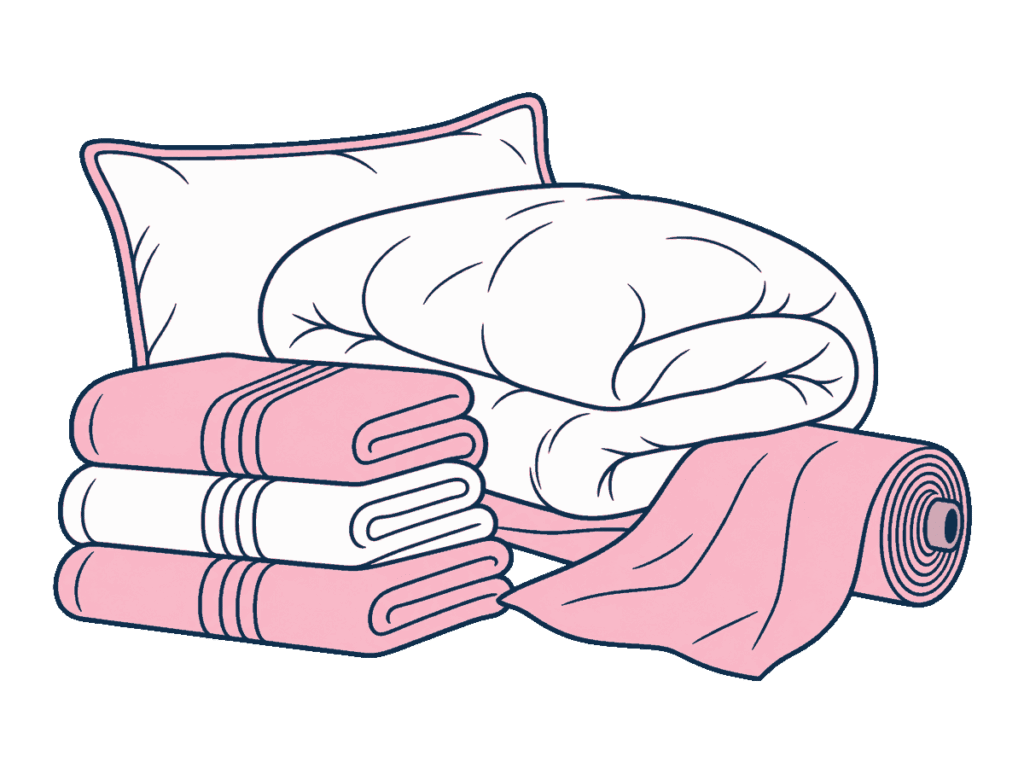
Class 24 covers fabric itself and the textile goods of the home: bed linen, duvets, towels, blankets, throws, curtains, cushion covers, table linen and tea towels. It also takes in some things people don’t expect, such as sleeping bags, textile flags and woven clothing labels. It’s the 26th most used of the 45, with 17,722 UK registrations between September 2021 and September 2026, which is about 45% fewer registrations than the average class. The trap is assuming that anything made of fabric belongs here.
What class 24 covers
This is the official Nice heading, in full:
Textiles and substitutes for textiles; household linen; curtains of textile or plastic.
Class 24 has two halves. The first is cloth sold as cloth: woven, knitted and non-woven fabrics, felt and fabric by the metre. The second is finished household textiles, the things you use flat or draped rather than wear or sit on. Once fabric becomes a garment it moves to class 25, once it becomes a bag it moves to class 18, and once it’s stuffed into a pillow or cushion it moves to class 20.
When you definitely need class 24
- You make or sell fabric, felt or textile by the metre
- You sell bed linen, duvets, duvet covers, pillowcases or mattress covers
- You sell towels, bath linen, beach towels or tea towels
- You sell blankets, throws, quilts or cushion covers
- You sell curtains, shower curtains or table linen
When you might need class 24 without realising
Plenty of brands outside the home textiles trade end up needing class 24.
- Baby brands. Baby blankets are class 24, on 1,221 registrations, and so are sleeping bags for babies, on 764. Sleepsuits, rompers and fabric bibs are class 25.
- Clothing labels. A fashion brand that has its own woven labels made is dealing in class 24 goods. Labels of textile appear on 574 registrations.
- Events, clubs and party brands. Textile flags and bunting are class 24, with bunting on 473 registrations. Paper flags are class 16.
- Outdoor and camping brands. Sleeping bags are class 24, on 1,915 registrations, even though tents are class 22.
- Artists and makers. Wall hangings of textile are class 24, on 1,003 registrations. Wall hangings that aren’t textile are class 27.
Not sure whether your product is class 24 or class 20? The free class tools below show you where businesses like yours actually file, or you can give us a call.
What businesses actually claim in class 24
These are the terms that turn up most often in recent UK class 24 registrations:
| Term | Marks using it | Share of class 24 | How common |
|---|---|---|---|
| bed linen | 3,934 | 22.2% | Most use this |
| towels | 3,478 | 19.6% | Most use this |
| bed blankets | 3,191 | 18.0% | Most use this |
| bed covers | 3,014 | 17.0% | Most use this |
| household linen | 2,613 | 14.7% | Most use this |
| pillowcases | 2,496 | 14.1% | Most use this |
| curtains | 2,368 | 13.4% | Most use this |
| mattress covers | 2,115 | 11.9% | Recommended |
| towels of textile | 2,097 | 11.8% | Recommended |
| duvet covers | 2,079 | 11.7% | Recommended |
The bedroom leads the class. Bed linen is on 3,934 registrations, followed by towels on 3,478 and bed blankets. Bed covers, household linen, pillowcases and curtains fill out the top of the table, with duvet covers on 2,079.
Because the broad terms are so widely claimed, naming what you actually sell helps. Adding beach towels or shower curtains costs nothing extra within the class and makes clear where your brand trades.
What class 24 does not cover
Pillows, cushions and mattresses are class 20. The cover is class 24, but the filled item is furniture. Pillows appear on 4,589 class 20 registrations and cushions on 3,865. Mattress covers stay in class 24, on 2,115. Curtain rails and indoor window blinds are class 20 too.
Clothing, scarves and aprons are class 25. A fabric brand that also sells finished garments needs class 25, where scarves appear on 9,627 registrations and aprons on 3,046.
Rugs, carpets and bath mats are class 27. Floor coverings sit in their own class, with rugs on 1,756 class 27 registrations and bath mats on 1,525. Travelling rugs, the kind you put over your knees, are class 24.
Bags and cleaning cloths go elsewhere. Tote bags are class 18, on 7,536 registrations, even when made of cotton. Cleaning cloths are class 21, with cleaning cloths on 1,444. Yarn and thread are class 23.
Where these terms actually live
| Term | Belongs to | Marks using it |
|---|---|---|
| tote bags | Class 18 | 7,536 |
| pillows | Class 20 | 4,589 |
| cushions | Class 20 | 3,865 |
| cleaning cloths | Class 21 | 1,444 |
| scarves | Class 25 | 9,627 |
| aprons | Class 25 | 3,046 |
| rugs | Class 27 | 1,756 |
| bath mats | Class 27 | 1,525 |
Each of these is a separate registration. A mark in class 24 does not cover any of them.

The mistake I see most often
The mistake is assuming everything made of fabric stays in class 24. The material doesn’t decide the class. What the product is used for does.
Take a homeware brand selling bed linen, duvets, cushions, a rug, cotton tote bags and matching aprons. The bed linen and duvets are class 24. The cushions are class 20. The rug is class 27. The tote bags are class 18, and the aprons are class 25. File only class 24 and half the range isn’t covered.
The practical fix is to list every product and ask what it is, not what it’s made of. A UK application can’t have classes added later, so it’s worth getting the list right at the start.
Is class 24 the right class for you?
If you make or sell fabric, bed linen, duvets, towels, blankets, throws, curtains, cushion covers, table linen or textile flags under your own brand, class 24 is very likely yours. If you also sell pillows, cushions, clothing, rugs, bags or yarn, look at classes 20, 25, 27, 18 and 23 as well.
Our free class tools build a specification from wording already accepted on real UK filings, so you can see what businesses like yours claim before you commit.
Common questions about class 24
Are cushions class 24 or class 20?
Both, depending on what you sell. A filled cushion is class 20, with furniture. A cushion cover sold on its own is class 24, with cushion covers on 1,916 registrations. A brand selling both usually needs both classes.
Is a rug class 24?
Usually not. Rugs for the floor are class 27, with carpets and mats. The exception is the travelling rug, a blanket for your knees, which is class 24 with travelling rugs on 557 registrations.
Which class are woven clothing labels in?
Class 24. Labels of textile, including labels for identifying clothing, sit with fabrics, with textile labels on 486 registrations. The clothing they are sewn into is class 25.
Are flags and bunting class 24?
Flags of textile or plastic and bunting are class 24. Paper flags and paper bunting are class 16. Flagpoles are class 6 if metal and class 19 if not.
About these figures. Last researched 23 September 2026, from UK trademarks registered between September 2021 and September 2026 whose entry in this class is still active. That is current drafting practice rather than the historical register. Terms shown are those most frequently used in that period.
Four FREE ways to build your class 24 terms
Start with whichever you already have. They all live in the same place.
 Let us read your websiteBest if your site already describes what you sell.Start this tool →4Free AI toolAnswer a few questionsBest if you are pre-launch, or your site does not tell the whole story.Start this tool →
Is your brand name actually free to use?
Classes are half the picture. The other half is whether somebody already holds your name in them. Our free search checks the UK register in seconds, no sign up and nothing to pay.
 0161 833 5400