
Class 27: Floor Coverings
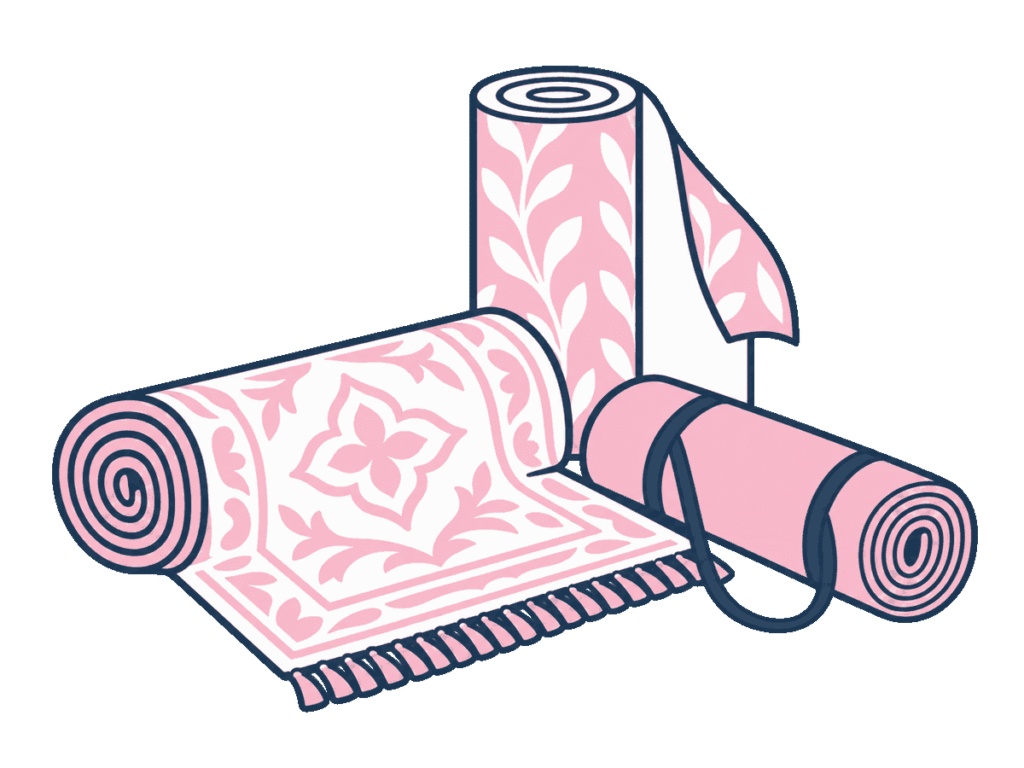
Class 27 covers what goes on top of a floor that’s already there, plus what goes on the walls: carpets, rugs, mats, linoleum, vinyl floor coverings, artificial turf and wallpaper. It’s the 40th most used of the 45, with 6,177 UK registrations between September 2021 and September 2026, which is about 80% fewer registrations than the average class. It’s one of the smaller classes, and the surprise is who fills it: the single most claimed term isn’t carpet, it’s yoga mats.
What class 27 covers
This is the official Nice heading, in full:
Carpets, rugs, mats and matting, linoleum and other materials for covering existing floors; wall hangings, not of textile.
The key words are “existing floors”. Class 27 is for coverings you lay over a floor, not the floor itself. That takes in carpets and rugs, every kind of mat from door mats to yoga mats, carpet underlay, carpet tiles, linoleum and artificial grass. Wallpaper sits here too, along with wall hangings that aren’t made of fabric.
When you definitely need class 27
- You make or sell carpets, rugs or runners
- You sell mats of any kind, such as door mats, bath mats or non-slip mats
- You sell yoga, exercise or gym mats
- You sell wallpaper
- You sell artificial grass, carpet tiles, linoleum or vinyl floor coverings
When you might need class 27 without realising
The name makes it sound like a class for carpet shops, but plenty of other brands end up here.
- Fitness and yoga brands. Yoga mats are the most claimed term in the class, on 1,806 registrations, and gymnastic mats appear on 1,026. A yoga studio selling its own branded mats is selling class 27 goods, whichever class its studio services sit in.
- Interior and wallpaper designers. Wallpaper is class 27, on 1,312 registrations, including textile wallpaper. A designer who licenses patterns onto wallpaper needs this class for the product.
- Car accessory brands. Car mats and floor mats for vehicles are class 27, not class 12 with the car.
- Garden and landscaping brands. Artificial grass is class 27. Laying it for customers is a class 37 service.
Not sure whether your product is a floor covering or flooring? The free class tools below show you where businesses like yours actually file, or you can give us a call.
What businesses actually claim in class 27
These are the terms that turn up most often in recent UK class 27 registrations:
| Term | Marks using it | Share of class 27 | How common |
|---|---|---|---|
| yoga mats | 1,806 | 29.2% | Most use this |
| carpets | 1,792 | 29.0% | Most use this |
| rugs | 1,756 | 28.4% | Most use this |
| mats | 1,722 | 27.9% | Most use this |
| bath mats | 1,525 | 24.7% | Most use this |
| door mats | 1,511 | 24.5% | Most use this |
| floor coverings | 1,317 | 21.3% | Most use this |
| wallpaper | 1,312 | 21.2% | Most use this |
| non-slip mats | 1,300 | 21.0% | Most use this |
| floor mats | 1,270 | 20.6% | Most use this |
The table is split between the home and the gym. Yoga mats lead, just ahead of carpets on 1,792 and rugs on 1,756. Then come plain mats, bath mats on 1,525 and door mats on 1,511, with wallpaper and non-slip mats not far behind.
The general terms, floor coverings on 1,317 registrations and carpets, rugs and mats, cover a lot of ground, but it’s worth naming the specific products you sell too. Carpet underlay, on 799 registrations, is a good example of something a flooring brand often forgets to list.
What class 27 does not cover
Flooring itself is class 19. This is the defining split. Laminate, wooden and parquet floors, and ceramic floor tiles, are building materials in class 19, with laminate flooring on 305 registrations there and wooden flooring on 371. Even vinyl changes class depending on the wording: vinyl floor coverings for existing floors are class 27, but vinyl floor coverings for forming a floor are class 19.
Fabric wall hangings and curtains are class 24. Wallpaper and non-fabric wall hangings are class 27, but a fabric wall hanging is class 24, as are curtains, on 2,368 class 24 registrations. A home furnishings brand selling rugs and throws needs both classes.
Fitting carpets and flooring is class 37. A carpet company that measures and fits is providing an installation service, and so is anyone who cleans carpets and rugs. Laying carpet, carpet cleaning and fitting laminate floors are all class 37, where general cleaning services appear on 1,359 registrations.
Running a flooring showroom is class 35. Selling other brands’ carpets and rugs, in a showroom or online, is a retail service in class 35. Your own range of rugs is class 27. A retailer with its own label usually needs both.
Where these terms actually live
| Term | Belongs to | Marks using it |
|---|---|---|
| wooden flooring | Class 19 | 371 |
| laminate flooring | Class 19 | 305 |
| curtains | Class 24 | 2,368 |
| cleaning services | Class 37 | 1,359 |
Each of these is a separate registration. A mark in class 27 does not cover any of them.

The mistake I see most often
The mistake is treating the product and the fitted floor as the same thing. Class 27 protects coverings for existing floors. The structural flooring underneath is class 19, and the service of fitting it is class 37.
Take a flooring business that sells its own range of carpets and rugs, also sells laminate and engineered wood, and fits everything it sells. The carpets and rugs are class 27. The laminate and wood are class 19. The fitting is class 37. And if it sells other brands in its showroom, that’s class 35. File only class 27 and the name is protected on the rugs but not on the service most customers are actually buying.
The practical fix is to list what you sell and what you do, and check each one. A UK application can’t have classes added later, so it’s worth getting the list right at the start.
Is class 27 the right class for you?
If you sell carpets, rugs, mats of any kind, wallpaper, artificial grass or floor coverings under your own brand, class 27 is very likely yours. If you also sell hard flooring, fabric furnishings or fitting services, look at classes 19, 24, 37 and 35 as well.
Our free class tools build a specification from wording already accepted on real UK filings, so you can see what businesses like yours claim before you commit.
Common questions about class 27
Is a yoga mat class 27 or class 28?
Class 27. Yoga mats, exercise mats and gymnastic mats are all floor coverings, even though they’re used for sport. Class 28 is for the sporting equipment itself, such as weights, balls and yoga blocks, so a fitness brand selling mats and equipment usually needs both.
Is wallpaper really in class 27?
Yes. Wallpaper, wallpaper borders and textile wallpaper are all class 27, even though they go on walls rather than floors. Hanging wallpaper for customers, like painting and decorating, is a class 37 service, and paint itself is class 2.
Is a baby play mat class 27 or class 28?
It depends on what’s built into it. A plain play mat, the padded floor mat a baby lies or crawls on, is class 27. A play mat with toys attached, such as an activity gym with hanging toys, or a mat printed as a road layout for toy cars, is class 28 as a toy. Brands that sell both styles often claim both.
Is a camping mat class 27?
Usually not. Sleeping mats for camping are treated as mattresses, which puts them in class 20. Beach mats are class 27, while picnic blankets are class 24. The product’s purpose, sleeping or covering the ground, decides it.
About these figures. Last researched 23 September 2026, from UK trademarks registered between September 2021 and September 2026 whose entry in this class is still active. That is current drafting practice rather than the historical register. Terms shown are those most frequently used in that period.
Four FREE ways to build your class 27 terms
Start with whichever you already have. They all live in the same place.
 Let us read your websiteBest if your site already describes what you sell.Start this tool →4Free AI toolAnswer a few questionsBest if you are pre-launch, or your site does not tell the whole story.Start this tool →
Is your brand name actually free to use?
Classes are half the picture. The other half is whether somebody already holds your name in them. Our free search checks the UK register in seconds, no sign up and nothing to pay.
 0161 833 5400