

Class 22: Ropes, Tents & Nets
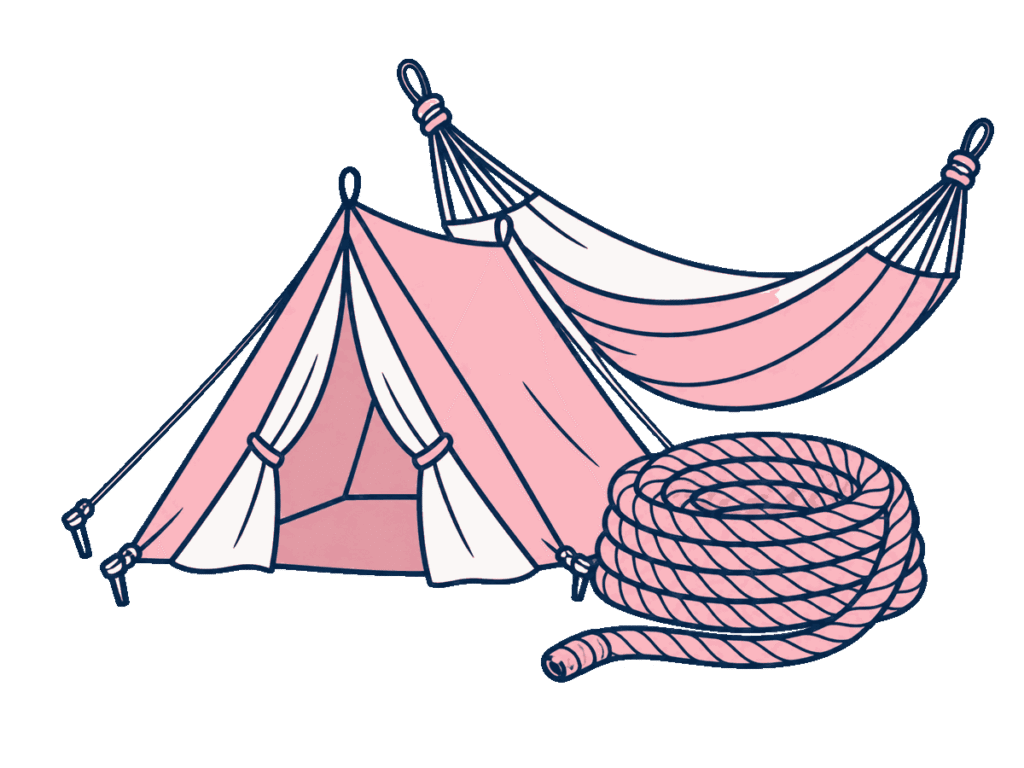
Class 22 covers ropes, nets, tents, tarpaulins, textile awnings, sails and sacks, plus the raw materials of the textile trade: raw fibres, padding and stuffing. It’s the 41st most used of the 45, with 4,943 UK registrations between September 2021 and September 2026, which is about 85% fewer registrations than the average class. Most brands that need it sell outdoor, camping or marine goods, and the main risk is assuming the rest of the kit sits here too.
What class 22 covers
This is the official Nice heading, in full:
Ropes and string; nets; tents and tarpaulins; awnings of textile or synthetic materials; sails; sacks for the transport and storage of materials in bulk; padding, cushioning and stuffing materials, except of paper, cardboard, rubber or plastics; raw fibrous textile materials and substitutes therefor.
The class has two sides. One is finished goods made from cord and heavy fabric: ropes, nets, tents, tarpaulins, hammocks and sails. The other is the textile trade at its earliest stage: raw wool and other fibres before they are spun, and the stuffing that goes inside cushions and upholstery. Once fibre becomes yarn it moves to class 23, and once it becomes cloth it moves to class 24.
When you definitely need class 22
- You make or sell tents, hammocks, tarpaulins or textile awnings
- You make ropes, string, cords or nets
- You make sails for boats
- You sell storage sacks, laundry bags or fabric gift bags
- You supply raw fibres, padding or stuffing materials
When you might need class 22 without realising
Because the class is small, most of the surprises are outdoor and home brands.
- Camping and festival brands. Tents are class 22, on 1,479 registrations, and so are hammocks, on 964. A camping brand that starts with tents needs class 22 before anything else.
- Home and laundry brands. Laundry bags are class 22, on 609 registrations, and so are bags for storage purposes, on 444.
- Climbing and sports brands. Climbing ropes are class 22, on 224 registrations. A climbing brand’s other kit, such as clothing or harnesses, may need other classes.
- Gift and packaging brands. Fabric gift bags are class 22, on 149 registrations. Paper gift bags are class 16.
Not sure whether your product is class 22 or class 24? The free class tools below show you where businesses like yours actually file, or you can give us a call.
What businesses actually claim in class 22
These are the terms that turn up most often in recent UK class 22 registrations:
| Term | Marks using it | Share of class 22 | How common |
|---|---|---|---|
| tents | 1,479 | 29.9% | Most use this |
| hammocks | 964 | 19.5% | Most use this |
| tarpaulins | 941 | 19.0% | Most use this |
| ropes | 680 | 13.8% | Most use this |
| nets | 678 | 13.7% | Most use this |
| awnings of textile | 618 | 12.5% | Most use this |
| laundry bags | 609 | 12.3% | Most use this |
| sails | 596 | 12.1% | Most use this |
| awnings | 580 | 11.7% | Recommended |
| awnings for tents | 516 | 10.4% | Recommended |
Camping leads the class. Tents is on 1,479 registrations, followed by hammocks, tarpaulins on 941, and then ropes and nets. Awnings, laundry bags and sails fill out the rest of the table.
The numbers are small across the board, which usually means less crowding for a new name. A specific specification still helps: naming camping tents or awnings of textile costs nothing extra within the class and makes clear where your brand trades.
What class 22 does not cover
Sleeping bags, mosquito nets and bunting are class 24. They feel like camping or outdoor goods, but they sit with textiles. Sleeping bags appear on 1,915 class 24 registrations, mosquito nets on 960 and bunting on 473.
Sports nets and fishing tackle are class 28. Commercial fishing nets are class 22, but nets for sports are class 28, on 1,299 registrations, along with fishing tackle, on 2,650. Hair nets are class 26.
Metal structures and camping furniture go elsewhere. Metal gazebos, metal awnings and metal tent pegs are class 6. Air mattresses are class 20, with air mattresses on 768 registrations there. Parachutes are class 12, and sandbags are class 19.
Yarn is class 23, and cloth is class 24. Raw wool is class 22. Spun into yarn it becomes class 23, and woven into fabric it becomes class 24, where textiles appears on 1,659 registrations. Dog leads made of rope are class 18.
Where these terms actually live
| Term | Belongs to | Marks using it |
|---|---|---|
| air mattresses | Class 20 | 768 |
| sleeping bags | Class 24 | 1,915 |
| textiles | Class 24 | 1,659 |
| mosquito nets | Class 24 | 960 |
| bunting | Class 24 | 473 |
| fishing tackle | Class 28 | 2,650 |
| nets for sports | Class 28 | 1,299 |
Each of these is a separate registration. A mark in class 22 does not cover any of them.

The mistake I see most often
The mistake is ignoring the stage of production. The same material, and the same brand, can sit in several classes depending on how finished it is.
Take a wool business that sells raw fleece, knitting yarn, woven blankets and knitted jumpers. The raw fleece is class 22. The yarn is class 23. The blankets are class 24. The jumpers are class 25. File only one of those and the rest of the range isn’t covered, even though it’s all wool.
A camping brand has the same problem in a different form. The tent and tarpaulin are class 22, the sleeping bag is class 24, the air mattress is class 20, and the metal gazebo is class 6. The practical fix is to list every product and check each one. A UK application can’t have classes added later, so it’s worth getting the list right at the start.
Is class 22 the right class for you?
If you make or sell tents, hammocks, tarpaulins, textile awnings, ropes, string, nets, sails, storage sacks, laundry bags, raw fibres or stuffing under your own brand, class 22 is very likely yours. If you also sell sleeping bags, sports nets, yarn, fabric, metal structures or camping furniture, look at classes 24, 28, 23, 6 and 20 as well.
Our free class tools build a specification from wording already accepted on real UK filings, so you can see what businesses like yours claim before you commit.
Common questions about class 22
Is a sleeping bag class 22 like a tent?
No. Tents are class 22, but sleeping bags are class 24, with textiles, and air mattresses are class 20. A camping brand selling all three usually needs three classes, with camping tents on 481 class 22 registrations.
Which class are nets in?
It depends on the net. Fishing nets for commercial use are class 22, with fishing nets on 376 registrations. Nets for sport, such as tennis and goal nets, are class 28. Hair nets are class 26, and mosquito nets are class 24.
Are awnings and gazebos class 22?
Awnings made of textile or synthetic material are class 22, with awnings of textile on 618 registrations. Awnings of metal and gazebos made mainly of metal are class 6, so the frame material decides.
Is a rope dog lead class 22?
No. Dog leads and leashes are class 18, with other animal goods, whatever they’re made from. Rope sold as rope stays in class 22, and string appears on 281 class 22 registrations.
About these figures. Last researched 23 September 2026, from UK trademarks registered between September 2021 and September 2026 whose entry in this class is still active. That is current drafting practice rather than the historical register. Terms shown are those most frequently used in that period.

Four FREE ways to build your class 22 terms
Start with whichever you already have. They all live in the same place.
 Let us read your websiteBest if your site already describes what you sell.Start this tool →4Free AI toolAnswer a few questionsBest if you are pre-launch, or your site does not tell the whole story.Start this tool →
Is your brand name actually free to use?
Classes are half the picture. The other half is whether somebody already holds your name in them. Our free search checks the UK register in seconds, no sign up and nothing to pay.

 0161 833 5400