

Class 17: Rubber & Plastics
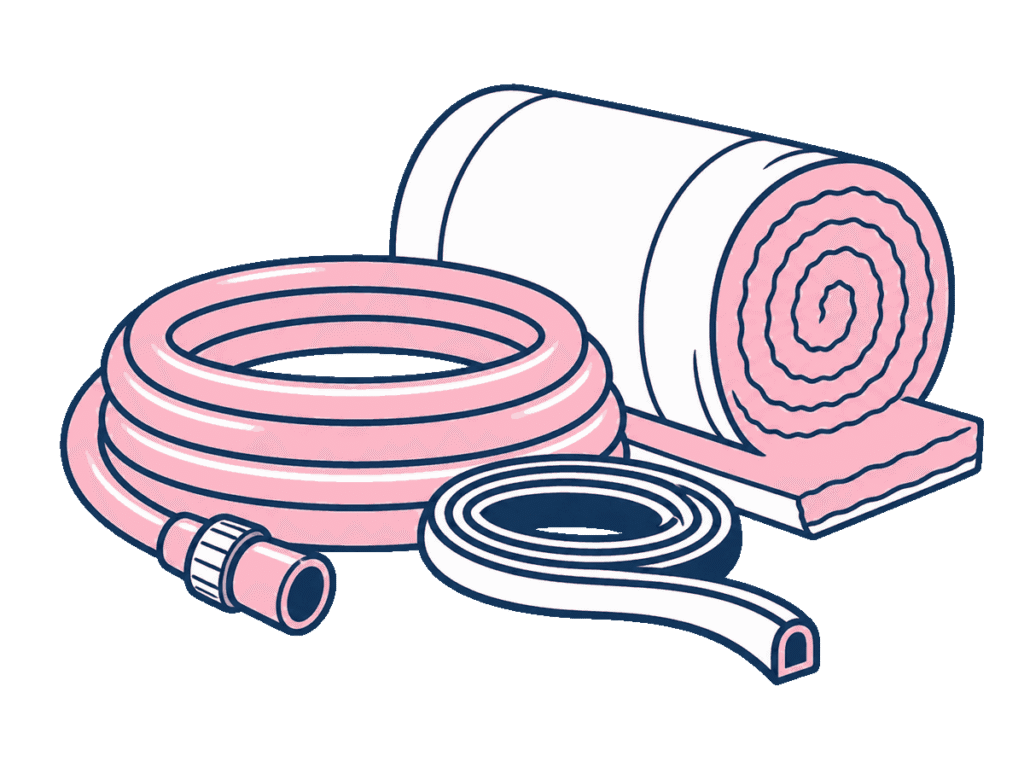
Class 17 covers rubber and plastics that are only part-way to being a finished product, plus insulation, seals, sealants, flexible hoses and industrial tapes such as duct tape and masking tape. It’s the 39th most used of the 45, with 6,392 UK registrations between September 2021 and September 2026, which is about 80% fewer registrations than the average class. It’s a quiet, mostly industrial class, and the most common mistake is assuming that anything made of plastic or rubber belongs here.
What class 17 covers
This is the official Nice heading, in full:
Unprocessed and semi-processed rubber, gutta-percha, gum, asbestos, mica and substitutes for all these materials; plastics and resins in extruded form for use in manufacture; packing, stopping and insulating materials; flexible pipes, tubes and hoses, not of metal.
The key phrase is “semi-processed”. Class 17 is mostly about materials on their way to becoming something else: rubber sheets, plastic rods and films, foam and filaments. It also covers things whose job is to insulate, seal or pack, such as gaskets, draught excluders and sealants, and flexible hoses that aren’t made of metal. Finished products made from plastic or rubber usually sit in the class that matches what they’re for.
When you definitely need class 17
- You make or sell semi-processed rubber or plastics, such as sheets, rods, films or foam
- You make insulating materials, seals, gaskets or sealants
- You sell garden hoses or other flexible hoses that aren’t made of metal
- You make industrial tapes, such as duct tape, masking tape or insulating tape
- You make plastic filaments for 3D printing
When you might need class 17 without realising
A few consumer brands end up here, usually through DIY, garden or making products.
- DIY and home-improvement brands. Duct tape is class 17, on 292 registrations, and so is masking tape, on 244. Silicone sealants and draught excluder strips sit here too.
- Garden brands. Garden hoses are class 17, on 299 registrations, even though the spray nozzle that goes on the end is class 21.
- 3D printing brands. Plastic filaments for 3D printing are class 17, on 174 registrations.
- Home and car accessory brands. Tinted anti-glare films for windows are class 17, with anti-glare films for windows [tinted films] on 98 registrations. Fitting them is a class 37 service.
Not sure whether your plastic or rubber product is class 17 or somewhere else? The free class tools below show you where businesses like yours actually file, or you can give us a call.
What businesses actually claim in class 17
These are the terms that turn up most often in recent UK class 17 registrations:
| Term | Marks using it | Share of class 17 | How common |
|---|---|---|---|
| insulating materials | 572 | 8.9% | Recommended |
| packing, stopping and insulating materials | 418 | 6.5% | Recommended |
| garden hoses | 299 | 4.7% | Recommended |
| duct tape | 292 | 4.6% | Recommended |
| duct tapes | 290 | 4.5% | Recommended |
| plastics in extruded form for use in manufacture | 290 | 4.5% | Recommended |
| seals, sealants and fillers | 267 | 4.2% | Recommended |
| watering hose | 265 | 4.1% | Recommended |
| flexible hoses, not of metal | 263 | 4.1% | Recommended |
| adhesive tapes, strips, bands and films | 255 | 4.0% | Some use this |
Insulation leads the class. Insulating materials is on 572 registrations, followed by the heading’s own wording and then garden hoses and duct tape. It’s a small class, and the table reflects its mix of industrial materials and everyday DIY products.
Small numbers usually mean less crowding for a new name. It’s still worth naming what you actually make. A brand selling garden hoses and one selling synthetic rubber to manufacturers are in very different markets, and a specific specification makes that clear.
What class 17 does not cover
Raw plastics and resins are class 1. Plastics in their primary, unprocessed form sit with chemicals, where unprocessed plastics appears on 282 class 1 registrations. Once extruded into sheets, rods or filaments, they move to class 17.
Rigid pipes follow their material. Flexible hoses not of metal are class 17. Rigid pipes not of metal, for building, are class 19, with rigid pipes, not of metal, for building on 272 registrations. Metal pipes are class 6, on 223.
Other tapes depend on their use. Duct tape, masking tape and insulating tape are class 17. Adhesive tape for stationery purposes is class 16. Adhesive tapes for medical purposes are class 5, on 481 registrations.
Finished plastic and rubber goods follow their purpose. Plastic garden furniture and plastic storage tanks are class 20. Flower pots are class 21, and so are rubber gloves for household use, with household gloves on 1,464 class 21 registrations. Bin bags and cling film are class 16. Moulding or processing plastics for other businesses is a class 40 service.
Where these terms actually live
| Term | Belongs to | Marks using it |
|---|---|---|
| unprocessed plastics | Class 1 | 282 |
| adhesive tapes for medical purposes | Class 5 | 481 |
| metal pipes | Class 6 | 223 |
| rigid pipes, not of metal, for building | Class 19 | 272 |
| household gloves | Class 21 | 1,464 |
Each of these is a separate registration. A mark in class 17 does not cover any of them.

The mistake I see most often
The mistake is assuming the material decides the class. It doesn’t. Class 17 covers semi-processed materials, insulation, seals and flexible hoses. Once plastic or rubber becomes a finished product, the class usually follows what the product is for.
A plastics manufacturer is a good example. The extruded sheets and filaments it sells to other factories are class 17. Its branded garden furniture is class 20, its flower pots are class 21, and its bin bags are class 16. Moulding parts to a customer’s design is a class 40 service. File only class 17 and the consumer range, often the part with the brand on the shelf, isn’t covered.
The practical fix is to list each product by what it does, not what it’s made of, and check each one. A UK application can’t have classes added later, so it’s worth getting the list right at the start.
Is class 17 the right class for you?
If you make or sell semi-processed rubber or plastics, insulation, seals, sealants, flexible hoses, industrial tapes or 3D printing filament under your own brand, class 17 is very likely yours. If you also sell raw plastics, rigid pipes, finished plastic goods or moulding services, look at classes 1, 19, 6, 20, 21 and 40 as well.
Our free class tools build a specification from wording already accepted on real UK filings, so you can see what businesses like yours claim before you commit.
Common questions about class 17
Is duct tape class 16 or class 17?
Class 17. Duct tape, masking tape and insulating tape are class 17, with insulating tapes on 236 registrations. Sticky tape for stationery purposes is class 16, and adhesive tape for medical use is class 5, so the purpose decides.
Is 3D printing filament a plastic or a chemical?
A plastic. Filaments for 3D printing are semi-processed plastics, so they’re class 17. Plastics in their primary, unprocessed form are the chemical side, in class 1. The objects printed from them go in whatever class matches what they are.
Is a garden hose class 17?
Yes. Garden hoses and other flexible hoses not made of metal are class 17, with flexible hoses, not of metal on 263 registrations. The spray nozzles and sprayers are class 21, and a mechanical hose reel is class 7, so a watering range can span several classes.
Are all plastic products class 17?
No. Class 17 is for plastics that are still materials, such as sheets, rods, films and filaments. Finished plastic products follow their purpose: garden furniture is class 20, flower pots are class 21, and bin bags are class 16.
About these figures. Last researched 23 September 2026, from UK trademarks registered between September 2021 and September 2026 whose entry in this class is still active. That is current drafting practice rather than the historical register. Terms shown are those most frequently used in that period.

Four FREE ways to build your class 17 terms
Start with whichever you already have. They all live in the same place.
 Let us read your websiteBest if your site already describes what you sell.Start this tool →4Free AI toolAnswer a few questionsBest if you are pre-launch, or your site does not tell the whole story.Start this tool →
Is your brand name actually free to use?
Classes are half the picture. The other half is whether somebody already holds your name in them. Our free search checks the UK register in seconds, no sign up and nothing to pay.

 0161 833 5400