

Class 19: Building Materials
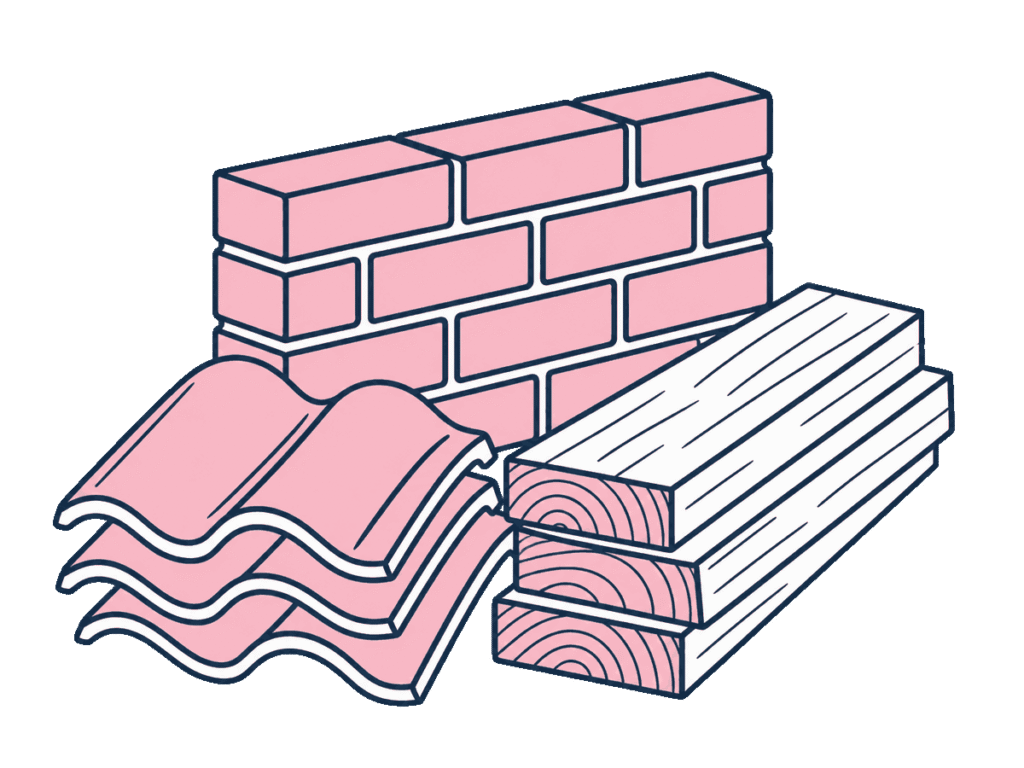
Class 19 is building materials that aren’t made of metal: timber, tiles, bricks, cement, concrete, glass, wooden and laminate flooring, and non-metal doors, windows and pipes. It also covers garden sheds and other buildings you can move, and even gravestones. It’s the 35th most used of the 45, with 9,576 UK registrations between September 2021 and September 2026, which is about 70% fewer registrations than the average class. The rule to remember is that the material usually decides: the metal version of the same product is class 6.
What class 19 covers
This is the official Nice heading, in full:
Materials, not of metal, for building and construction; rigid pipes, not of metal, for building; asphalt, pitch, tar and bitumen; transportable buildings, not of metal; monuments, not of metal.
“Not of metal” appears three times, and it’s the key to the class. Wood, stone, brick, concrete, glass, plastic and composite building products sit here. Their metal equivalents sit in class 6. The class also takes in road and roofing materials such as asphalt and bitumen, prefabricated and portable buildings such as sheds, and stone or concrete monuments.
When you definitely need class 19
- You make or sell non-metal building materials, such as timber, bricks, cement, concrete or plasterboard
- You sell tiles, wooden flooring or laminate flooring
- You make doors, windows or skirting boards that aren’t made of metal
- You sell wooden garden sheds, decking or other non-metal garden buildings
- You make gravestones, memorials or other monuments that aren’t made of metal
When you might need class 19 without realising
Class 19 reaches beyond builders’ merchants into home and garden brands.
- Flooring brands. Wooden flooring is class 19, on 371 registrations, and so are laminate flooring, on 305, and parquet flooring, on 362.
- Garden brands. Wooden garden sheds, wooden decking and non-metal greenhouses are class 19. Non-metallic transportable buildings is claimed on 331 registrations.
- Landscaping suppliers. Gravel is class 19, on 197 registrations, and so are paving slabs, not of metal, on 119.
- Memorial masons. Gravestones and headstones are class 19, with monuments, not of metal on 353 registrations.
If you build with it, pave with it or put it up in the garden, and it isn’t metal, class 19 is worth checking before you file.
Not sure whether your product is class 19 or class 6? The free class tools below show you where businesses like yours actually file, or you can give us a call.
What businesses actually claim in class 19
These are the terms that turn up most often in recent UK class 19 registrations:
| Term | Marks using it | Share of class 19 | How common |
|---|---|---|---|
| non-metallic building materials | 653 | 6.8% | Recommended |
| building materials (non-metallic) | 588 | 6.1% | Recommended |
| building materials, not of metal | 466 | 4.9% | Recommended |
| materials, not of metal, for building and construction | 464 | 4.8% | Recommended |
| tiles | 431 | 4.5% | Recommended |
| building and construction materials and elements, not of metal | 407 | 4.2% | Recommended |
| cement | 396 | 4.1% | Recommended |
| building timber | 381 | 4.0% | Some use this |
| wooden flooring | 371 | 3.9% | Some use this |
| parquet flooring | 362 | 3.8% | Some use this |
The broad terms lead. Non-metallic building materials is on 653 registrations, followed by several other ways of saying the same thing. Then come the specific products: tiles on 431, cement on 396, building timber and flooring.
It’s a mid-sized class, and a broad term on its own tells people very little about what you actually sell. Adding laminate flooring or paving slabs, not of metal costs nothing extra within the class and makes clear where your brand trades.
What class 19 does not cover
Metal versions are class 6. The same product can switch class depending on what it’s made of. Metal doors are class 6, on 446 registrations, and so are metal fence panels, on 214. Metal sheds, greenhouses, decking and skirting boards are class 6 too.
Carpets, wallpaper and artificial grass are class 27. Anything laid over an existing floor or wall sits with floor and wall coverings. Carpets appears on 1,792 class 27 registrations, wallpaper on 1,312 and artificial turf on 585.
Insulation is class 17, and paints and preservatives are class 2. Insulating materials sit in class 17, on 572 registrations. Wood preservatives are class 2, on 187.
Kitchens are class 20, and building work is class 37. Worktops and kitchen cabinets are furniture, with kitchen cabinets on 886 class 20 registrations. Building, installing, scaffolding and repair are class 37 services, where building construction appears on 2,253 registrations.
Where these terms actually live
| Term | Belongs to | Marks using it |
|---|---|---|
| wood preservatives | Class 2 | 187 |
| metal doors | Class 6 | 446 |
| metal fence panels | Class 6 | 214 |
| insulating materials | Class 17 | 572 |
| kitchen furniture | Class 20 | 2,296 |
| kitchen cabinets | Class 20 | 886 |
| carpets | Class 27 | 1,792 |
| wallpaper | Class 27 | 1,312 |
| artificial turf | Class 27 | 585 |
| building construction | Class 37 | 2,253 |
Each of these is a separate registration. A mark in class 19 does not cover any of them.

The mistake I see most often
The mistake is treating a building project as a single class. To a customer, a new garden room or kitchen is one purchase. For trademark purposes, it breaks down by material and by who does the work.
Take a garden-room company. The timber building itself is class 19. Any metal-framed version is class 6. The insulation is class 17, the flooring laid inside may be class 19 or class 27, and the fitted furniture is class 20. Putting it all up on site is class 37. File only class 19 and the installation, often the service customers are really paying for, isn’t covered.
The practical fix is to list every product by what it’s made of, then add the work you do on site as a separate service. A UK application can’t have classes added later, so it’s worth getting the list right at the start.
Is class 19 the right class for you?
If you make or sell non-metal building materials, flooring, tiles, doors, windows, garden buildings, paving or monuments under your own brand, class 19 is very likely yours. If you also sell metal versions, insulation, floor coverings, paints or kitchens, or you install what you sell, look at classes 6, 17, 27, 2, 20 and 37 as well.
Our free class tools build a specification from wording already accepted on real UK filings, so you can see what businesses like yours claim before you commit.
Common questions about class 19
Are carpets and artificial grass class 19?
No. Carpets, rugs, wallpaper and artificial grass are class 27. Wooden, laminate and parquet flooring are class 19. Vinyl is a split case: vinyl floor coverings laid over an existing floor are class 27, while vinyl used to form the floor itself is class 19.
Do wooden and metal sheds go in the same class?
No. Wooden garden sheds, non-metal greenhouses and portable buildings are class 19. Metal sheds and metal greenhouses are class 6. The same split applies to doors, decking and skirting boards.
Is a kitchen worktop class 19?
No. Worktops, countertops and kitchen cabinets are class 20, as furniture, with kitchen furniture on 2,296 registrations. The tiles on the wall behind them are class 19, and fitting the kitchen is a class 37 service.
Are gravestones class 19?
Yes, if they’re stone, concrete or another non-metal material. Monuments not of metal are named in the class heading, and gravestones and tombstones are listed there. A metal memorial plaque would be class 6.
About these figures. Last researched 23 September 2026, from UK trademarks registered between September 2021 and September 2026 whose entry in this class is still active. That is current drafting practice rather than the historical register. Terms shown are those most frequently used in that period.

Four FREE ways to build your class 19 terms
Start with whichever you already have. They all live in the same place.
 Let us read your websiteBest if your site already describes what you sell.Start this tool →4Free AI toolAnswer a few questionsBest if you are pre-launch, or your site does not tell the whole story.Start this tool →
Is your brand name actually free to use?
Classes are half the picture. The other half is whether somebody already holds your name in them. Our free search checks the UK register in seconds, no sign up and nothing to pay.

 0161 833 5400