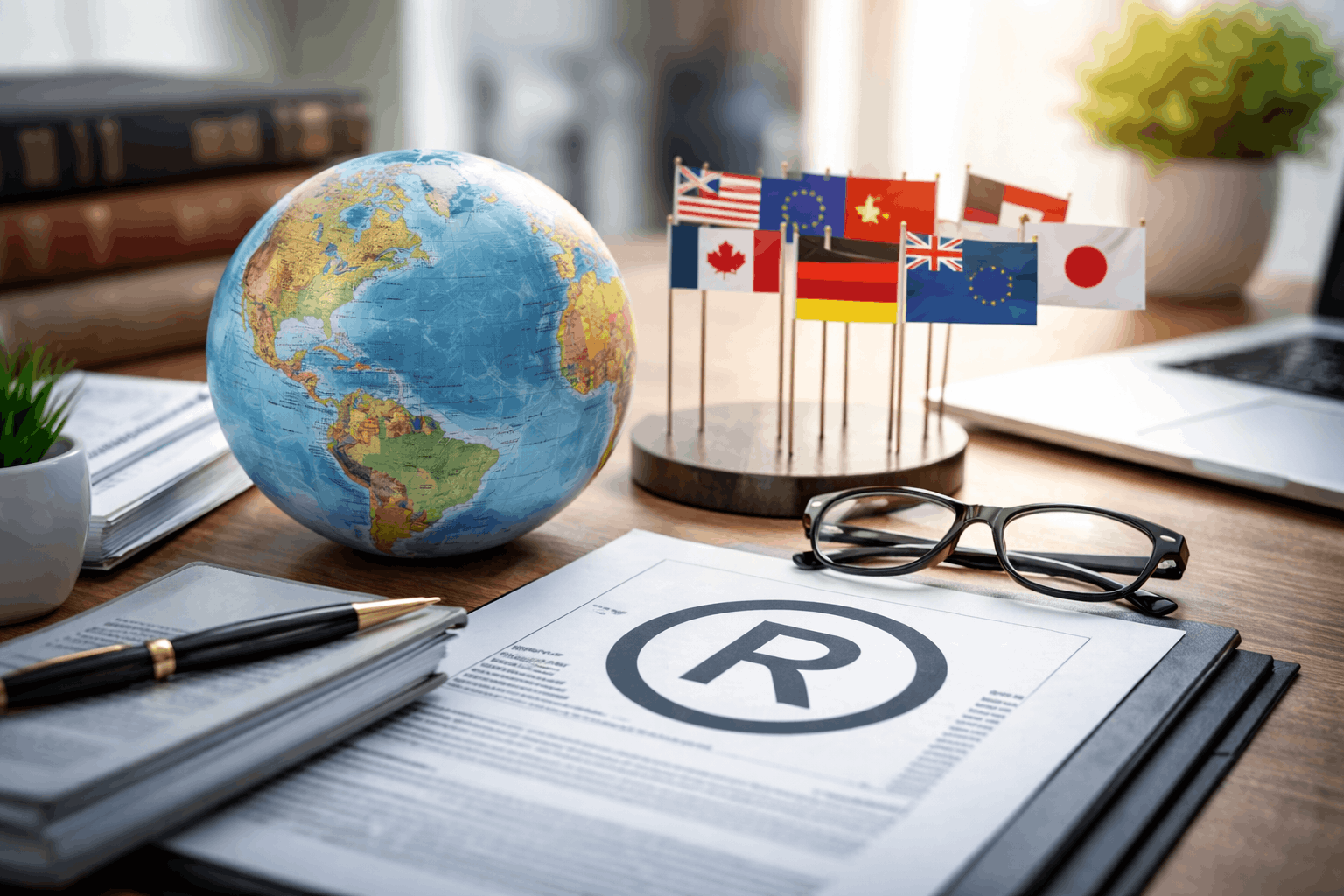
Thinking about international trademark registration? Learn the pros and cons of the Madrid Protocol and why local filing can offer better protection across global markets.
This is one of those times when we can share our experiences with the hope of saving people money.
If you are providing goods and services overseas, then you should be thinking about international trademark registrations in all jurisdictions that you operate in. However, today there is a choice you have to make when it comes to overseas applications thanks to the introduction of the Madrid Protocol system.
On the surface, the Madrid Protocol looks like the obvious choice. One application, one system, multiple countries. Simple. Efficient. Cost effective right?
In reality, it is not always that simple…
The background
The Madrid Protocol is an international trademark filing system that allows a trademark owner to seek protection in multiple countries through a single international application.
The Madrid Protocol system is administered by the World Intellectual Property Organisation, or WIPO, which is a United Nations agency based in Geneva. WIPO does not grant trademarks itself. It simply administers the international system, and each individual country still decides whether a trademark can be registered in its jurisdiction.
This is an important point, because many people assume that using the Madrid Protocol means their trademark is being dealt with by one central body from start to finish. That is not really the case. While the filing route is centralised, the decision making is still local.
Instead of filing separate applications in the USA, Australia, the EU, Canada and so on, the Madrid system allows you to file one application through your home office and select the countries where you want protection.
On paper, this sounds ideal.
Why it may seem great
The Madrid Protocol system has some clear advantages.
It can be cheaper at the initial filing stage because you are filing one central application rather than paying multiple law firms in multiple countries at the outset.
It can also be administratively easier. Changes such as address updates, ownership changes and renewals can often be managed centrally rather than having to deal with multiple overseas representatives.
For simple trademarks, simple goods and services and straightforward jurisdictions, the Madrid Protocol can work well.
However, this is where the practical reality starts to differ from the theory.
Where it falls down
The biggest issue with the Madrid Protocol is that although the application is filed centrally, the trademark is still examined locally by each individual trademark office.
This means the USPTO in the United States will examine it under US law. IP Australia will examine it under Australian law. The EUIPO will examine it under EU law.
Every office has its own rules, its own quirks and its own approach to specifications, classifications and objections.
In our experience, large offices such as the USPTO (USA) can be particularly strict on descriptions of goods and services. What is acceptable in the UK is often not acceptable in the US or Australia or the United Arab Emirates etc.
When objections are raised, you then usually need a local representative anyway to respond. At that point, the cost advantage of the Madrid system often starts to disappear.
There is also the issue of central attack. If the original home application or registration is refused, cancelled or restricted within the first five years, the wider Madrid application can also be affected across all designated countries.
That can become a very expensive problem.
What our experience tells us
If you are serious about securing the correct overseas rights, then in our experience an experienced local representative, like we are in the UK, is often better placed to help in their own jurisdiction.
They understand the intricacies of the classes and descriptions in their local jurisdiction. They know what examiners are likely to accept and what they are likely to object to. They know how to draft specifications that are more likely to be accepted first time.
Every office has its own quirks, and local knowledge can make a very big difference to the success of an application and the overall cost in the long run.
We have seen many situations where Madrid applications end up more expensive than filing nationally because of objections, amendments and the later need to appoint local representatives anyway.
How we add value
We have spent almost two decades building a network of reliable overseas representatives that we trust with trademark applications.
The nature of our relationship with them means that we are able to remain your single point of contact, saving you the time and expense of shopping around and having to deal with multiple firms in multiple jurisdictions.
We coordinate the applications, the specifications, the responses and the renewals, while working with trusted local specialists in each country where protection is needed.
Another bonus is that because we make it light work for them, you do not usually pay any more than if you approached them directly yourself.
So, you still get local expertise, but with one point of contact.
Conclusion
Whilst the Madrid Protocol on the surface appears quicker and more efficient, in our experience, if you want the best chance of success, there is no substitute for local representation and local expertise.
International trademarks are not just about filing an application. They are about securing the right protection in the right countries in the right way.
That is where experience makes all the difference.
If you are considering international trademark registration, contact our team today to discuss the best strategy for your brand.
Questions about this
Is the Madrid Protocol the cheapest way to protect my brand abroad?
Not necessarily. The Madrid Protocol can be the cheapest and simplest route in the right circumstances, but it should not be assumed to be the best route simply because it combines several countries into one application.
Many businesses are attracted by the convenience of one application, one payment system and central administration. Those are genuine advantages, but a Madrid application is not one worldwide trademark. Each country examines the application under its own laws and may raise its own objections. A refusal in one country does not affect the others, but responding can require a local trademark representative and additional fees.
There is another important consideration. For its first five years, a Madrid registration remains dependent on the original UK application or registration. If that UK mark is refused, cancelled, withdrawn or restricted during that period, the international protection may also be affected. Converting the affected rights into separate national applications may be possible, but can be expensive.
In our experience, Madrid is often over-recommended. It can work well for simple marks in straightforward territories, but where objections are likely, local representation usually gives the best chance of success. We compare the territories, classes, strength of the mark, likely objections, local representation requirements and longer term administrative costs before recommending a route.
Having supported clients since 2008, we have built a trusted network of local trademark representatives around the world. Because those advisers often discount their fees where we manage the client and administration, using them through us will frequently cost no more than approaching them directly. You still have one UK point of contact while benefiting from local support in each important territory. Where Madrid genuinely offers the best route, we can use it.
Our aim is not simply to find the cheapest application fee. It is to create the most practical and cost effective international protection strategy, with fewer unexpected costs and the right support already available if problems arise.
Before committing to overseas application fees, speak to our team about your international trademark plans. We will help you compare Madrid with direct national applications and identify the most appropriate route for the territories where your brand matters.
 Answered by Jonathan Paton, Founder & CEO