
Class 21: Household Utensils
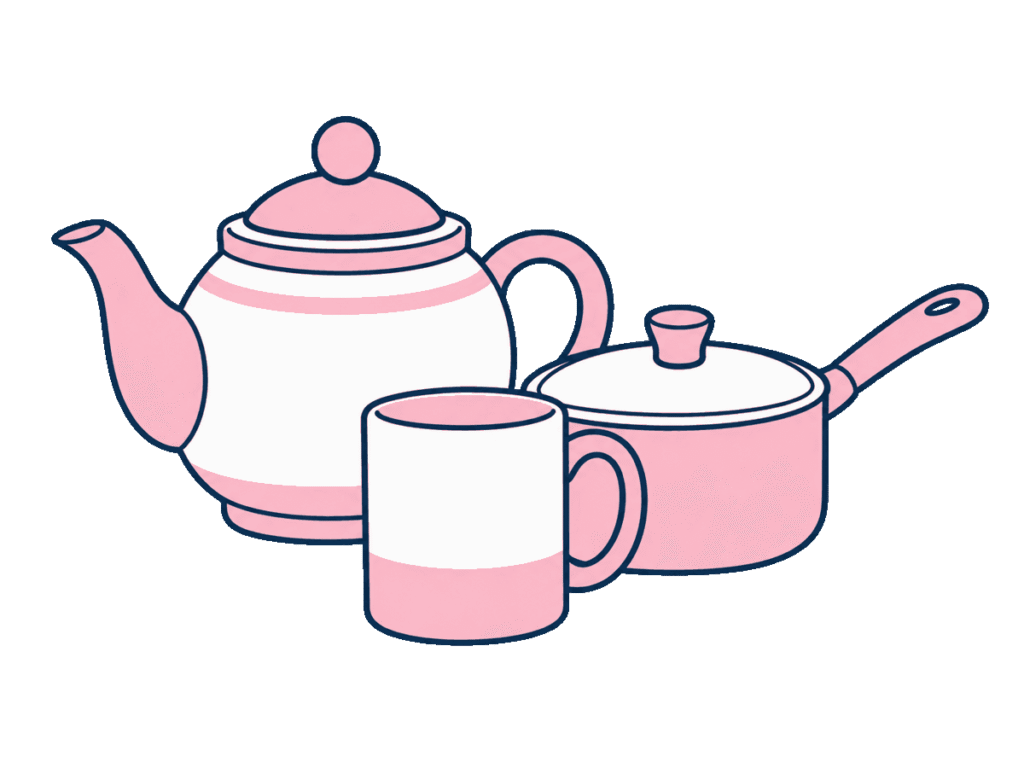
Class 21 is the everyday things of the kitchen and home: cookware, tableware, mugs, glasses, water bottles, lunch boxes, food containers, cleaning tools, brushes and combs. It also covers vases, candle holders, flower pots and pet bowls. It’s the seventh most used of the 45, with 53,680 UK registrations between September 2021 and September 2026, which is about 70% more registrations than the average class. The trap is that “kitchenware” isn’t one class: the knives, the kettle and the cupboard all sit somewhere else.
What class 21 covers
This is the official Nice heading, in full:
Household or kitchen utensils and containers; cookware and tableware, except forks, knives and spoons; combs and sponges; brushes, except paintbrushes; brush-making materials; articles for cleaning purposes; unworked or semi-worked glass, except building glass; glassware, porcelain and earthenware.
The heading reads like a list, but there’s a pattern. Class 21 covers hand-held things you cook with, serve on, drink from, store food in and clean with, plus glass and ceramics. Two exceptions stand out. Knives, forks and spoons go to class 8. Paintbrushes go to class 16. Most electric kitchen appliances leave too. One surprise stays: electric toothbrushes are class 21, like ordinary ones.
When you definitely need class 21
- You make or sell cookware, bakeware, tableware, mugs or glassware
- You sell water bottles, flasks, lunch boxes or food storage containers
- You sell cleaning tools, such as mops, cloths, sponges and brushes
- You make hair brushes, combs, toothbrushes or make-up brushes
- You sell vases, candle holders, flower pots or pet feeding bowls
When you might need class 21 without realising
Class 21 turns up in a lot of brands that don’t think of themselves as homeware businesses.
- Drinks and lifestyle brands. Branded water bottles are class 21, on 3,495 registrations, and so are mugs, on 6,091. A coffee shop or gym selling its own reusable bottles needs class 21 for them.
- Beauty brands. Make-up brushes are class 21, on 3,040 registrations, and so are cosmetic utensils, on 5,550, even though the make-up itself is class 3.
- Pet brands. Pet feeding bowls are class 21, on 2,668 registrations, and so are litter trays and bird feeders.
- Home fragrance and gift brands. Candle holders are class 21, on 2,234 registrations, and so are vases, on 2,980. The candles themselves are class 4.
If it goes in a kitchen cupboard, on a table, in a bathroom or next to a pet’s bed, class 21 is worth checking before you file.
Not sure whether your product is class 21 or somewhere else? The free class tools below show you where businesses like yours actually file, or you can give us a call.
What businesses actually claim in class 21
These are the terms that turn up most often in recent UK class 21 registrations:
| Term | Marks using it | Share of class 21 | How common |
|---|---|---|---|
| kitchen utensils | 7,938 | 14.8% | Most use this |
| cups | 6,268 | 11.7% | Recommended |
| mugs | 6,091 | 11.3% | Recommended |
| containers for household or kitchen use | 5,643 | 10.5% | Recommended |
| cosmetic utensils | 5,550 | 10.3% | Recommended |
| brushes | 5,489 | 10.2% | Recommended |
| moulds [kitchen utensils] | 5,170 | 9.6% | Recommended |
| bottles | 4,826 | 9.0% | Recommended |
| kitchen containers | 4,684 | 8.7% | Recommended |
| household or kitchen utensils | 4,619 | 8.6% | Recommended |
Kitchen utensils lead the class. Kitchen utensils is on 7,938 registrations, followed by cups on 6,268 and mugs. Containers, brushes, baking moulds and bottles fill out the top of the table, and lunch boxes appear on 3,596.
Because the broad terms are so widely claimed, naming what you actually sell helps. Adding water bottles or food storage containers costs nothing extra within the class and makes clear where your brand trades.
What class 21 does not cover
Knives, forks, spoons and cutters are class 8. The heading excludes them in terms. Cutlery appears on 2,039 class 8 registrations and kitchen knives on 929. Hand-operated cutters such as pizza cutters are class 8 too.
Most electric kitchen appliances are class 7 or class 11. A non-electric kettle is class 21, but an electric one is class 11, with electric kettles on 933 registrations there. Air fryers are class 11, and vacuum cleaners are class 7, on 2,011.
Cleaning products are class 3, and textiles are classes 24 and 25. The mop is class 21, but the cleaning liquid is class 3, where cleaning preparations appears on 2,701 registrations. Tea towels are class 24, on 1,644, and aprons are class 25, on 3,046.
Baby bottles are class 10, and cupboards are class 20. Feeding bottles for babies sit with medical and nursing goods in class 10. Kitchen cabinets and storage furniture are class 20.
Where these terms actually live
| Term | Belongs to | Marks using it |
|---|---|---|
| cleaning preparations | Class 3 | 2,701 |
| vacuum cleaners | Class 7 | 2,011 |
| cutlery | Class 8 | 2,039 |
| kitchen knives | Class 8 | 929 |
| electric kettles | Class 11 | 933 |
| tea towels | Class 24 | 1,644 |
| aprons | Class 25 | 3,046 |
Each of these is a separate registration. A mark in class 21 does not cover any of them.

The mistake I see most often
The mistake is calling the whole range kitchenware and filing one class. To a customer it’s all kitchen stuff. For trademark purposes, it splits four or five ways.
Take a kitchen brand selling pans, mugs, a knife block set, an electric kettle, tea towels and aprons. The pans and mugs are class 21. The knives are class 8. The electric kettle is class 11. The tea towels are class 24, and the aprons are class 25. File only class 21 and some of the most giftable pieces in the range aren’t covered.
The practical fix is to list every product and check each one, paying special attention to anything with a blade, a plug or a fabric. A UK application can’t have classes added later, so it’s worth getting the list right at the start.
Is class 21 the right class for you?
If you make or sell cookware, tableware, glassware, drinkware, food containers, cleaning tools, brushes, combs, vases, candle holders or pet bowls under your own brand, class 21 is very likely yours. If you also sell cutlery, electric appliances, cleaning products, kitchen textiles or furniture, look at classes 8, 11, 7, 3, 24, 25 and 20 as well.
Our free class tools build a specification from wording already accepted on real UK filings, so you can see what businesses like yours claim before you commit.
Common questions about class 21
Are aprons and tea towels class 21?
No. Aprons are clothing, so they’re class 25, and tea towels are household textiles in class 24. Oven gloves stay in class 21, with oven gloves on 1,414 registrations. A kitchen gift range often needs all three.
Why is a pizza cutter class 8 but a bottle opener class 21?
Because class 8 is for hand tools and cutting implements, including cutlery. Pizza cutters and kitchen knives are treated as cutting tools, so they’re class 8. A bottle opener is treated as a kitchen utensil, so it stays in class 21, with bottle openers on 3,164 registrations, along with salt and pepper mills.
Are water bottles and flasks class 21?
Yes. Water bottles, drinking bottles and vacuum flasks are class 21, with drinking bottles on 2,700 registrations. Baby feeding bottles are the exception: they’re class 10.
Which class covers pet bowls and litter trays?
Class 21. Pet feeding bowls, litter trays and bird feeders are household containers, with bird feeders on 1,590 registrations. Pet beds are class 20, pet toys are class 28, and collars and leads are class 18.
About these figures. Last researched 23 September 2026, from UK trademarks registered between September 2021 and September 2026 whose entry in this class is still active. That is current drafting practice rather than the historical register. Terms shown are those most frequently used in that period.

Four FREE ways to build your class 21 terms
Start with whichever you already have. They all live in the same place.
 Let us read your websiteBest if your site already describes what you sell.Start this tool →4Free AI toolAnswer a few questionsBest if you are pre-launch, or your site does not tell the whole story.Start this tool →
Is your brand name actually free to use?
Classes are half the picture. The other half is whether somebody already holds your name in them. Our free search checks the UK register in seconds, no sign up and nothing to pay.
 0161 833 5400