

Class 12: Vehicles
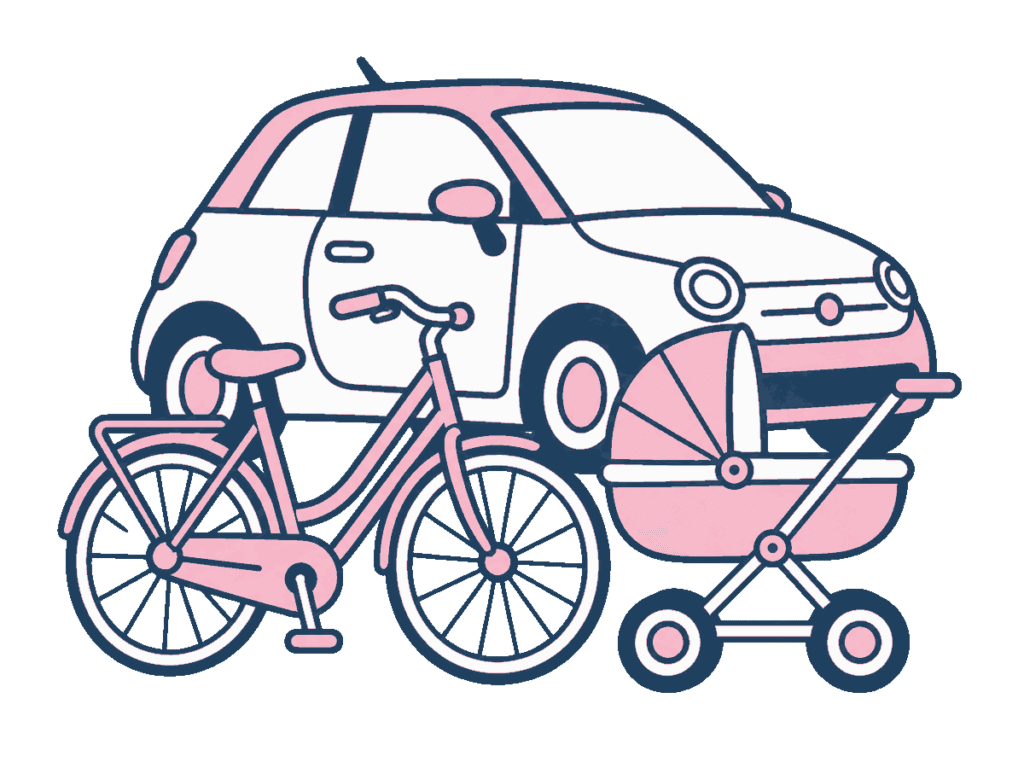
Class 12 is vehicles: anything that moves people or goods by land, air or water, and most of the parts that go on them. Cars, bikes, e-bikes, motorbikes, boats, drones, prams and wheelchairs all sit here. It’s the 27th most used of the 45, with 17,716 UK registrations between September 2021 and September 2026, which is about 45% fewer registrations than the average class. The surprise is who files most: not car makers, but cycling brands.
What class 12 covers
This is the official Nice heading, in full:
Vehicles; apparatus for locomotion by land, air or water.
It’s one of the shortest headings, and it’s wider than it looks. “Apparatus for locomotion” takes in far more than cars: bicycles, pushchairs, mobility scooters, drones and boats all count. Vehicle parts and accessories built for a vehicle, such as tyres, saddles, roof racks and seat covers, usually sit here too. What doesn’t sit here is the service of using vehicles: driving people, renting cars or delivering goods.
When you definitely need class 12
- You make or sell cars, motorbikes, vans, boats or caravans
- You sell bicycles, e-bikes or e-scooters, or parts such as frames, saddles and tyres
- You sell car accessories built for the vehicle, such as seat covers, roof racks or child car seats
- You sell prams, pushchairs, wheelchairs or mobility scooters
- You make drones or other aircraft
When you might need class 12 without realising
Class 12 turns up in a lot of businesses that don’t think of themselves as vehicle makers.
- Baby brands. Prams, pushchairs and child car seats are class 12, with pushchairs on 601 registrations and safety seats for children, for vehicles on 595.
- Mobility and care brands. Mobility scooters are class 12, on 733 registrations, and so are wheelchairs, even though crutches are class 10.
- Drone and aerial filming businesses. Drones sit here, on 468 registrations. The camera or the flight software sold on its own is class 9.
- Car accessory sellers. Seat covers for vehicles are class 12, on 681 registrations, and so are roof racks and bike carriers.
If your product carries people or goods, or is built to fit onto something that does, class 12 is worth checking before you file.
Not sure whether your accessory is class 12 or somewhere else? The free class tools below show you where businesses like yours actually file, or you can give us a call.
What businesses actually claim in class 12
These are the terms that turn up most often in recent UK class 12 registrations:
| Term | Marks using it | Share of class 12 | How common |
|---|---|---|---|
| bicycles | 2,407 | 13.6% | Most use this |
| vehicles | 1,994 | 11.3% | Recommended |
| electric vehicles | 1,875 | 10.6% | Recommended |
| electric bicycles | 1,813 | 10.2% | Recommended |
| motorcycles | 1,237 | 7.0% | Recommended |
| cars | 1,180 | 6.7% | Recommended |
| bicycle tyres | 984 | 5.6% | Some use this |
| upholstery for vehicles | 905 | 5.1% | Recommended |
| pumps for bicycle tyres | 887 | 5.0% | Some use this |
| bicycle frames | 873 | 4.9% | Recommended |
Bicycles lead the class. Bicycles is on 2,407 registrations, ahead of vehicles on 1,994. Add electric bicycles, bicycle tyres, frames, saddles and pedals, and cycling makes up a big share of the table. Electric vehicles are close behind, with electric vehicles on 1,875.
That matters if you’re a cycling or e-mobility brand. Class 12 is where your competition is, and a name that looks clear against car makers may still clash with another bike brand. It also pays to name the parts you actually sell, not just the vehicle.
What class 12 does not cover
Engines not for land vehicles, and workshop machinery, are class 7. A car engine is class 12, but an engine for a boat or aircraft, and the machines used to build or repair vehicles, are class 7. A mobility company that also makes its own workshop equipment needs both classes.
Servicing, maintenance and repair are class 37. A vehicle brand with service centres is providing a class 37 service, where vehicle maintenance appears on 457 registrations and car washing on 205.
Transport, rental and delivery are class 39. The vehicle is class 12; using it to carry people or goods, or renting it out, is class 39. Vehicle rental appears on 816 class 39 registrations and taxi services on 632.
Navigation devices, chargers and vehicle software are class 9. A connected-vehicle business needs class 9 for its technology. Charging stations for electric vehicles are class 9, on 1,747 registrations there, and so are dashboard cameras, sat navs and car batteries.
Where these terms actually live
| Term | Belongs to | Marks using it |
|---|---|---|
| protective helmets | Class 9 | 2,056 |
| charging stations for electric vehicles | Class 9 | 1,747 |
| bicycle lights | Class 11 | 1,824 |
| scooters [toys] | Class 28 | 1,859 |
| vehicle maintenance | Class 37 | 457 |
| car washing | Class 37 | 205 |
| vehicle rental | Class 39 | 816 |
| taxi services | Class 39 | 632 |
Each of these is a separate registration. A mark in class 12 does not cover any of them.

The mistake I see most often
The mistake is assuming that a name on a vehicle also protects the transport or hire business behind it. It doesn’t. The vehicle is a class 12 product. Carrying passengers, renting vehicles out or delivering goods are class 39 services, and they need their own class.
E-scooter and e-bike hire schemes show it clearly. The scooters and bikes carry the brand, so class 12 feels like the obvious choice. But customers are paying for the rental, not buying the scooter. The app they book through is class 9, the rental is class 39, and servicing the fleet is class 37. File only class 12 and the business customers actually pay for may not be covered.
The practical fix is to ask what customers pay you for: the vehicle itself, or what you do with it. If it’s what you do with it, the service classes matter at least as much. A UK application can’t have classes added later, so it’s worth getting the list right at the start.
Is class 12 the right class for you?
If you make or sell vehicles, bikes, e-bikes, boats, drones, prams, wheelchairs or vehicle parts and accessories under your own brand, class 12 is very likely yours. If you also repair, rent out or transport with them, or sell vehicle technology, look at classes 37, 39 and 9 as well.
Our free class tools build a specification from wording already accepted on real UK filings, so you can see what businesses like yours claim before you commit.
Common questions about class 12
Are car mats class 12?
No, and it surprises people. Floor mats for vehicles are class 27, with carpets, rugs and other floor coverings. Seat covers, roof racks and steering wheel covers stay in class 12. A car accessories brand selling mats and seat covers needs both classes.
Is a bike helmet class 12?
No. Bicycle and motorcycle helmets are class 9, as protective equipment, where protective helmets appear on 2,056 registrations. Bike lights are class 11, with bicycle lights on 1,824 registrations. The bike and its parts are class 12, so a cycling brand often needs all three.
Is a child’s scooter class 12 or class 28?
It depends what it is. Toy scooters are class 28, where scooters [toys] appears on 1,859 registrations. Push scooters sold as vehicles and electric scooters are class 12. Toy cars and ride-on toys are class 28 as well.
Are e-bike batteries and chargers class 12?
No. The e-bike and its motor are class 12, but batteries and battery chargers are class 9, even when they’re made for one bike. An e-bike brand selling spare batteries or chargers under its own name needs class 9 as well, and charging stations for electric vehicles sit in class 9 too.
About these figures. Last researched 23 September 2026, from UK trademarks registered between September 2021 and September 2026 whose entry in this class is still active. That is current drafting practice rather than the historical register. Terms shown are those most frequently used in that period.

Four FREE ways to build your class 12 terms
Start with whichever you already have. They all live in the same place.
 Let us read your websiteBest if your site already describes what you sell.Start this tool →4Free AI toolAnswer a few questionsBest if you are pre-launch, or your site does not tell the whole story.Start this tool →
Is your brand name actually free to use?
Classes are half the picture. The other half is whether somebody already holds your name in them. Our free search checks the UK register in seconds, no sign up and nothing to pay.

 0161 833 5400