





Established Representative at the UK Intellectual Property Office — since 2008New scam warning · 26 Nov: Ryecroft Legal Trademark Notice: What the Reg…

EU and international

Someone in Another Country Is Using My Brand. Can I Stop Them?

A UK trademark is a territorial right and stops at the border. What you can do when a business overseas uses your name, and where you should be registered.

Published 26 Aug 2026By Jonathan Paton8 min read

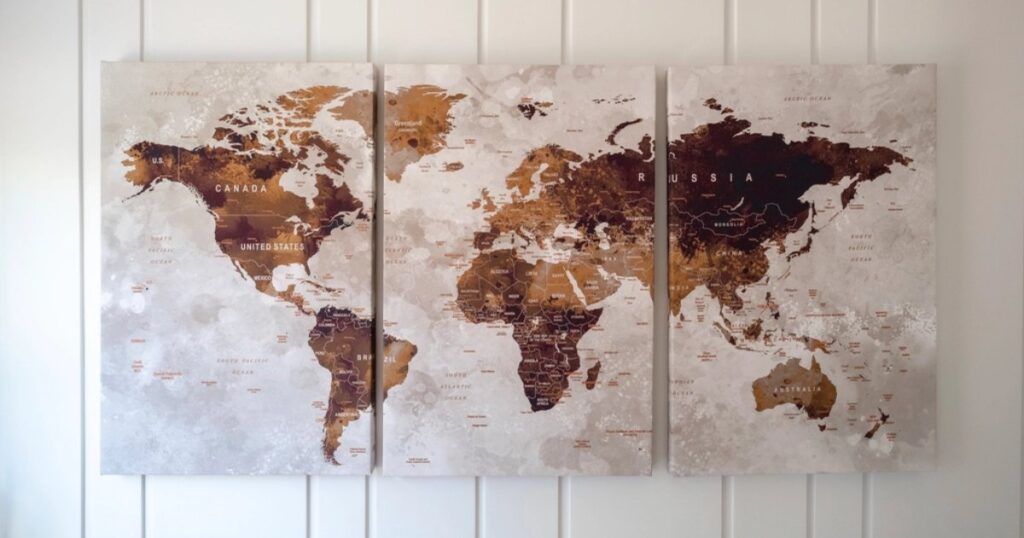
World map on a wall, illustrating that trademark rights are territorial and stop at the border

A customer sends you a link. There’s a business on the other side of the world using your name, your colours, and in the worst cases your actual website copy. The first question is always the same: can I make them stop?

The answer depends almost entirely on one thing, and it isn’t who was first or who’s bigger. It’s where you’re registered.

Does my UK trademark protect me abroad?

No. A trademark is a territorial right, so your UK registration gives you rights in the UK and nowhere else.

That’s probably the most expensive misunderstanding in this whole subject, and it catches out businesses that have done everything else properly. People assume protection travels with the business as it grows. It stops at the border.

It’s worth saying this isn’t a loophole or an oversight. It’s how the system is built. Every country runs its own register, applies its own law and decides for itself, which is why the same brand can win in one place and lose in another within a couple of months, with neither office having got it wrong.

Someone overseas is using my name. What can I actually do?

It comes down to whether you hold a right in their country.

If you’re registered there, you have real options: a cease and desist backed by an actual right, a platform takedown, customs enforcement in some territories, and court action if it comes to that. If you’re not, your position is weaker but not always hopeless. Platform takedowns can still be possible on other grounds, and if they’re selling into a country where you do hold a registration that may give you a route even though their home base doesn’t. If they’ve applied to register your name, you may be able to oppose it.

What you generally can’t do is force a business in a country where you hold no rights to stop using a name simply because you used it first somewhere else.

There’s a question I’d ask before any of that, though, and it’s the one people skip. What outcome are you actually trying to achieve? Whether somebody can start legal action is rarely the interesting question. Do you want them gone, or do you want them out of your actual market, or do you just want them to stop using your product photography? Those are three different problems with three different price tags, and the cheapest one is often achievable without a lawyer going anywhere near it.

What if they registered it there before I did?

This is the situation that hurts, and it’s more common than people expect in fast-growing markets.

Sometimes it’s opportunistic, where somebody watches which brands are gaining traction elsewhere and registers the name locally, then waits. Sometimes it’s entirely innocent and two businesses simply arrived at the same name.

Either way, if they hold the registration and you don’t, expanding into that market can mean negotiating with them, rebranding for that territory, or challenging the registration on grounds such as bad faith or non-use. All three are slower and more expensive than filing there would have been, which is the whole argument for doing it early.

Which countries should I actually be registered in?

Not all of them. That’s neither affordable nor necessary, and anyone telling you otherwise should be asked why.

The sensible test is where you actually sell, where you genuinely plan to sell in the next few years, and where a copy of your brand would do you real commercial damage. For a lot of UK businesses that’s a short list.

There’s more than one route. A single international application through the Madrid System covers multiple territories from one filing, which looks tidy and sometimes is. Filing directly in each country through local representatives costs more upfront and tends to produce fewer surprises later. Which is right depends on how many territories you need and how straightforward your mark is, and we’ll tell you honestly which one fits rather than defaulting to whichever is easiest to quote for.

Why this bites smaller businesses harder

A large group has people whose job this is. They can file broadly, watch several registers, and absorb the cost of a mistake in a market that didn’t work out.

A smaller business is usually making the call with imperfect information and a finite budget, and that’s a perfectly rational way to run a company. The difficulty is that the consequence lands differently. A dispute that’s an irritation to a corporate can genuinely damage a business with one brand and a handful of staff. That asymmetry is the reason I’d push almost every SME towards prevention over enforcement. Catching this at the point you decide to sell into a new market costs very little. Catching it after somebody’s registered your name there costs a great deal.

What should I do now?

Write down where you sell today and where you expect to sell within three years. Then check what you’re actually registered for in each of those places, because most businesses have never seen that in one list. If somebody’s already using your name overseas, get the position checked before you send anything, since a letter threatening something you can’t enforce does more harm than good. And if you’re expanding, treat each new market as its own decision rather than an extension of the registration you already hold.

Our international trademark registration page sets out the routes and what each genuinely costs, and a trademark consultation and audit will tell you where you’re protected and where you’re exposed.

You can book a free 15-minute call, email enquiries@thetrademarkhelpline.com or call 0161 833 5400.

This article is for information purposes only and does not constitute trademark advice or guidance.


Questions about this

Someone in another country is using my brand. Can I stop them?

Whether you can stop them depends on the country, the rights you hold and what the other party is doing. The most important starting point is whether you have applied to register, or have registered, your trademark in the country concerned.

We believe international problems are cheapest to address before a copycat becomes established. A brand without a registered trademark may still have rights through earlier use, goodwill, copyright, designs, domain procedures, passing off or local unfair competition laws. However, those rights vary between countries and can be harder and more expensive to demonstrate. A UK trademark may still help where the activity targets UK customers, but it does not automatically create rights abroad.

TMH assesses where the other business is based, where it trades, who used the brand first in that territory, any local applications or registrations, what has been copied and the financial or reputational effect. Depending on the result, the options may include correspondence, opposition or cancellation, a platform takedown, customs action, a negotiated territorial agreement or formal legal proceedings.

Registering in every country where you trade is ideal, but budget and commercial priorities do not always make that realistic. This is why we recommend regular brand and trademark monitoring wherever you trade or hope to trade, not only where you already own registrations. Monitoring does not create rights, but it can provide early warning while affordable options may still be available.

Our Monitoring and Defence packages include up to two hours of enforcement support in each 12 month period. In many straightforward matters, this is enough to assess the issue and send a Cease and Desist letter in an attempt to stop it before it becomes a larger dispute.

TMH manages strategy, evidence, correspondence and other paralegal activity from the UK. Formal foreign register proceedings, court action and some local enforcement require a local representative. Where that happens, we coordinate a trusted partner and reduce their administrative workload. The client keeps one UK point of contact and usually pays no more for the local representative than if instructed directly through our established arrangement.

This gives the client early warning, a proportionate enforcement route and coordinated international support with cost exposure kept to a minimum. Do not send a threatening letter before the position has been assessed.

Our International Trademark Registration page explains how TMH coordinates future applications through one UK point of contact.

Jonathan PatonAnswered by Jonathan Paton, Founder & CEO
Can I obtain a global trademark?

No. There is no single trademark registration that protects your brand in every country. Protection is territorial, so a UK registration does not give you rights wherever your customers happen to be.

We believe international protection works best when it follows the business plan. A long list of countries can look reassuring while missing the market where products are made, a distributor is being appointed or sales are about to grow. A trademark is an asset, and it is worth most where the business is actually earning.

Our international trademark registration service compares the routes. The Madrid system lets you seek protection in several countries through one international application. It simplifies the paperwork, but it does not create one worldwide right: each country examines the application under its own rules and can refuse it. Harper Beckham’s beauty brand is a recent example, registered in the UK but refused in the US because of an earlier American mark. An EU trademark is different again: one right covering the EU member states, but not the UK. Neither route removes the need to check for earlier rights in the countries that matter.

TMH maps where you sell, manufacture and plan to expand, then recommends a route. In our experience, Madrid is often over-recommended, and local representation usually gives the best chance where objections are likely. For the EU, our EU trademark registration service checks whether a single EU right fits the plan.

You get a country-by-country plan tied to the places where your brand earns its money.

Jonathan PatonAnswered by Jonathan Paton, Founder & CEO
Jonathan Paton
Written by

Jonathan Paton

Founder & CEO

Read more about Jonathan →
Temmy the owl giving a thumbs up

Free portal

Get access to our free portal

Enhanced features including International Trademark and UK Company Portfolios, Watchlists, Alert and Monitoring Services and much more.

Best next step · Free

Is your brand name free to use?

Latest from The Trademark HelplineKnowledge Hub
Temmy the owl with a question

Book your free 15-minute callChoose a day and time and a specialist will call you.

or call 0161 833 5400

Download Your Guide

Fill in the form below to access your free guide.