
Trademark Renewal
Last reviewed by Jonathan Paton
Most trademarks, including UK and EU registrations, last 10 years and can be renewed every 10 years for as long as you want them.
You can renew in the 6 months before it expires, or up to 6 months afterwards for an extra fee. Miss both and the trademark is removed from the register.
- UKIPO registered since 2008
- Rated excellent by 250+ businesses
- 4,176 UK trademarks registered between 2008 and 2026
- 0161 833 5400
- Check my renewal date
Renew online in a few minutes
Renewing is straightforward. Find your trademark below, check the details and renew. If your business has changed since you filed, read the next section first: a quick review now can save you paying twice later.

Prefer us to handle it? Book a free renewal call
Your renewal date
When is my trademark due for renewal?
For UK and EU trademarks, your renewal date is 10 years from the filing date, the day the application was made, not the day it was registered. For most trademarks that’s a few months earlier than owners expect.
You can find it by searching the official register, the UK IPO’s for UK trademarks or the EUIPO’s for EU trademarks, where it’s shown as the expiry date. If you’re a client, it’s on your Temmy portal alongside every other mark you own.
The registry usually sends a reminder to the address on the register, so if you’ve moved, or the trademark is still at an old address or with a previous adviser, that reminder may never reach you. That’s one of the most common reasons trademarks lapse.
 Laura Spencer
Trademark Administrator
“Regular reviews of your trademarks are incredibly important. When ownership or structure changes, you move address, or you’re simply busy running your business, you aren’t necessarily thinking ‘I need to update my trademark’.
We recommend an annual review of your trademarks: the goods and services, jurisdictions, ownership and address.
We also recommend monitoring reports at least quarterly, so you know about potential infringements at Companies House, on impersonator websites, social media and online marketplaces, wherever people go to find you.
Somebody being confused for you is about more than lost business. Reputational damage can be hard to repair, especially online.”
Official fees
How much does trademark renewal cost?
These are the official UK and EU fees, and they apply however you renew. Other countries set their own, and the cost calculator has them. You can drop classes you no longer need when you renew, which reduces the fee. Our own fee is set out clearly in your quote before we start.
Before you renew
Renewal is the best time to review your trademark
Ten years is a long time in a business. Products change, the logo changes, sometimes the owner changes, and renewing exactly what was filed a decade ago isn’t always the right answer. It’s also the one moment when fixing it costs least, because you can’t add classes or goods and services to an existing trademark later.
If you’ve added products or services since you filed, renewing exactly what’s on the register can mean renewing now, then filing a new application for what’s missing later, and paying for both. Keep the existing registration renewed, because its original filing date can’t be replaced. A review before you renew shows whether you also need a new application, and exactly what it should cover.
That’s why we advise a fresh Trademark Clearance Audit and Consultation before every renewal. It does two jobs:
It checks the trademark still fits the business.Is the owner right? Does the specification cover what you sell today, and what you’ll sell next? Is the logo on the register the one you actually use?
It looks for threats you may have missed.If you haven’t had active monitoring in place, similar marks may have been filed, or lookalikes may be trading, without you knowing. Renewal is the time to find out, not after a customer mentions it.
The aim is the right solution, not the quickest one. Sometimes that’s a straight renewal. Sometimes it’s renewal plus a new application for what’s changed. Occasionally it’s a new application instead.
Proof of use
Why we log it at renewal
Renewing a UK or EU trademark doesn’t require any evidence that you’re using it. But once a trademark has been registered for five years, use starts to matter. If you want to enforce it against someone else, or they challenge it, you may be asked to prove you’ve genuinely used it, for the goods and services you’re relying on, in the last five years. Anything you can’t show use for can be removed.
So at renewal we collect and log your proof of use: dated examples of the trademark on products, packaging, your website and invoices. If we ever need to enforce, the evidence is already on file rather than being pieced together under a deadline.
Your options
Renew or file a new application?
If you can’t show use for some or all of your trademark, or the brand has moved on, a new application can be the better route. A new registration starts its own five-year period before proof of use can be demanded, and it lets you file the trademark as you use it today, with the classes and terms you actually need.
The cost of a new application isn’t much different from the cost of a renewal, so the decision is about what protects you best and saves on future fees, not which is cheaper today. It’s not a way around use altogether: a new application still has to be made in good faith, for goods and services you genuinely intend to trade in. We’ll tell you which route fits your situation.
Key dates
The renewal timeline
-
6 months before expiry
Renewal window opens. Renew at the standard fee
-
Expiry date
Still on the register, but the renewal is now late
-
Up to 6 months after expiry
Renew with a late fee (£60 in the UK)
-
6 to 12 months after expiry
Removed from the register. In the UK you can ask to restore it by post, with a written statement explaining why it wasn’t renewed on time
-
More than 12 months after expiry
Too late to restore. A new application is the only route, and someone else may have filed first
Renewal is the final stage of the trademark process. See what happens at renewal and expiry.
Missed it?
I’ve missed my renewal date. What now?

Don’t pay anyone who writes to you about it until you’ve checked who they are (see the scam warning below).
Within 6 months
You can still renew. It costs the normal fee plus a late fee (£60 in the UK).
6 to 12 months
The trademark has been removed. In the UK you can ask the IPO to restore it. You’ll need to explain why it wasn’t renewed on time, and the IPO decides whether to accept that. We can help you put the statement together.
More than a year
The registration can’t be brought back. You’d need to file a new application, and anything filed by someone else in the meantime could stand in your way. A clearance audit will tell you where you stand before you spend anything.
Changes
Can I change my trademark when I renew?

You can removeclasses, goods or services at renewal, and it’s often worth doing if parts of the specification no longer fit what you sell.
You can’t add anythingNew goods, new services, a new logo or a different version of the name all need a new application, which is why renewal is the moment to review all of it.

Changing the owner is separateMoving a trademark from your own name to your company, for example, is a separate recordal, not part of renewal. If the ownership is wrong, fix it before or alongside the renewal.
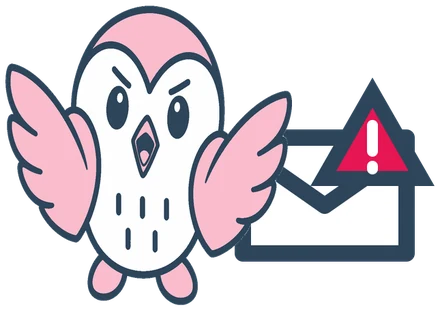
Watch out for renewal scams
Because renewal dates are public, owners approaching renewal receive official-looking letters and emails asking for payment, often at several times the real fee and sometimes for nothing at all. They use names that sound like registries and set urgent deadlines.
The simple rule: if you didn’t ask for it, check before you pay. Our trademark scam directory lists the ones we’ve seen, including renewal letters from Stern Young & Partners and Cohen Klein & Associates. Renewing early is one of the best defences: once a trademark has been renewed, most of these letters stop.

Renewing EU and international trademarks
- EU trademarks also last 10 years from filing and are renewed with the EUIPO, not the UK IPO.
- International registrations under the Madrid system are renewed centrally through WIPO every 10 years, covering the countries you choose to keep. Elsewhere, an owner without a local business presence usually needs a local representative to deal with the registry.
- UK “comparable” trademarks created from EU trademarks at the end of the Brexit transition keep the original EU dates but are renewed separately in the UK, so owners with an EU trademark from before 2021 often have two renewals to deal with.
After Brexit: what to check when you renew an EU trademark
You need European representation for anything beyond the renewal itself. Since 1 January 2021, UK advisers can’t act before the EUIPO. A business without a base in the EEA can still renew its EU trademark directly, but changing the owner or address, responding to the EUIPO or defending the mark needs a European representative. We arrange this through trusted European representatives, so you keep one point of contact.
Your EU trademark no longer protects you in the UK. EU trademarks stopped covering the UK on 1 January 2021, and since January 2026 use in the EU no longer protects a comparable UK trademark from a non-use challenge. If you’re renewing an EU trademark and still trade in the UK, check you hold a UK registration you actually use here. Brexit’s Final Blow to EU Trademarks explains the 2026 change.
We handle UK, EU and international renewals, working with trusted European and local representatives where they’re needed. EU trademark registration and international trademark registration explain how the systems fit together.
How we handle your renewal
We confirm the date and check the record: owner, address, classes and status.
We review the trademark with you through a clearance audit and consultation, and log your proof of use.
We recommend the right route: renew, renew and add a new application, or file afresh.
We file with the IPO, EUIPO or WIPO and confirm when it’s done.
We set the next reminder, and your portfolio shows every future renewal date. Adding monitoring means you hear about threats as they happen, not ten years later.

Renewal coming up?
Book a free 15-minute call. We’ll confirm your date, check the record and tell you whether a straight renewal is the right answer.
Trademark renewal questions
How long does a trademark last?
UK and EU trademarks last ten years from the filing date, and international registrations ten years from registration. Each can be renewed for further 10-year periods, indefinitely, as long as the renewal fee is paid on time.
How much does it cost to renew a trademark?
In the UK, the official fee is £245 for the first class and £60 for each additional class, plus £60 if you renew up to 6 months late. Renewing an EU trademark online costs €850 for one class, €50 for the second and €150 for each class after that, plus 25% if you renew late. Our own fee is set out clearly in your quote before we start.
What happens if I don’t renew my trademark?
After the 6-month late renewal period it’s removed from the register. In the UK you then have 6 more months to ask for it to be restored, with a statement explaining why you didn’t renew. After that it can’t be restored.
Do I need proof of use to renew a trademark?
No. Neither the UK IPO nor the EUIPO asks for evidence of use at renewal. But once a trademark has been registered for five years, you may have to prove genuine use if you enforce it or someone challenges it, and anything you can’t show use for can be removed. That’s why we log your proof of use when you renew.
Can I renew my trademark early?
Yes, in the 6 months before the expiry date. The new 10-year period still runs from the old expiry date, so you lose nothing by renewing early.
Is it better to renew or file a new application?
It depends on how the trademark and the business have changed, and whether you can show use. A new application restarts the five-year period before proof of use can be demanded and lets you file what you use today, for a similar cost. It still has to be made in good faith, for goods and services you genuinely use or intend to use: refiling only to avoid proof of use can be treated as bad faith. We’ll recommend the right route after reviewing it with you.
I’ve received a renewal letter. Is it genuine?
Many aren’t. Genuine reminders come from the registry, such as the UK IPO or the EUIPO, or from the adviser you already use. Be wary of anyone you haven’t dealt with asking you to pay to have your trademark “listed”, “published” or “monitored”. Check our scam directory or send it to us before paying anything.