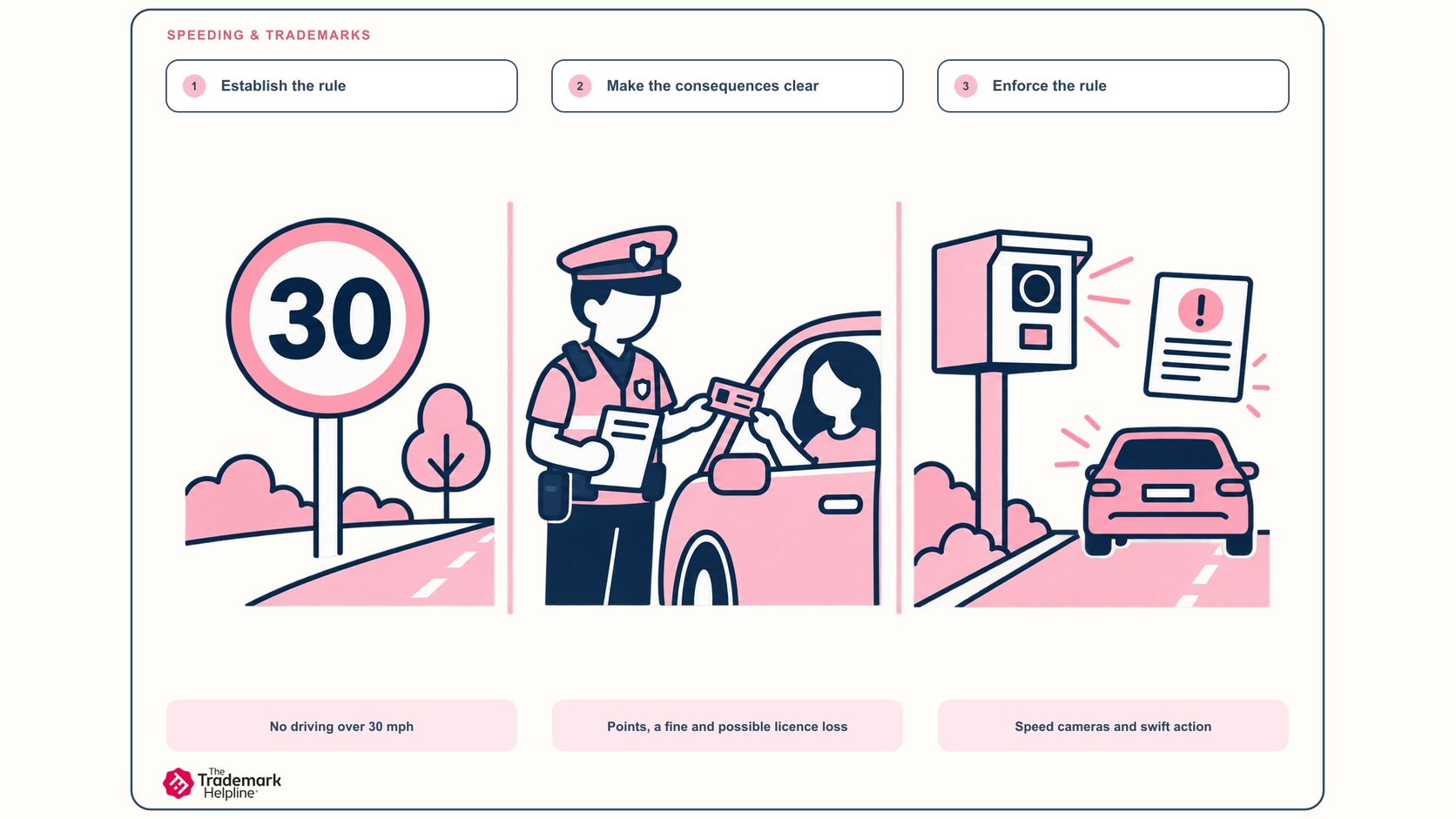
Word a trademark specification by describing the goods and services you actually offer, and genuinely plan to offer over the next five years, in clear and specific terms, using the UK Intellectual Property Office’s (IPO) approved wording wherever it fits. The specification is the list of goods and services in your application, and it sets the limits of what your trademark protects. Too narrow and you leave gaps. Too vague or too broad and the IPO may object, or the registration can be challenged later. And once the application is filed, you can narrow the list but you can’t add to it.
Below I have set out what a specification is, where it tends to go wrong, and the steps and timeframes for getting the wording right before you file. It is the same order of work we follow when we file through our UK trademark registration service, where choosing the classes and drafting the terms is part of the job.
Why does the wording matter as much as the name?
Because the name only tells you what is protected, and the specification tells you what it is protected for. In July we posted on The Trademark Helpline’s LinkedIn page that a lot of businesses focus almost entirely on the name. Is it available? Is it distinctive? Is anything similar already registered? All important questions. But the protection you end up with also depends on the goods and services listed in the application, and because that part can feel like admin, it is easy to rush.
The post made a second point that I agree with completely. The wording needs to reflect the business as it is today and the direction it is likely to grow in. A UK trademark lasts 10 years before it needs renewing, so a rushed list can stay with you for a long time.
What is a trademark specification?
It is the list of specific goods and services your trademark covers, grouped into classes. There are 45 classes: 1 to 34 for goods and 35 to 45 for services. Our guide to trademark classes explains what sits in each one. Inside each class you choose terms, which are the more specific descriptions.
GOV.UK uses clothing as its example: class 25 covers clothing, and within it you might choose terms such as “sports clothing” or “athletic clothing”. Your trademark is only protected for the terms you select. The IPO charges by class, not by term, so the official fee of £205 for one class doesn’t change with the number of terms, although each extra class costs £60.
Can you write your own wording, or use the IPO’s terms?
You can do either, but pre-approved terms are the safer starting point. The IPO’s classification search service is a database of more than 80,000 entries, and the IPO’s own classification guide says it represents the Registrar’s view of where goods and services belong. Using a term from it means the wording is already accepted as clear and correctly classified.
Your own wording can work, and sometimes it’s the only way to describe something new accurately. But it has to be clear and precise enough for anyone reading the register to understand what is covered. The classification guide gives examples of wording that fails:
- “and the like goods”, because it doesn’t say which goods.
- “electrical and electronic goods” in a retail specification, because it is too vague to identify the types of goods.
- “machines” on its own, which is too vague, although “machine tools” is acceptable.
Retail services are a common trap. Selling goods is a service in class 35, and the wording needs to name the goods being sold, for example retail services connected with the sale of clothing, rather than retail services on their own.
How broad is too broad for a trademark specification?
Too broad is where you claim goods or services you have no real intention of trading in. In SkyKick v Sky, decided on 13 November 2024, the UK Supreme Court held that applying for a mark without intending to use it for everything claimed can be bad faith, and a registration can be cut back as a result. We covered the ruling in our piece on the Supreme Court and overly broad filings.
The IPO then changed its practice. Its guidance of 27 June 2025 says examiners will look for specifications that are manifestly broad, and a claim for all 45 classes or all goods in class 9 will trigger an objection. It also asks applicants to think about whether broad terms like “computer software” or “clothing” really match what they do, or whether narrower wording fits better.
Breadth also matters later on. Once a mark has been registered for five years, terms you haven’t genuinely used can be revoked for non-use, one term at a time.
How do you word a trademark specification, step by step?
Here is the order I would work in, with the timeframe attached to each stage.
- List what carries the name, today and over the next 5 years. Write down every product and service that will be sold under the name, including add-ons like merchandise, training or online sales. Then add what you genuinely plan in the next five years, which is the horizon GOV.UK itself uses.
- Match each item to a class. A skincare brand that also runs workshops needs goods and services classes, not just one.
- Choose terms, starting with approved wording. Use the IPO’s database first. Write your own wording only where nothing fits, and keep it plain and specific.
- Test the breadth. Read each term and ask whether there’s a real plan behind it. If you would struggle to explain why it’s there, it probably doesn’t belong.
- File, then examination, about 2 to 3 weeks. The IPO usually sends its examination report within 2 to 3 weeks. If it objects to the wording, you have 2 months to respond, and you can clarify or narrow the terms but not widen them.
- Publication, 2 months, then registration. Once accepted, the application is published for 2 months so others can oppose it. With no issues, registration usually takes around 3 to 4 months in total.
- Review at 5 years and at renewal, 10 years. Check the specification still matches the business. Anything new that falls outside it needs a new application. Our trademark renewal service sends a reminder before the renewal date, which is a good time for that check.
Before any of this, it’s worth running a free trademark search on the name, because every term you add is another place your mark could meet someone else’s.
What happens if you get the wording wrong?
It depends which way it’s wrong. Vague wording usually gets picked up at examination, and you lose weeks sorting it out. Overly broad wording can draw a bad faith objection, or be cut back years later. Wording that is too narrow is the quietest problem, because nobody tells you. The gap only shows when someone else starts trading in it. As the post put it, if the terms are too narrow or something important is missed, it may not be a quick fix later. That’s the thinking behind our piece on why the most expensive trademark application is the one that fails.
How can we help with your specification?
Drafting specifications is a big part of my work at The Trademark Helpline. I start with what the business actually does and where it’s heading, and only then move to classes and terms, because that order tends to catch the gaps. If you’d like a second pair of eyes before filing, our trademark consultation and clearance audit starts from £99, and consultation is free for new clients.
You can book a free call, email enquiries@thetrademarkhelpline.com or ring us on 0161 833 5400. The name matters, but so does what sits behind it.
Related questions
- Can I register a trademark myself, or do I need an attorney?
- Does a UK trademark protect me everywhere I sell?
- What happens if someone copies my logo? Can I sue?
This article is for information purposes only and does not constitute trademark advice or guidance. Last reviewed 25 September 2026. First shared as a LinkedIn post.
Questions about this
What is a trademark specification?
It is the list of specific goods and services your trademark covers, grouped into classes. There are 45 classes, 1 to 34 for goods and 35 to 45 for services, and within each you choose terms that describe what you sell. Your trademark is only protected for the terms selected, so the specification sets the limits of your protection just as much as the name does.
 Answered by Laura Spencer, Paralegal
Is it better to use the IPO’s pre-approved terms or write my own wording?
Pre-approved terms are the safer starting point. The IPO’s classification database holds more than 80,000 entries, and using one means the wording is already accepted as clear and correctly classified. Your own wording can work, especially for something new, but it has to be precise. Phrases like and the like goods, or machines on its own, are too vague, and retail services need to name the goods being sold.
Answered by Laura Spencer, ParalegalDoes adding more terms to a class increase the IPO fee?
No. The IPO charges by class, not by term, so the £205 official fee for one class stays the same however many terms you list, with each extra class costing £60. That does not make it wise to list everything, though. Terms with no real plan behind them can draw a bad faith objection, and terms that go unused can be revoked one at a time once the mark has been registered for five years.
Answered by Laura Spencer, Paralegal