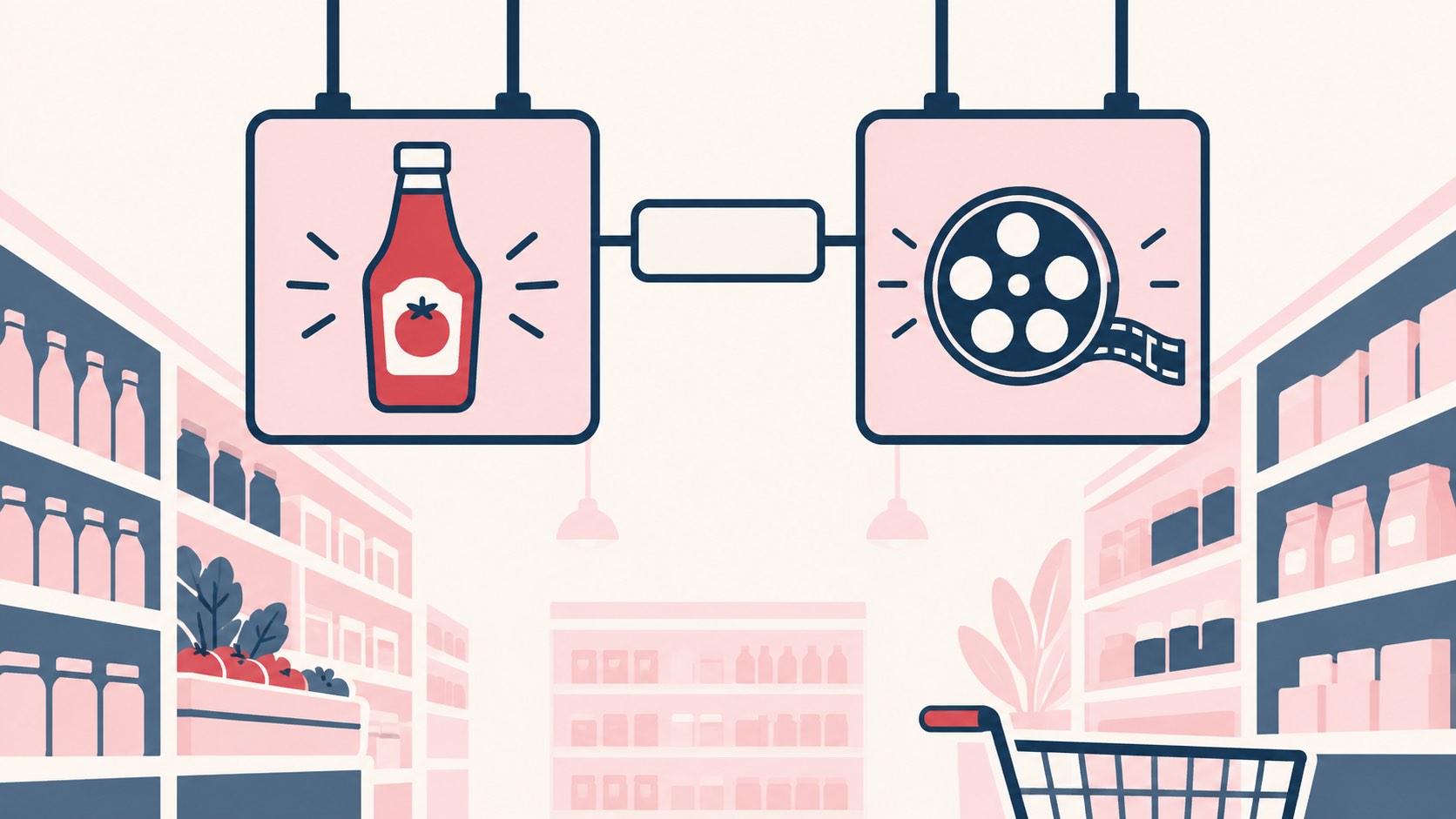
Yes. A big brand can oppose your trademark in a different industry, and it doesn’t need an identical name to do it. In the UK it has two main routes: arguing that your goods or services are similar enough to its own that customers could be confused, or arguing that its mark has a reputation here and your mark would take unfair advantage of it or harm it, whatever you sell. Whether it would win is a separate question. Often the threat alone is enough, and that’s the part most owners don’t see coming.
What happened with Crazy Rich Flavours?
A small London-based Singaporean sauce brand found this out recently. Its founder, Megan Tan, sells Singaporean condiments and cooking sauces in the UK, and had been using “Crazy Rich Flavours” as a tagline on her lids. Customers liked it, so she planned to rebrand the business around it. In October 2025 she applied to register CRAZY RICH and CRAZY RICH FLAVOURS for food. On 10 December 2025 the UK IPO told her that Warner Bros. intended to oppose both applications, on the basis of possible confusion with Crazy Rich Asians, its 2018 film set in Singapore. She withdrew them the next day, as Mothership reported in January 2026.
On paper, sauces and films look like completely different worlds. That’s exactly why the story is so useful. Tan said she’d been advised she had arguments she could run, but that a small start-up couldn’t afford a long fight with a global studio, so she chose to find a new name. Nobody ruled on who was right. Commercial reality decided it.
Trademark risk isn’t only about identical names in identical industries. It can involve reputation, association and where your brand is heading. If you’re weighing up a challenge like this, our trademark opposition service works on both sides, opposing an application or defending one, and starts with an honest look at the evidence.
How does the IPO judge a trademark in a different industry?
It looks at the goods and services themselves, not at which industry you feel you’re in. The IPO’s examination guide lists what it weighs up: the goods or services actually listed in each application, what they’re for, how they’re used, and whether they’re complementary, meaning one tends to go with the other.
The easiest way I can explain it is a supermarket. Trademark classes are like the aisles: useful for organising the shop, but a customer who sees the same name on the crisps in one aisle and the dip in another may well assume one company made both. Different classes don’t settle anything. What matters is whether the average customer would think the two businesses were connected.
That’s why your list of goods and services carries so much weight. A broad list reaches further into other people’s territory. A tight, accurate one is harder to argue with.
What is the reputation ground in section 5(3)?
It’s the route that lets a well-known brand object even when the goods aren’t similar at all. Section 5(3) of the Trade Marks Act 1994 says a mark that is identical or similar to an earlier mark won’t be registered if the earlier mark has a reputation in the UK and using the later mark without due cause would take unfair advantage of, or be detrimental to, the earlier mark’s distinctive character or repute. Section 5(3A) makes clear it applies whether the goods are identical, similar or not similar.
In plain English, the brand owner is saying one of three things:
- You’re riding on the back of our reputation to sell your product (unfair advantage).
- You’re diluting how distinctive our name is (detriment to distinctive character).
- You’re tarnishing our name by association (detriment to repute).
It isn’t a free pass for big brands, though. The opponent has to prove its reputation with evidence, and the IPO’s tribunal manual expects it to spell out exactly how the harm would happen rather than just quote the Act. Well-funded brand owners do lose. Supermac’s beat McDonald’s at the UK registry, and in April 2026 the Intellectual Property Enterprise Court dismissed easyGroup’s claims against Easyfeetstore, including its reputation claim, because it found no link in customers’ minds between easyJet and Easyfeet.
Why do small businesses back down even when they might win?
Because the first move is cheap for the big brand and stressful for everyone else. Step by step, this is usually how it unfolds in the UK.
- Your application is published. Once it passes examination, anyone has two months to oppose.
- A notice of threatened opposition arrives. The other side files a form TM7A, which extends their window to three months. According to the IPO’s opposition guidance, there’s no fee and it doesn’t commit them to opposing.
- You decide. Argue, narrow your list of goods and services, agree terms, or withdraw. The IPO guidance says that if you withdraw before an opposition is actually filed, you won’t be liable for costs.
That’s where many small businesses fold, and I understand why. A notice of threatened opposition isn’t a decision against you. It’s an opening position. The same guidance suggests contacting the other side, because narrowing the list of goods or services can resolve the conflict without a formal opposition. That conversation is worth having before you give up a name you’ve built. It’s also where trademark representation and protection earns its keep: official correspondence comes through us, and you get experienced guidance on the options before anyone replies.
What happens when your brand grows into new products?
This is where “different industry” arguments tend to fall apart. A name can sit happily in one market for years, then the business launches merchandise, clothing or events, and suddenly it’s standing in the bigger brand’s own aisle.
The Patagonia dispute in the United States shows how this can play out. Patagonia sued the drag performer and environmental activist Pattie Gonia on 21 January 2026. In Patagonia’s own statement, the trigger was branded apparel from late 2024 and a trademark application in September 2025 covering clothing, among other things, which Patagonia says overlaps with its own registrations. Pattie Gonia disputes Patagonia’s account, it’s a US case under US law, and no court has decided it. The point for UK businesses is simpler: the dispute sharpened when the name moved into the goods Patagonia actually sells.
Update, September 2026: since this was first published, the Patagonia case has been referred to private mediation, due by the end of November 2026, with a jury trial set for January 2027. And on 18 August 2026, DJ Mag reported that the Dutch DJ and producer Chris Stussy had changed his artist name to Chris Stassy. He didn’t give a reason, though fans speculated about the streetwear brand Stüssy. As someone who DJs on the side, I’d been aware of the potential overlap for a while. A DJ and a clothing label feel like different worlds, until the DJ gets bigger and there are events, caps and merchandise. Changing one letter looks easy. Changing the name fans have spent years learning isn’t.
How can you check your name before a big brand does?
Check where the business is going, not just where it is today. Here’s what I’d consider before any money goes to the IPO:
- Search beyond the exact match. Look for names that are similar in look, sound or meaning, not only identical ones. Our free trademark search is a sensible first look at the UK register.
- Look beyond your own class. Ask whether a famous name sits behind yours, even in an unrelated market.
- Map your next three years. New products, merchandise, licensing, franchising, other countries. Each one moves you closer to somebody else.
- Weigh the practical risk. Not just “could they win?” but “would they bother, and could we afford it if they did?”
At The Trademark Helpline, a full brand clearance audit is carried out before any application is filed: the name, the market, the classes, the likely conflicts and the practical risk of opposition. Our trademark consultation and clearance audit starts from £99, and the consultation is free for new clients. It won’t make a big brand disappear, but it shows you where they are before you print the labels. The aim isn’t just to get an application filed. It’s to protect a brand you can actually use, defend and build around.
If you’d like to talk it through, book a free call, ring 0161 833 5400 or email enquiries@thetrademarkhelpline.com.
Related questions
- What would it cost me to rebrand if I am forced to change my name?
- What are trademark classes, and which ones do I need?
- Can someone steal my business name?
- Someone is already using my business name. What can I do?
This article is for information purposes only and does not constitute trademark advice or guidance. Last reviewed 25 September 2026. First shared as a LinkedIn post.
Questions about this
Can a big brand oppose my trademark if we are in different industries?
Yes. In the UK a big brand can argue that your goods or services are similar enough to its own that customers could be confused, or, under section 5(3) of the Trade Marks Act 1994, that its mark has a reputation and yours would take unfair advantage of it or harm it, whatever you sell. Whether it would win is a separate question, and the opponent still has to prove its reputation with evidence.
 Answered by Alex Pugh, Brand Protection Consultant
What happened with the Crazy Rich Flavours trademark applications?
A small London-based Singaporean sauce brand applied in October 2025 to register CRAZY RICH and CRAZY RICH FLAVOURS for food. On 10 December 2025 the UK IPO told the founder that Warner Bros. intended to oppose both, citing possible confusion with its 2018 film Crazy Rich Asians. She withdrew the applications the next day, saying a small start-up could not afford a long fight. Nobody ruled on who was right.
Answered by Alex Pugh, Brand Protection ConsultantWhy do small businesses withdraw when a big brand threatens opposition?
Because the first move is cheap for the big brand and stressful for everyone else. A notice of threatened opposition has no fee and commits the other side to nothing, yet it lands as a serious threat. It is an opening position, not a decision. IPO guidance suggests contacting the other side, as narrowing your goods or services can often resolve things, and withdrawing before an opposition is filed avoids liability for costs.
Answered by Alex Pugh, Brand Protection Consultant