Amazon and big brands block products that look legitimate because they are protecting something worth far more than one sale: the trust customers place in a name. When a listing appears to use somebody else’s trademark, or describes itself in a way that sounds like a copy, platforms usually act first and ask questions later. Most of the time that protects buyers. Occasionally it catches someone with a perfectly good reason for selling, and that seems to be what happened when Amazon treated Frank Bruno’s replica shorts as a trademark infringement.
What happened with Frank Bruno’s shorts?
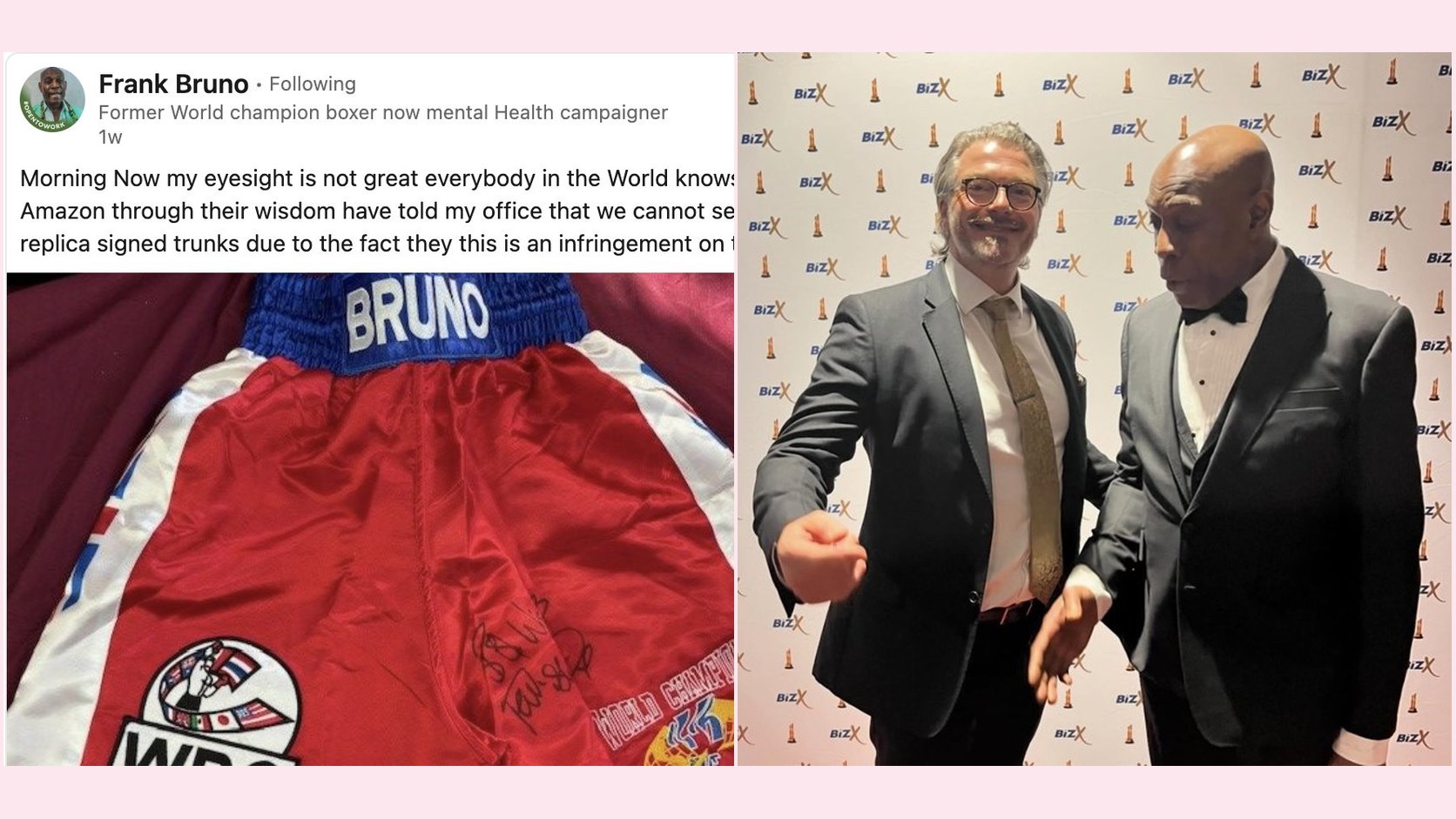
Frank posted on LinkedIn that Amazon had told his office it could not sell his replica signed boxing trunks, because the listing was treated as an infringement involving Adidas. These are his trunks, with his name on the waistband and his signature on the leg, and he was understandably baffled.
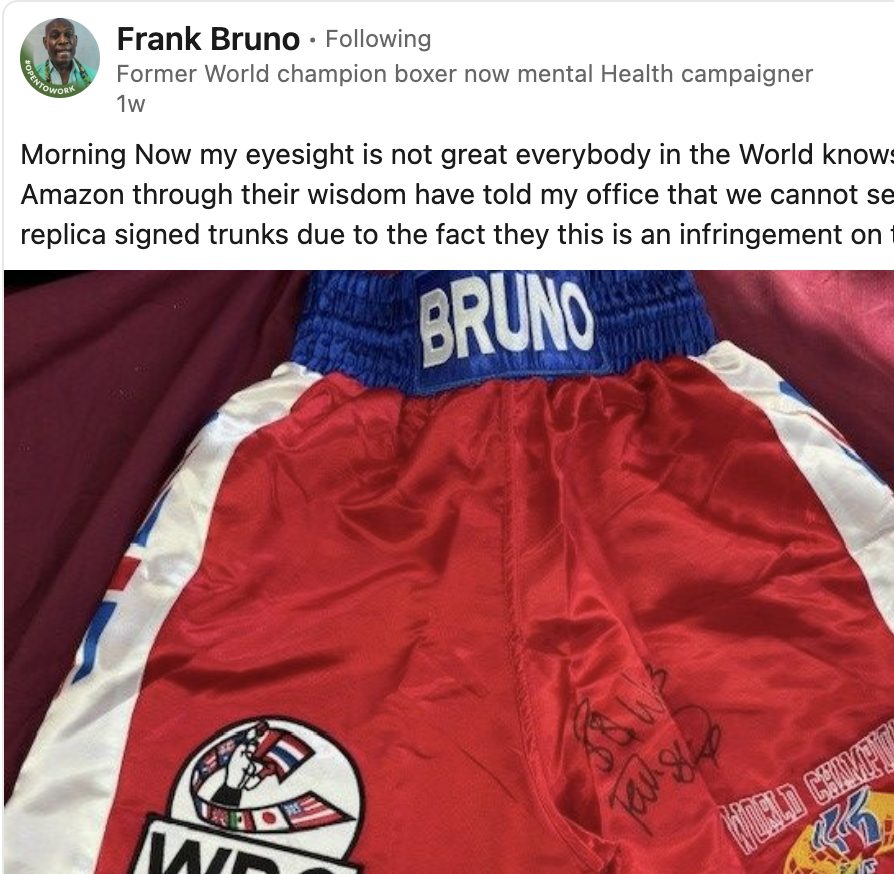
I commented on his post and called him “Champ”, partly because it felt right and partly because, in boxing, respect matters. My first thought was that the word “replica” may have tripped Amazon’s automated checks. Given how careful online marketplaces are about counterfeits, that’s understandable. But an automated system doesn’t easily tell the difference between a counterfeit, a tribute item, a fundraising product and something made in the spirit of boxing culture.
If you sell anything branded online, this is worth understanding, and it is why registering your trademark in the UK matters long before a marketplace ever questions you.
Why would Amazon block a product that looks genuine?
People tend to think trademark enforcement is about protecting revenue. It’s bigger than that. A cheap counterfeit doesn’t just take a sale, it tells the customer that the brand stands behind something it never made. One bad experience with a fake and the customer blames the real business.
So Amazon and the big brands invest heavily in protecting trust. They use registered trademarks, product authentication, marketplace monitoring and automated systems that scan millions of listings for names, logos and tell-tale words. Amazon’s Brand Registry is built around trademarks, and it gives the trademark owner tools to report listings they believe infringe. When a report or an automated flag comes in, removing the listing is the safe option for the platform.
Where does Adidas come into it?
Adidas protects its three stripes very firmly, and it is entitled to. Where a product carries the stripes or other Adidas branding, a complaint is no surprise. If the shorts don’t, it seems less likely anyone would genuinely mistake them for an Adidas product, although the absence of those elements doesn’t automatically settle every question.
Replica sportswear often carries more than one organisation’s branding: the boxer’s name, the kit maker’s marks, a governing body’s logo. Look closely at Frank’s trunks and you’ll see the WBC badge. I’m not clear on the WBC’s rules for using its logo, although, given that they sometimes seem to want three per cent every time a professional boxer breathes, it may be worth speaking to them too. Each of those marks belongs to someone, and if even one isn’t covered by permission, a platform can treat the whole product as a problem. Assumptions are not a substitute for permission.
Where does automated enforcement get it wrong?
Software is very good at spotting a name, a logo or a word like “replica”. It is much worse at understanding context. It can’t easily tell whether a seller is authorised, whether the product is genuine, or whether it’s raising money for a good cause.
It’s a bit like a nightclub bouncer with a list. If your name isn’t on it, you’re not coming in, however famous you are. That’s frustrating when you’re the one standing outside, but a door with no list at all would be far worse for everyone inside.
There is a balance to be found. Brands need to protect their intellectual property. Marketplaces need to keep counterfeits off their shelves. Organisations like the WBC need to control how their logos are used. But genuine creators and charitable projects also need a fair chance to explain what they’re doing and get the right permissions. A human conversation can often resolve what an automated system can’t.
What does this mean for your brand?
The lesson runs both ways. If you own a brand, you need to be on the list. If you sell products carrying anyone else’s branding, you need to be able to prove you’re allowed to.
Smaller businesses can borrow much of what the big brands do, at a fraction of the cost:
- Register your key trademarks and use them consistently. Platforms recognise registered rights first, and a pending UK application is usually enough to start the conversation with Amazon.
- Check before you sell. A free trademark search shows who already owns what on the UK register, and a trademark consultation and clearance audit looks at marketplaces, social media and earlier use too.
- Get permission in writing for anyone else’s marks, and keep it with your supplier invoices. That paperwork is what gets a wrongly blocked listing reinstated.
- Choose your listing words carefully. “Replica”, “inspired by” and “style” can all look like red flags to an automated system.
- Watch the marketplaces. Trademark monitoring tells you when someone files or sells something close to your brand, so you hear about it before your customers do.
- Act quickly and proportionately when a copy appears. Our website and marketplace takedown service deals with fake listings without turning every problem into a legal battle.
Consumer trust and brand reputation take years to build and seconds to damage. That’s why brand protection belongs at the heart of the business, not at the bottom of the to-do list.
Why this one matters to me
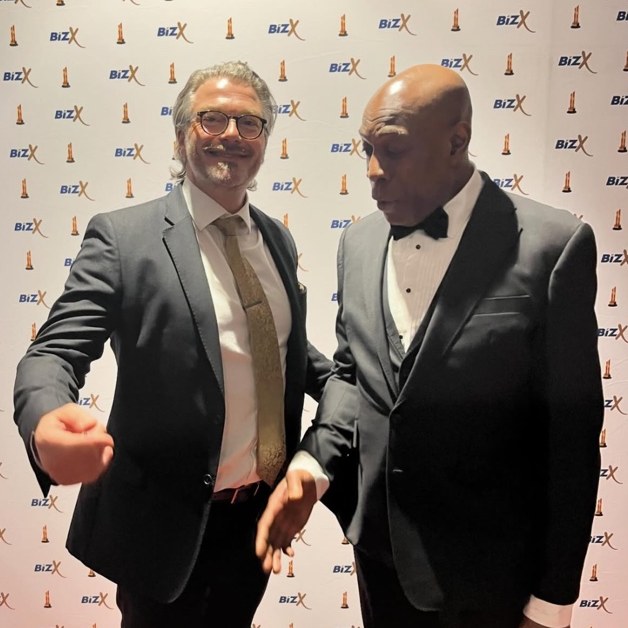
Boxing isn’t just a sport to me. I’m a genuine fan, and I’ve been lucky enough to meet Frank in person. Judging by this photo, I was so excited I forgot how to shake his hand. I care about the sport, its people and the communities built around it, and I understand why boxers, coaches and charities get frustrated when products connected to their work are removed without a clear explanation.
I’ve sent Frank a message to say I’d be happy to help promote the shorts through our website if they’re raising money for his foundation and there’s another place to buy them. And if anyone from Adidas, Amazon or the WBC is reading this, perhaps we can start with a conversation before reaching for the takedown notice.
In the meantime, I still have one practical question. Frank, where else can I buy a pair?
If a marketplace has blocked one of your listings, or you want to make sure your brand is the one on the list, book a free 15 minute call, email enquiries@thetrademarkhelpline.com or ring 0161 833 5400.
Related questions
- I’m selling on Amazon US or abroad, do I need a US or local trademark?
- I’ve received a cease and desist letter, what do I do now?
- What happens if someone copies my logo, can I sue?
- How do I check if a name is trademarked?
This article is for information purposes only and does not constitute trademark advice or guidance. Last reviewed 16 October 2026. First shared as a LinkedIn post.