Not automatically. A UK trademark covers the goods and services listed when it was filed, and that list doesn’t grow as your business does. So does your trademark cover AI? If you only use AI tools behind the scenes, your registration probably still describes what you sell. If you now sell AI, as an app, a platform, a chatbot or an AI-driven service, there’s a fair chance your registration doesn’t mention it at all.
I work on the marketing side here, not the legal side, and practical AI is part of my day job. So this is a plain-English guide to where AI fits, with links to our class guides and our team for the legal detail.
Why doesn’t a trademark grow with your business?
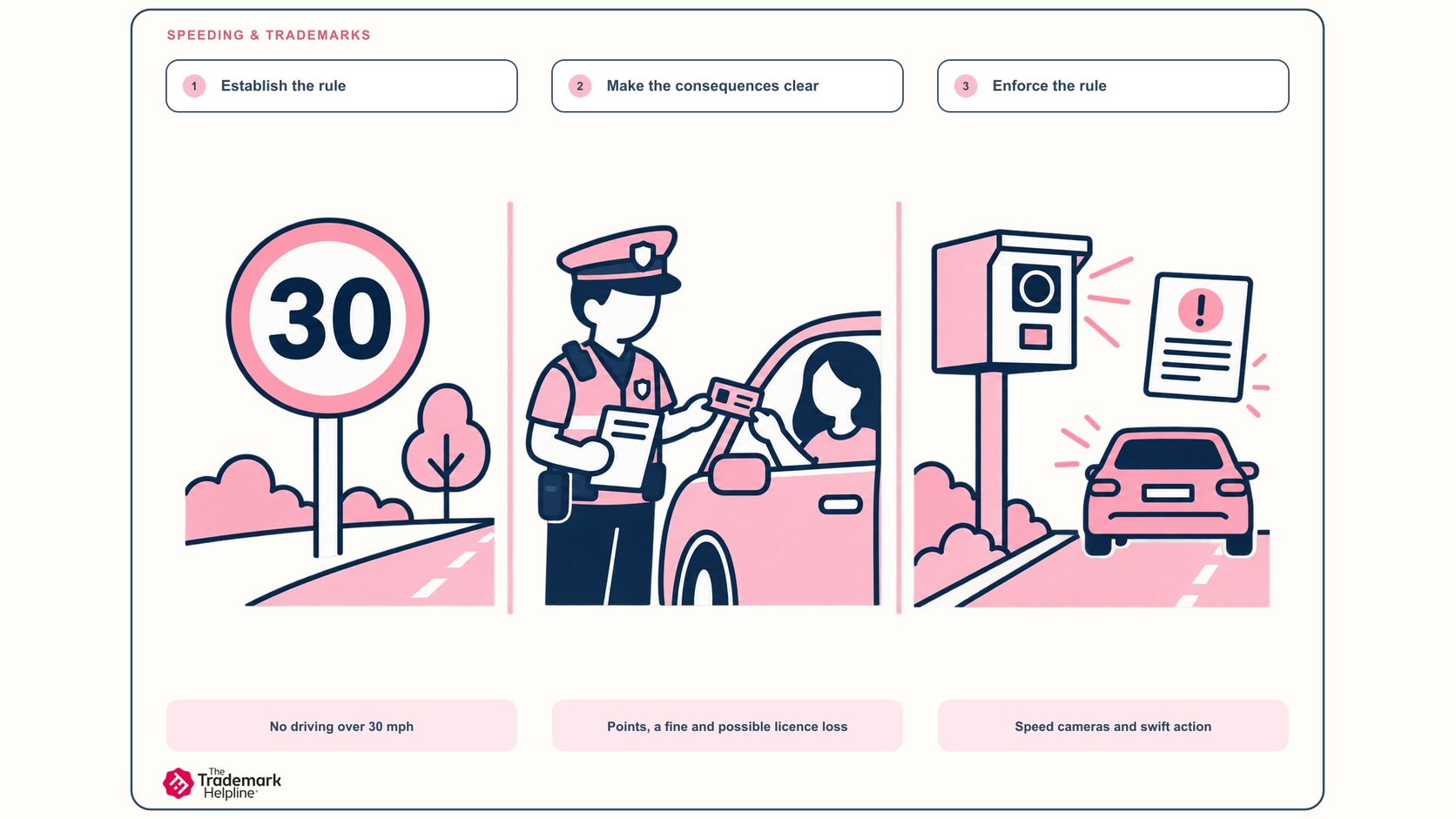
Because a trademark is registered against specific classes and terms that describe what a business does when it applies. As the business changes and moves into things like AI, that original scope stays where it was. We made the same point in a podcast clip we shared on our company page.
Two bits of jargon first. A class is a broad category of goods or services, and a term is the specific description inside that class. GOV.UK puts it plainly: your trademark is only protected in the classes and terms you select, and you can’t add more terms after you’ve applied. The Trade Marks Act 1994 lets an applicant narrow what an application covers, but not widen it.
In simple terms, if you want your brand protected for something new, that usually means a new application rather than an edit to the old one. Our UK trademark registration service can file that for you, with the classes and terms chosen to fit what you now sell.
Does your trademark cover AI if you only use AI tools?
Usually, yes. The main thing is to separate using AI from selling AI.
- Using AI. An accountancy firm drafts client emails with an AI assistant. A clothing brand uses AI to write product descriptions. A salon adds an AI chatbot to handle bookings. The customer is still buying accountancy, clothes or a haircut, so what your trademark needs to cover usually hasn’t changed.
- Selling AI. The same accountancy firm builds an AI tax tool and charges clients to use it. A marketing agency launches its own AI content platform under its brand. Now the brand is on something new, and the original list of goods and services may not describe it.
Plenty of businesses sit somewhere in between. If customers now see your name on an AI feature, app or tool they use or pay for, that’s the point I’d check.
Which trademark classes cover AI?
Mostly class 9, for AI software people download, and class 42, for AI provided as a service. Trademark offices use an international system called the Nice Classification. There are 45 classes, with goods in classes 1 to 34 and services in 35 to 45, as GOV.UK’s classification guidance sets out. AI doesn’t have a class of its own. Where it lands depends on what you’re selling and how customers get it. For software and AI businesses, two classes come up most often.
For the full list of classes, and wording that real UK businesses have had accepted, our free class search and terms tools are the best place to start.
Class 9: software people download or install
Class 9 covers goods, and that includes recorded and downloadable computer software. If your AI comes as an app someone downloads to their phone, or software they install, class 9 is usually part of the picture. Our class 9 guide to software and electronics goes into what it covers and how it differs from class 42.
Class 42: software and AI provided as a service
Class 42 covers services, including designing and developing software, and software as a service (SaaS), where customers log in and use it online. The current edition of the Nice Classification, in force from 1 January 2026, lists AI-specific terms in class 42, including “artificial intelligence as a service” and “artificial intelligence consultancy”. If you run an AI platform, build AI tools for clients or advise businesses on AI, class 42 is where those terms sit.
Other classes that can come into play
If AI is part of how you deliver another service, the class for that service still matters. Class 35 covers advertising, marketing and business services, so an AI-driven marketing offer may belong there as well; our class 35 guide explains more. Class 41 covers education and training, so an AI-powered course or tutoring product may need it. Which classes, and which exact wording, is where our team comes in.
Can you just add every AI term to be safe?
It’s tempting, but it’s not how it works. GOV.UK says to choose only terms relevant to your business plans for the next five years, and warns that a trademark with terms you don’t plan to use may be challenged, with legal costs to pay. In 2024, in SkyKick v Sky, the UK Supreme Court restored a High Court finding that some of Sky’s trademarks had partly been applied for in bad faith, in a long-running dispute about how broad its lists of goods and services were.
So the aim is balance. When we start an application, we ask clients where they plan to take the business, so the classes and terms cover the direction it’s genuinely heading as well as what it does today. Then, as the business grows, we review whether the protection still reflects what it actually does. Clients on our trademark representation and protection service can book regular check-ins for exactly that. A trademark isn’t a one-off task, and AI is the clearest example right now of why.
How do you check if your trademark covers the AI you sell?
Compare what your registration lists with what you sell today. These steps take you through it.
- Find your registration. Look your trademark up on the UK IPO register and note down the classes and terms.
- Write down what you sell today. Not what you sold when you applied. List anything with AI in it that customers pay for or use.
- Sort it into using or selling. Tools you use behind the scenes usually don’t change anything. Things customers buy or use under your name might.
- Downloaded or online? A downloadable app points towards class 9. A platform or service people log into points towards class 42.
- Check the name. Is the AI product sold under your main brand, or does it have a name of its own? A separate product name may need its own protection.
- Compare the two lists. If what you sell now isn’t described by your current terms, that’s the gap worth talking to us about.
How can we help?
If you’re launching an AI product under a new name, start with our free trademark search to see whether anything similar is already on the UK register. It’s free, unlimited and the results are instant.
If you already have a registration and aren’t sure it still fits, our Trademark Consultation and Clearance Audit is designed for exactly that point, before you apply or make changes to your trademark. Clearance audits start from £99, and the consultation is free for new clients.
Or book a free call with our team, ring 0161 833 5400 or email enquiries@thetrademarkhelpline.com. Tell us what your AI does and how customers get it, and we can look at whether your protection has kept pace.
AI is changing what a lot of businesses sell. It’s worth making sure your trademark has changed with it.
Related questions
- Does a UK trademark protect me everywhere I sell?
- Can I register a trademark myself, or do I need an attorney?
- Does owning the domain name protect my brand?
This article is for information purposes only and does not constitute trademark advice or guidance. Last reviewed 25 September 2026. First shared as a LinkedIn post.
Questions about this
Does an existing trademark cover AI products?
Not automatically. A UK trademark covers the goods and services listed when it was filed, and that list does not grow with the business. Using AI behind the scenes, such as drafting emails or product descriptions, usually changes nothing because customers are still buying the same thing. Selling AI under the brand, as an app, platform, chatbot or AI-driven service, may fall outside the original terms, and as terms cannot be added after applying, that usually means a new application.
 Answered by Saad Ashraf, Marketing Manager
Which trademark classes cover AI software and services?
Mostly class 9 and class 42. Class 9 covers goods, including downloadable software, so an AI app someone installs usually belongs there. Class 42 covers services such as software design and development and software as a service, and the Nice Classification in force from 1 January 2026 lists AI-specific terms there, including artificial intelligence as a service. Class 35 or class 41 may also matter if AI supports marketing, education or training services.
Answered by Saad Ashraf, Marketing ManagerIs it safe to add every AI term to a trademark application?
No. GOV.UK advises choosing terms relevant to business plans for the next five years and warns that terms you do not plan to use may be challenged, with legal costs to pay. In SkyKick v Sky in 2024, the UK Supreme Court restored a finding that some of Sky’s trademarks had partly been applied for in bad faith, in a dispute about how broad they were. The aim is to cover what the business does now and where it is genuinely heading.
Answered by Saad Ashraf, Marketing Manager