

Search the UK register for GUINNESS and one of the results is dead. Two others are alive, carry the same filing date as the dead one, the same registration date, and belong to two different companies.
That looks like a database problem. It isn’t. It’s a deliberate and fairly ordinary piece of trademark housekeeping, and it shows something about trademarks that most business owners have never had cause to think about: a registration isn’t one indivisible thing. It’s an asset, and assets can be carved up.
What actually happened to the GUINNESS registration?
A single registration, number 2275979, was filed on 23 July 2001 and entered on the register on 8 March 2002, covering class 33, alcoholic beverages. That registration is now marked dead. In its place are two records: 2275979A, owned by Diageo Great Britain Limited at Park Royal in London, and 2275979B, owned by Diageo Ireland Unlimited Company at St James’s Gate in Dublin. Both carry the 2001 filing date, both carry the 2002 registration date, and both are due for renewal in 2031.
One registration became two, and the original stays visible as a trace of what used to be there.
Splitting a registration is a normal thing to do
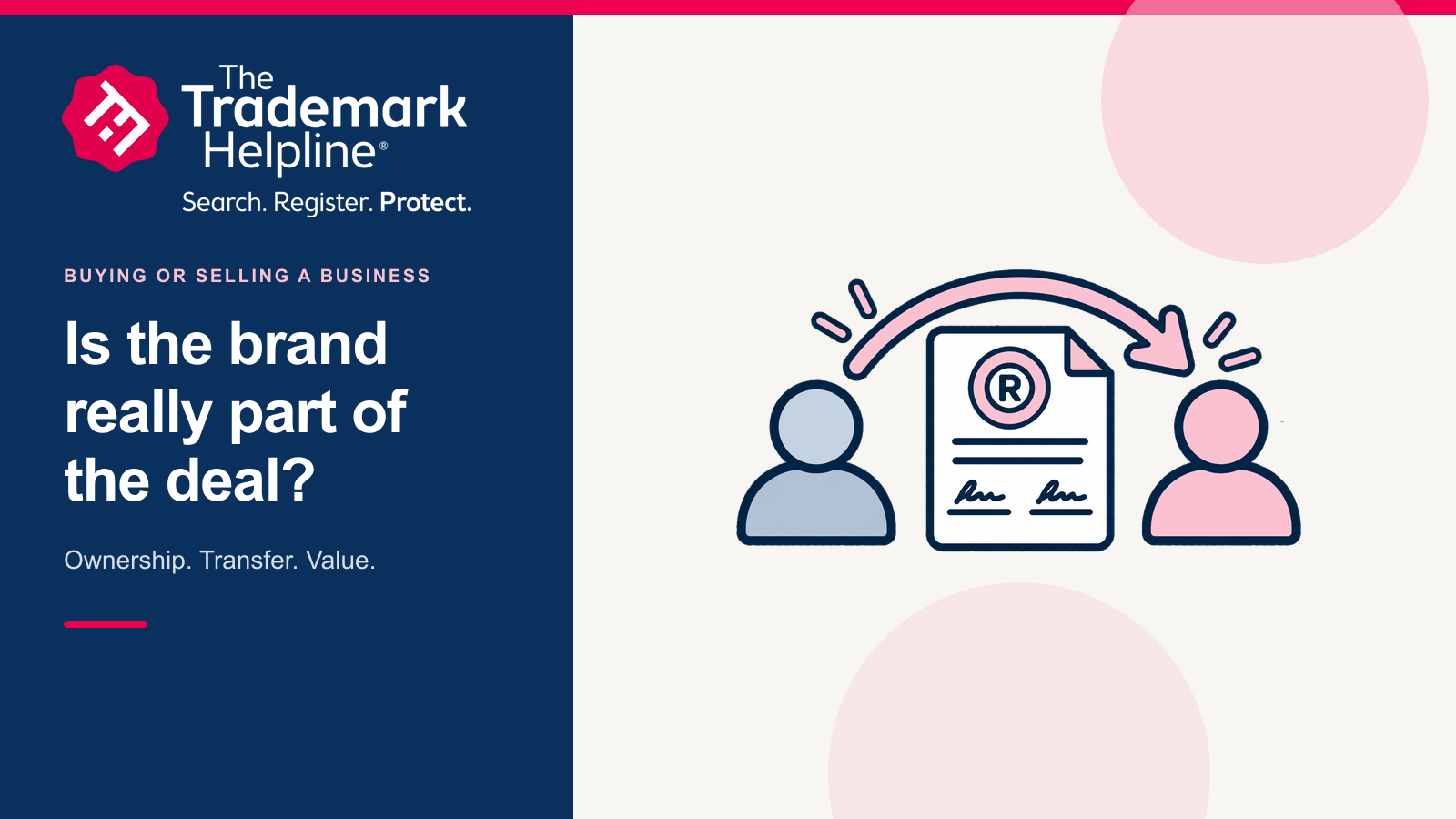
The mechanism is straightforward. Section 24(2) of the Trademarks Act 1994 says an assignment of a registered trademark may be partial, limited so it applies to some but not all of the goods or services it covers, or to use in a particular manner or a particular locality. So an owner can carry out a partial assignment of a trademark, transferring part of a registration and keeping the rest. The registry can’t leave that as one record with two owners, so it splits the registration and each part becomes a registration in its own right, identified by a letter and renewed separately.
There’s a second route to a similar place. An owner can divide a trademark registration voluntarily, without transferring anything, usually to separate out goods that are being disputed so the rest can proceed cleanly. Where two different companies end up owning the halves, as here, that points to a partial assignment rather than a defensive division.
The closest everyday parallel is land. A title can be split, a lease carved out of a freehold, part of a plot sold while you keep the rest. Nobody finds that strange. A trademark works the same way, and for some reason far fewer people know it.
The bit that surprises people: you keep your filing date
Look at the dates again. Both halves still show a filing date of 23 July 2001 and registration on 8 March 2002. The split, which from the renewal dates appears to have happened around 2011 or 2012, reset nothing.
That matters more than it sounds, because in trademarks being early is most of the battle. Your filing date decides who came first if there’s ever a conflict. If restructuring ownership pushed that date forward, nobody would ever restructure, and businesses would be stuck holding assets in the wrong companies for fear of losing their place in the queue. They aren’t. What you had, you keep. It just ends up in more than one place.
Why would a business do this?
Diageo hasn’t published its reasons and I’m not going to invent them. What can be said is what a split of this kind achieves in general. It lets different companies within a group hold different parts of the same brand, which matters for licensing, for how royalties move between entities, for how a group is structured, and simply for keeping an asset with the company that actually uses it.
The pattern here is at least visible. The British company holds one half, the Irish company the other, and the mark is the core drinks class. The Dublin address is St James’s Gate, the brewery Arthur Guinness took a 9,000-year lease on in 1759. The London address is Park Royal, where Guinness was brewed from the 1930s until that brewery closed in 2005.
When would you actually want to do this?
This is where it stops being a Diageo curiosity, because the situations below turn up in ordinary businesses far more often than the rarity of split registrations suggests.
When the business changes shape. You’re building a franchise or reseller network and want franchisees operating under the brand for what they actually deliver, while the rights to everything else stay firmly with you. You’re selling a subsidiary and the buyer needs the brand for the part they’re buying while you keep it for everything you’re retaining. A management team is buying out a division. A group has grown into several companies and the trademark is still sitting with whichever entity happened to file first. In each case a partial assignment gives both sides a clean registration instead of a shared one and a contract trying to police the boundary.
When somebody else is buying part of it. Insolvency is one of the most practical uses of all. A buyer in an administration often wants specific parts of a business rather than the whole thing, and the brand rights need to follow only those parts. A partial assignment lets an administrator sell the trademark rights for one product line while the rest stays in the estate. If you’re buying out of administration it’s worth establishing early exactly what you’re getting, because “we bought the brand” and “we bought the brand for these goods” are very different positions and the difference usually surfaces long after completion. The same logic applies where a lender or investor wants the rights attached to a funded part of the business ring-fenced in the funded entity.
When you’re settling a fight. Two businesses in a dispute sometimes find they aren’t really competing at all, they just share a name across different categories. Dividing the registration so each holds what they actually trade in can turn an argument into a boundary, without either side giving up their filing date. And where only some of your goods are under attack, dividing the registration lets the unchallenged part carry on cleanly while the disputed part is dealt with separately. That second one isn’t a transfer at all, it’s quarantining the problem.
When it’s about geography rather than products. Section 24(2) allows a split limited by use in a particular manner or locality, not just by goods and services, so it can follow a map rather than a product list.
And the one nobody plans for. Trademarks are property, so they form part of what gets divided when a family business passes down a generation or a relationship behind a business ends. Two people carrying on in different fields under a shared name is exactly the situation this is built for.
What it costs you
It would be a poor article that listed ten uses and no downsides, so here are the ones that matter.
You now have two renewal dates instead of one, which is twice the admin and twice the chance that one lapses quietly while everybody assumes somebody else is watching it. Enforcement gets more complicated, because two owners hold near-identical marks and if a third party turns up you need to have settled in advance who takes action and on what basis. If you rely on a family of related marks when arguing that consumers would make a connection between them, handing part of that family to a different owner can make the argument harder to run.
And register the trademark assignment promptly. An assignment is a registrable transaction, and under section 25 of the Trademarks Act 1994, if the mark is infringed before the particulars are registered the court won’t award costs to the new owner unless the application to register was made within six months, or as soon as practicable after. Winning your case and then being told you can’t recover your costs is an expensive piece of admin to have skipped.
What this means if you’re a smaller business
Very few businesses will ever need to split a registration, and that isn’t really the point. The point is what it tells you about the nature of the thing you own.
A trademark is a commercial asset. It can be sold, licensed, charged, inherited, moved between companies and divided. It should be held by whichever entity actually needs it, and that ought to be a decision rather than an accident of who filed the form.
The ordinary version of this problem is far less exotic than a Diageo restructure. A founder registers the mark personally in the early days and the company trades under it for a decade. A group grows into three companies and the trademark stays with the first one, which now does very little. Two shareholders each assume the other dealt with it. None of that is careless, it’s just what happens when a business changes shape faster than its paperwork. We have written separately about who owns the brand name when a business partner leaves, which is the same question arriving through a different door.
The difference between a large group and a small company here isn’t sophistication, it’s margin for error. A multinational has an IP department and can tidy this up whenever it chooses. A smaller business tends to discover the ownership question at precisely the moment it’s most expensive to answer, which is a sale, an investment round, a dispute or a founder leaving. Checking costs almost nothing. Fixing it under pressure, when the other side knows you need their signature, costs a great deal more.
What to check on your own registration
Look up your mark on the register and read the proprietor name. Not what you assume it says, what it actually says. Then check whether that owner is the entity trading under it today. If your group has more than one company, decide deliberately which company should own the trademark rather than leaving it where it first landed. If it needs to move, move it while everybody is still on good terms, because assignments are simple when there’s no argument. And if part of your business has been sold or spun out, check whether the trademark position followed the deal, because it frequently doesn’t.
None of this is urgent in the ordinary run of things. It’s cheap to sort now and awkward to sort when somebody is doing due diligence on you. If the mark was never registered in the first place, that is the gap to close first, and UK trademark registration is where it starts.
Not sure who actually owns your trademark?
A trademark consultation and audit will tell you what you own, which entity holds it and where the gaps are. For a lot of businesses it’s the first time anyone has looked at it properly.
You can book a free 15-minute call, email enquiries@thetrademarkhelpline.com or call 0161 833 5400.
This article is for information purposes only and does not constitute trademark advice or guidance.
Questions about this
Can a trademark registration be split in two?
Yes. Section 24(2) of the Trade Marks Act 1994 allows a partial assignment, limited to some of the goods or services a registration covers, or to use in a particular manner or locality. The registry then splits the registration, and each part becomes a registration in its own right, identified by a letter and renewed separately. An owner can also divide a registration voluntarily without transferring anything, often to separate out disputed goods so the rest can proceed.
 Answered by Jonathan Paton, Founder & CEO
What happened to the GUINNESS trademark registration?
UK registration 2275979, filed in July 2001 for alcoholic beverages in class 33, is now marked dead and has been replaced by two records. 2275979A belongs to Diageo Great Britain Limited and 2275979B to Diageo Ireland Unlimited Company. Both keep the original 2001 filing date and 2002 registration date, and both are due for renewal in 2031. Different group companies owning the halves points to a partial assignment rather than a defensive division.
Answered by Jonathan Paton, Founder & CEODoes splitting or partly assigning a trademark change its filing date?
No. Each part keeps the original filing date and registration date, so nothing is reset. That matters because the filing date decides who came first in any conflict. It means a business can restructure ownership, for example when selling a subsidiary, building a franchise network, buying part of a business out of administration or settling a dispute, without losing its place in the queue.
Answered by Jonathan Paton, Founder & CEO