
Often, yes. If customers are likely to remember a product by its own name, ask for it, search for it or recommend it to someone else, that name can end up worth as much to you as the business name on your invoices. So it’s worth deciding whether to trademark a product name before it goes public, not after. That doesn’t mean every working title needs filing. The main thing is to work out which names customers will actually attach to you, and protect those.
I look after marketing here rather than the legal side, so this is written from the brand and launch end of things. I’ll keep the legal mechanics simple and point you to our team for the detail.
What has Coca-Cola filed, and why are people talking about it?
On 9 July 2026, The Coca-Cola Company filed a US trademark application for SPRICY. The USPTO record for serial number 99930728 shows it as a word mark in class 32, covering “soft drinks”, filed on an intent-to-use basis. In simple terms, Coca-Cola is telling the US office it intends to use the name, not that a product is already on sale.
Update, September 2026: when we checked the record on 24 September 2026, the application was still waiting to be examined.
Naturally, people started guessing. Food Dive reported the filing within days and connected it to the sweet-and-spicy flavour trend. A spicy Sprite? A new flavour? A campaign name? Nobody outside Coca-Cola knows, and that was the point we made when we shared the story on our company page: a trademark filing doesn’t guarantee a product will launch.
Big brands often file names they are exploring, testing or keeping open as part of a wider plan. Some reach the shelves and some never do. But the filing still tells you something useful. One of the best-known brand owners in the world thinks a product name can be worth protecting in its own right, separately from the company name everyone already knows.
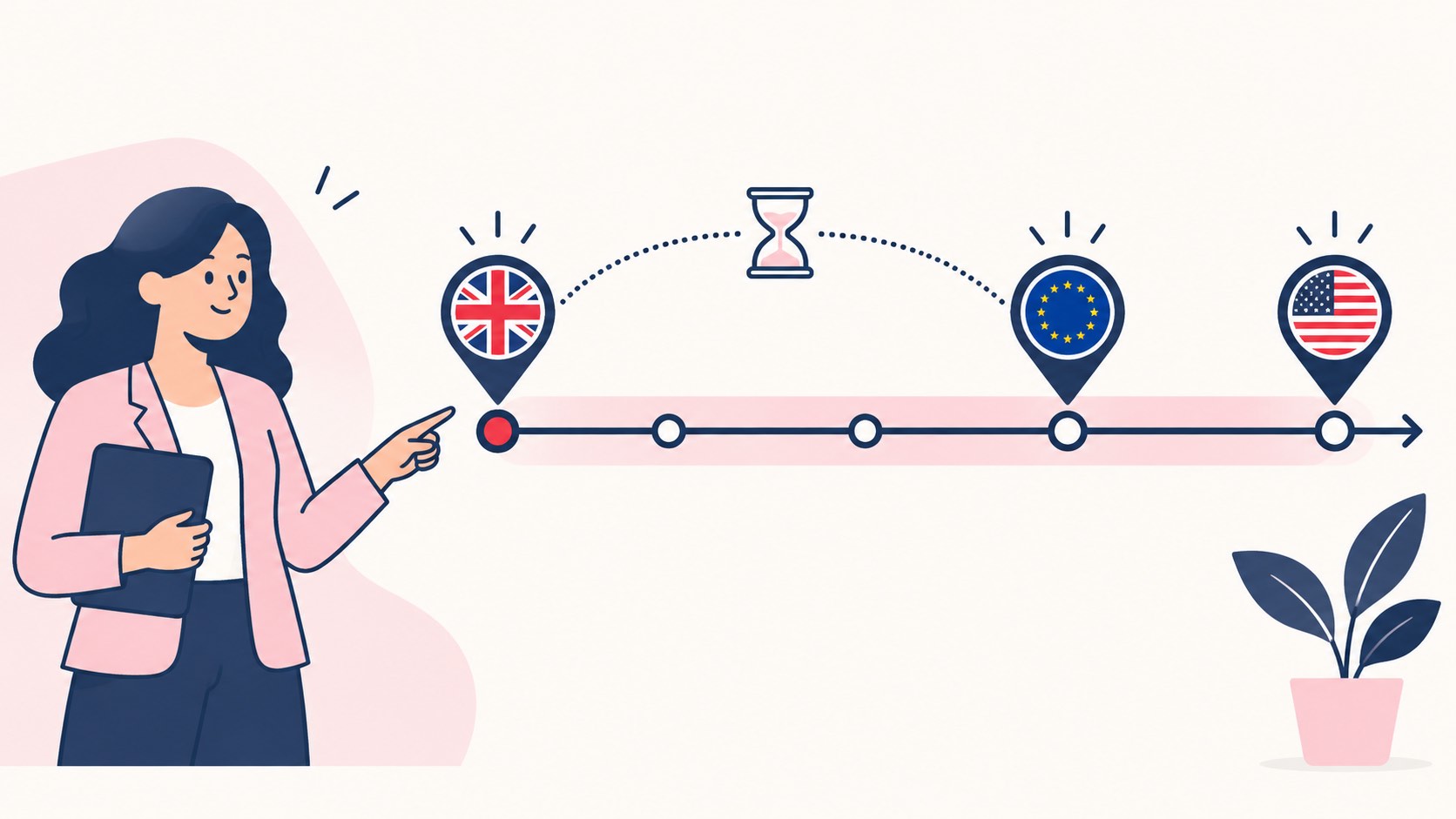
It’s also worth remembering that this is a US application. Trademarks are territorial, so a US filing does nothing in the UK. For a product sold here, the starting point is a UK filing, which our UK trademark registration service handles from search to registration, and a UK registration covers the UK and the Isle of Man.
Why can a product name matter as much as your business name?
From a marketing point of view, customers don’t always buy “the company”. They buy the thing. They type the product name into Google, search for it on Amazon, tag it on Instagram and recommend it by name. The business name might be on the back of the pack while the product name does most of the work.
That goes well beyond drinks. Product names, range names, course names, treatment names, service names, app names and campaign names can all become valuable once customers start recognising them. A few everyday examples of what that can look like:
- A skincare business whose customers ask for one named serum rather than the brand.
- A training company whose flagship course has built a following of its own.
- A salon or clinic with a signature treatment that people book by name.
- A software business whose app is better known than the company behind it.
The best way to look at it is this: which names are your customers actually using when they talk about you? Those names are carrying your marketing spend, your reviews and your reputation. If one of them isn’t protected, it’s harder to stop someone else building on it, and harder to hold on to the value you’ve paid to create.
Do you need to trademark every product name?
No. Filing every working title would cost money for very little return. The question we asked on our company page is a good filter to run before any name goes public: is this just a working title, or could it become something customers remember? Here’s how I’d break that down.
- Will customers see it? Internal project names and code names that never leave the office usually don’t need anything.
- Will you spend money behind it? Packaging, ads, a domain, social handles, printed stock. The more you invest in a name, the more it costs to lose it.
- Is it meant to last? A one-off seasonal promotion is different from a core product, or a range you plan to build on for years.
- Is it distinctive? GOV.UK explains that a trademark can’t simply describe the goods or services it relates to. A plain description of the product is hard to protect. An invented or unusual name is usually much easier.
- Is it free to use? Before any design work or print order, check whether someone already has the same or a similar name for similar goods or services.
If a name ticks most of those boxes, it’s probably worth a proper look. If it’s a short-term campaign line or an internal label, I’d usually leave it. A trademark isn’t the only tool either. We’ve written about how brands like McDonald’s protect a whole family of product names, logos and slogans, and why you don’t need to protect everything to protect what matters.
How do you trademark a product name in the UK?
In simple terms, it works the same way as registering your business name. GOV.UK’s own guide gives the name of your product or service as an example of what you can register. Here’s the short version:
- Choose what you’re protecting. Usually the name itself, and the logo too if the product has its own.
- Pick your classes and terms. A class is a broad category of goods or services, and a term is the specific description inside it. Your protection only covers what you pick, and GOV.UK advises choosing terms relevant to your business plans for the next five years. You can’t add terms after you’ve applied.
- Examination and publication. The UK IPO examines the application, then publishes it in its official journal for two months, during which anyone can oppose it.
- Registration. If there are no issues, GOV.UK says it usually takes around three to four months from application to registration. A registration lasts ten years and then needs renewing.
The UK IPO’s official fee starts from £205 for one class. Official fees vary by territory and number of classes, and we confirm the exact figure before anything is filed. With our representation packages you only pay the official fees charged by the registrar.
One more thing from the marketing side. A registration isn’t a job you do once and forget. Under section 46 of the Trade Marks Act 1994, a UK registration that hasn’t been genuinely used for five years can be challenged and revoked. That matters more for product names than business names, because products get renamed, rested and replaced far more often. We explain how that works in our guide to losing a trademark you don’t use. It also helps to know when someone else starts using a similar name. Our trademark monitoring service, from £14 a month, keeps an eye on the IPO register, Companies House, domain registrations and social media for you.
When is the right time to protect a product name?
The best way to look at it is to line the trademark up with the rest of your launch plan. Most launches have a point where the name gets locked in: the packaging goes to print, the domain is bought, the ads are built, the listing goes live. I’d consider checking and filing before that point rather than after launch day, because changing a name once it’s on packaging and in adverts costs far more than changing it on a planning document.
There’s a timing lesson in the Coca-Cola story too. Trademark filings are public, and people do read them. That’s how a US application for a soft drink name ended up in the trade press within a week. For most smaller businesses that’s not a reason to hold back, but it’s worth knowing that once an application is filed, it soon shows up on the public register for anyone to see. If a launch is commercially sensitive, talk to us about timing.
How can we help?
Our free trademark search is the simplest place to start. Put the product name in and see whether anything similar is already on the UK register. It’s free, unlimited and the results are instant.
If you’ve got a few names on the go and you’re not sure which ones deserve protecting, our Trademark Consultation and Clearance Audit checks a name across trademark registers, domains, social media, search results and online marketplaces before you commit money to it. Clearance audits start from £99, and the consultation is free for new clients.
Or if you’d rather talk it through, book a free call with our team, ring 0161 833 5400 or email enquiries@thetrademarkhelpline.com. Tell us what you’re launching and we can talk you through which names are worth protecting, and where.
Your business name is usually the first thing people protect. It isn’t always the only name your customers remember.
Related questions
- What are trademark classes, and which ones do I need?
- What happens if someone copies my logo? Can I sue?
- Can someone steal my business name?
This article is for information purposes only and does not constitute trademark advice or guidance. Last reviewed 25 September 2026. First shared as a LinkedIn post.