
One of the worst times to discover that your trademark is weaker than you thought is the day you actually need it.
Imagine somebody starts using a name that is uncomfortably close to yours. You have a registered UK trademark, so you contact them expecting the registration to put you in a strong position.
Instead of backing down, they ask a different question.
Can you prove you have actually been using it?
Suddenly the conversation has changed. You are no longer simply trying to enforce your trademark against them. You are having to defend your own registration.
That catches business owners out because most people understandably think of a trademark as something you register once. The certificate arrives, the trademark sits on the register and, providing you renew it every ten years, it continues protecting the brand.
There is another important condition.
If you do not genuinely use a UK trademark, after five years somebody can apply to have it revoked for non-use.
And in 2026, that has become particularly relevant to a large number of UK trademark owners.
How long can a trademark go unused in the UK?
Once a UK trademark registration has been registered for five years, it can become vulnerable to an application for revocation if it has not been put to genuine use in the UK for the goods or services it protects. Anyone can apply for revocation. They do not have to show that your registration has caused them damage first.
Once use becomes an issue, importantly, it is the registered trademark owner who has to show what use has actually been made of the mark.
That is why evidence becomes so important.
It is also why simply having a trademark certificate is not always the end of the story.
If you registered your name for clothing, software and financial services, for example, but have only ever genuinely traded in clothing, a non-use challenge does not necessarily have to remove the whole registration. The protection can be reduced so that you are left with a fair description of the goods or services for which genuine use can actually be demonstrated.
That can matter enormously if the part that disappears is the part you were hoping to rely upon against somebody else.
What actually counts as genuine use of a trademark?
This is where things become more interesting because “genuine use” sounds much simpler than it is.
The question is not simply whether somebody can find your trademark somewhere on the internet or whether you can produce an invoice with the name on it.
The UKIPO looks at whether the mark has genuinely been commercially exploited in the market for the relevant goods or services.
There are several recurring issues worth understanding.
Token use is not enough, but small use can be.
This is an important distinction.
The law does not say you need to have sold thousands of products. Even relatively limited use can potentially qualify where it represents genuine commercial activity intended to create or maintain a market.
What does not count is use that exists purely to preserve the trademark registration.
That distinction matters, particularly to smaller businesses. A small company should not assume that modest turnover automatically means it has failed the genuine use test. Equally, creating a handful of artificial transactions because a registration is approaching the five-year point is not a safe solution.
Internal use is not enough.
Putting the name on internal paperwork, presentations or documents circulating within your own organisation is not the same as genuinely using the trademark in the market.
The important question is whether the mark is being used commercially in connection with the goods or services for which it is registered.
The dates matter.
Non-use proceedings look at particular five-year periods.
You may have plenty of evidence that you used a trademark six years ago and plenty showing that you started using it again recently, but that does not automatically answer what happened during the relevant period being challenged.
This is one of those areas where a business owner can feel certain that they have “used the brand for years” and still find that the evidence does not answer the legal question actually being asked.
Your trademark can evolve, but only so far.
Brands change.
Logos get refreshed, colours change, typefaces move on and sometimes additional words are added.
The law allows some use of a trademark in a form that differs from the registered version, provided those differences do not alter its distinctive character. But there comes a point where the brand you are using today may be sufficiently different from the trademark you registered years ago that you have created a problem.
This is one of the most common gaps I see when looking at older trademark portfolios.
The business has done everything right commercially. It has modernised the brand as it has grown.
Nobody remembered to modernise the trademark protection with it.
Can you lose only part of a trademark registration?
Yes, and this is probably one of the least understood parts of trademark non-use.
A registration does not necessarily live or die as one complete block.
If you can prove genuine use for some goods or services but not others, the UKIPO can partially revoke the registration and arrive at a fair description of what should remain protected.
That matters because businesses quite reasonably register with the future in mind.
You may launch a business intending to offer five different services and five years later discover that one of those services became the entire company while the other four never happened.
You may have launched several product ranges but discontinued two of them.
You may have registered internationally and found that some markets simply never took off.
None of that means the original trademark strategy was wrong.
It does mean the registration needs reviewing as the business changes.
Why has trademark non-use become more important in 2026?
Brexit has created a particularly important issue.
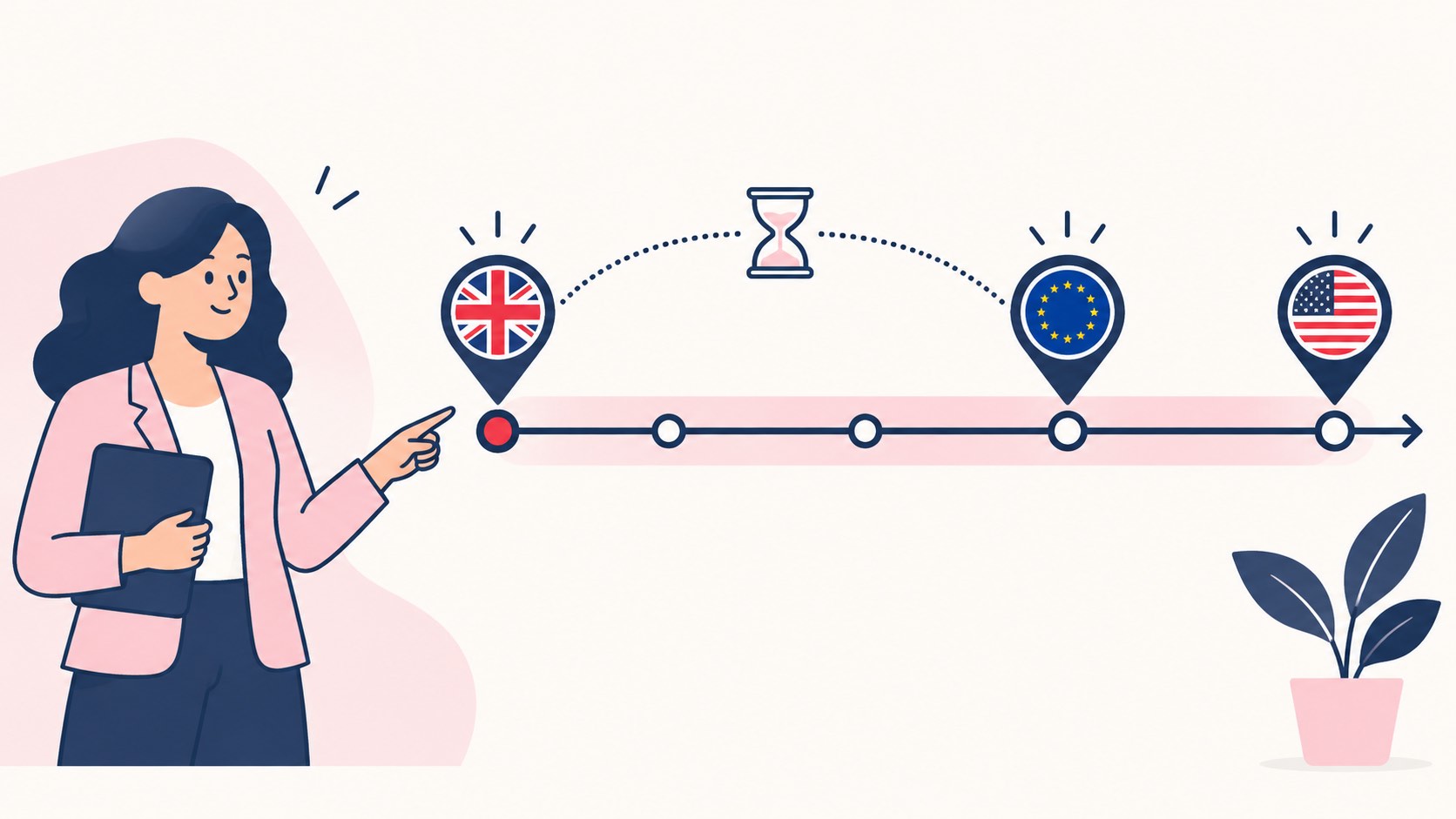
When the UK left the European Union, registered EU trademarks were effectively cloned onto the UK register as comparable UK trademarks.
This meant businesses suddenly had separate UK trademark rights even where they had historically traded principally, or sometimes entirely, elsewhere in the EU.
Transitional rules allowed EU use before 1 January 2021 to be taken into account when assessing use of those comparable UK rights where the relevant five-year period included that earlier time.
Use in the EU outside the UK after 1 January 2021, however, does not count as UK use.
The significance of 1 January 2026 is that we can now have a complete five-year period falling entirely after the end of the Brexit transition period.
For some businesses, that means a comparable UK trademark which has been sitting quite happily on the UK register may now have to stand on its own UK use.
If the brand has continued trading throughout France, Germany, Spain or elsewhere in the EU but has never really traded in the UK, that can create a vulnerability which simply was not as immediate before.
There are potentially a lot of businesses in that position.
You can see these questions appearing in real trademark disputes
While looking through the UKIPO trademark decisions recently, something stood out to me.
In a relatively short period across July and early August 2026, several decisions involving easyGroup or marks connected with the “easy” family raised exactly these kinds of questions.
Decision O/0574/26 concerning EASYTRIP included genuine use, calculation of the relevant dates and arriving at a fair description of goods and services.
O/0667/26 concerning EASY included internal use, use outside the relevant periods, use alongside another mark and partial revocation issues.
O/0695/26 concerned genuine use and whether use with matter added or subtracted could support the registered marks.
Then O/0704/26, published on 5 August, again involved questions around variant use and the appropriate description of goods and services.
I am deliberately not giving you a running scorecard of who won each argument here because that is not really the interesting point.
The interesting point is what is being argued.
This is one of the most extensively registered and actively protected brand families in the country, yet questions around genuine use, the precise version of the mark being used, dates and the scope of specifications are still capable of becoming important issues.
If those questions can arise in a portfolio that sophisticated, they can certainly arise in yours.
Why smaller brands should probably worry about this more, not less
A large organisation normally has people whose job it is to think about intellectual property.
There may be lawyers, brand managers, trademark attorneys, marketing archives and finance departments capable of finding invoices from five years ago.
A smaller business usually has none of those things.
The evidence may exist, but it is sitting in an old Shopify account, a discontinued website, somebody’s email inbox, an advertising platform nobody uses anymore or on packaging that was redesigned three years ago.
Then a non-use challenge arrives and somebody has to reconstruct five years of commercial activity retrospectively.
That is why I think trademark monitoring and regular brand audits matter just as much, and arguably more, for growing businesses.
Monitoring will not create genuine use where none exists and it cannot protect an unused trademark from revocation. What it can do is help you spot potentially conflicting applications and changing activity around your brand earlier, rather than discovering the problem after somebody has already decided your registration is standing in their way.
The audit answers the other half of the question: does the protection you have on paper still match the business you actually operate today?
What should a trademark owner do after five years?
I would look at five things.
- Check exactly what you own. Put every trademark, territory, registration date, renewal date, class and specification in one place. You would be surprised how many established businesses have never done this.
- Compare the registration with the business today. What products and services are you genuinely providing? What has disappeared? What has been added? Has the business moved into areas that were never protected?
- Check that the trademark you use still resembles the trademark you registered. If your branding has changed substantially, do not assume the old registration automatically protects the new version.
- Keep evidence of use while it is easy to find. Invoices, brochures, packaging, archived website pages, advertising, sales information and other dated material can become extremely important later. Trying to find all of that five years afterwards is considerably harder.
- Review comparable UK trademarks created after Brexit. If your original protection came through an EU trademark, establish whether there has actually been genuine use of the mark in the UK and whether the UK registration still reflects your commercial plans.
None of this means you should panic if a trademark is not being used for every word in its specification.
It means you should know where the gaps are.
There is a massive difference between consciously holding a registration knowing where the potential weaknesses sit and discovering those weaknesses for the first time after somebody else has launched a challenge.
Can someone cancel your trademark because you haven’t used it?
Potentially, yes.
Once the relevant non-use period has passed, somebody can apply for revocation and the trademark owner may then need to prove genuine use. Revocation can affect the whole registration or only the goods and services for which genuine use cannot be established.
But that does not mean every trademark with low sales is doomed, and it certainly does not mean somebody automatically takes ownership of your name.
Genuine use is assessed on the facts.
The important thing is understanding those facts before somebody else forces you to.
That, for me, is the real lesson.
A trademark registration is not simply a receipt that you file away for ten years.
It is an asset.
And like every other valuable business asset, occasionally you need to check that what you think you own is still what you actually own.
Not sure whether your trademark protection still fits your business?
Our trademark consultation and audit looks at the trademarks you currently own, how your business is actually using them, whether your protection still matches your products and services and where potential gaps or vulnerabilities may have developed.
If you already own trademarks and want to know when potentially conflicting applications are being filed, our trademark monitoring and alert services can help you identify them earlier.
You can also book a free 15-minute call, email enquiries@thetrademarkhelpline.com or call 0161 833 5400.
This article is for information purposes only and does not constitute trademark advice or guidance.