
Most people worry about someone copying their name. Far fewer worry about the opposite, that their own name might be a bit too close to somebody else’s, and that the somebody else might be very large indeed.
It’s one of the more uncomfortable questions I get asked, usually quietly, near the end of a call. Is my business name too similar to one that already exists, and could I be the one infringing?
A decision issued by the UK Intellectual Property Office at the end of July is about as useful an answer as you could ask for.
What actually happened at the UK registry?
Supermac’s, the Irish fast food chain, applied to register its name and logo in the UK. McDonald’s opposed the application, relying on its existing UK rights, including Big Mac and McCafé. The argument, in essence, was that the Mc and Mac element was theirs, and that consumers would connect the two.
The UKIPO disagreed and allowed Supermac’s marks through. The decision is O/0686/26, dated 31 July 2026, covering applications UK00003626047 and UK00003626061.
The reasoning is the part worth reading twice. The office found meaningful visual, aural and conceptual differences between the marks, enough that a consumer would not directly confuse one for the other. It accepted that McDonald’s has substantial reputation and goodwill, which nobody was ever going to dispute. It still concluded that the average consumer would make no link between the two.
Reputation, on its own, did not carry the opposition.
Pat McDonagh, who founded Supermac’s, made the point afterwards that his company has never had the scale or the resources of the business on the other side of the file, and that protection ought to turn on evidence rather than on size. Whatever you make of the wider dispute, that’s a fair description of what the decision actually did.
Why did the same brand win in the UK and lose in the EU?
Here’s the bit that I think matters most for anyone reading this from a UK business, and it has almost nothing to do with burgers.
In June, the EU Intellectual Property Office went the other way. Its board of appeal dismissed Supermac’s appeal and refused the EU application, finding the goods and services complementary, the Big Mac mark highly distinctive through years of heavy use, and the possibility of the public reading Supermac’s as a sub-brand impossible to rule out. Supermac’s argued the two had traded alongside each other in Ireland for around forty years without confusion. The board’s answer was that coexistence had to be shown across the whole EU, and evidence limited to Ireland wasn’t enough.
Same applicant. Same opponent. Same family of marks. One registry said yes, the other said no, within a couple of months of each other.
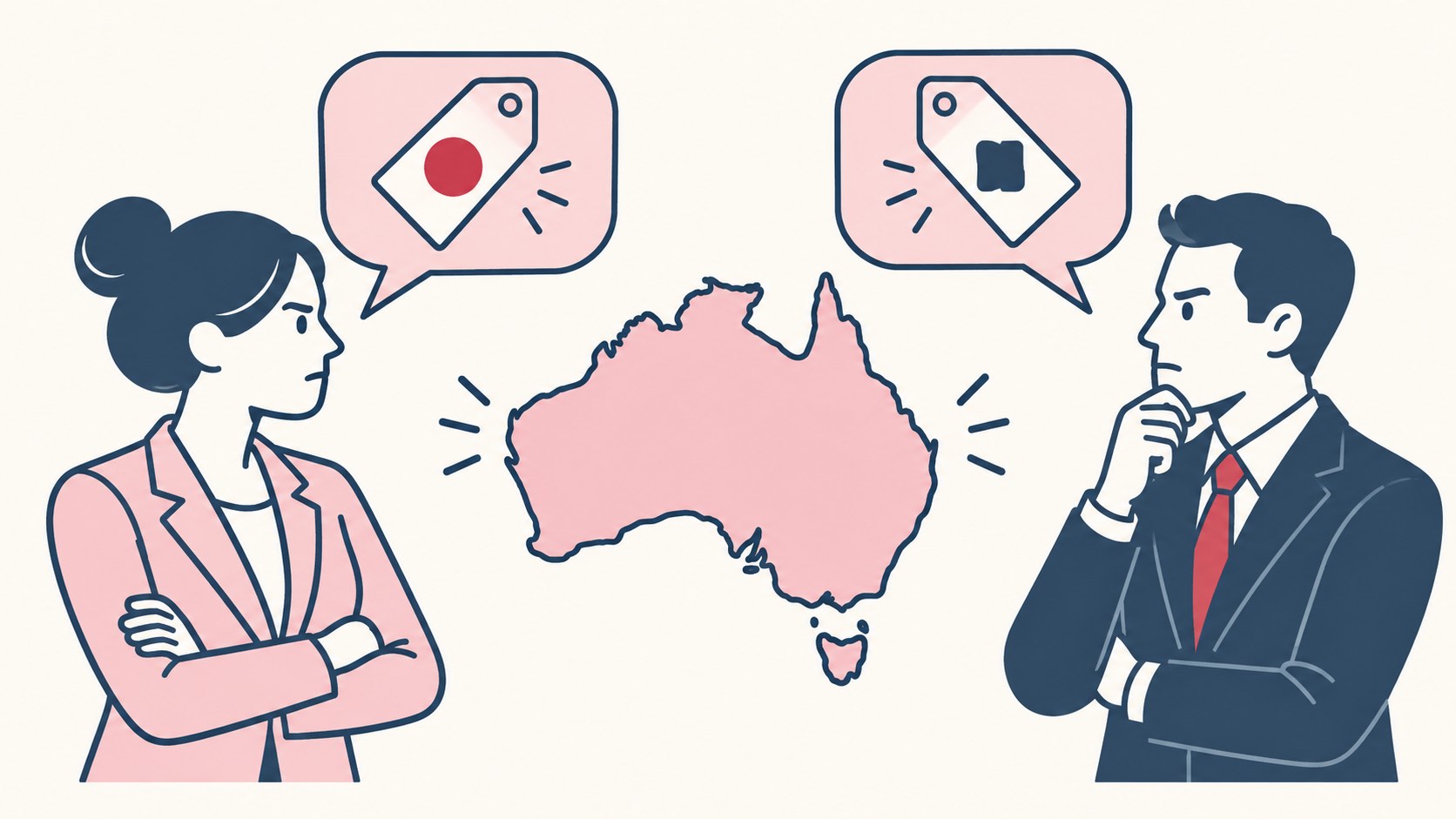
That is not a contradiction, and it isn’t either office getting it wrong. It’s what territoriality actually looks like in practice. Every registry decides on its own law, its own evidence and its own view of its own consumers. A win in one place tells you very little about the next place.
In my experience this is the single most expensive misunderstanding in the whole subject. People assume protection travels with the business. It doesn’t. It stops at the border, and so does the reasoning that got you there.
Is my business name too similar to one that already exists?
That is the question this decision really answers, and the honest answer is that being similar to an existing brand is not automatically a problem. What matters is whether the average consumer would actually be confused, judged on the names as a whole and on the goods and services each one covers. A shared word or prefix is not enough on its own.
If you’ve ever had the quiet worry that your name sits a bit close to a bigger one, and wondered whether you could be the one infringing, there are a few things I’d advise you to think about.
- Similarity is judged as a whole, not by the shared fragment. Strip out the element the other side is relying on and look at what’s left. If the rest of the name, the sound of it and the idea behind it are genuinely different, that matters. It’s the same logic that decided easyGroup’s run of claims against a small insole business, where the court declined to treat a common prefix as the property of one company.
- A big reputation cuts both ways. It gives the larger brand a broader reach, but it also means the average consumer knows exactly what that brand looks and sounds like, which can make a link less likely rather than more.
- Being opposed is not the same as being wrong. Oppositions are sometimes filed as a commercial reflex. The size of the opponent is not the strength of the case, and this decision is a reasonably blunt reminder of that.
- Check the register in every country you trade in or plan to trade in, before you commit. Not just the one you’re sitting in. A clearance search that covers your actual and intended markets is a fraction of the cost of discovering the problem after you’ve printed the packaging.
The uncomfortable version of this, and the one I’d rather people hear early, is that a name can be perfectly safe in the UK and a genuine problem in the EU, or the other way round. That isn’t bad luck. It’s just how the system is built.
What should you do about it?
- Run a search across the countries you sell in, not only the one you’re based in.
- If you’ve had a letter or an opposition, get someone to look at the actual strength of the claim before you agree to anything. In my experience the position is often better than the letter suggests.
- If you’re building a brand around a common word, prefix or suffix, invest in the parts that are genuinely distinctive, because those are the parts you’ll be able to enforce.
- If you already hold a UK registration and you’re expanding, treat each new market as a fresh decision rather than an extension of the one you’ve got.
None of this needs to be dramatic. Most of it is a conversation and a search, done before the money goes out rather than after.
If you’d like to know whether your name, logo or tagline is exposed, the free trademark search is a sensible starting point, and you’re welcome to book a free 15-minute call if you’d rather just talk it through. If the expansion question is the live one, our international trademark registration page sets out how filing in multiple territories actually works.
You can also email enquiries@thetrademarkhelpline.com or call 0161 833 5400.
This article is for information purposes only and does not constitute trademark advice or guidance.