Tesla announced the name Cybercab in April 2024. Six days later a French drinks company filed a trademark application for CYBERCAB covering vehicles and transport. More than two years on, Tesla is still fighting for the name, and the Tesla Cybercab trademark application in the US is on hold while that plays out.
It’s a live dispute and I’m not going to predict the outcome. But the timeline is one of the clearest illustrations I’ve seen of why the gap between announcing a name and filing a UK trademark application for it is the riskiest few days in a brand’s life.
What happened with the Tesla Cybercab trademark?
A French company filed CYBERCAB six days after Tesla announced the name, then claimed that filing date in an international registration covering the EU, the UK and the US. The timeline is worth setting out carefully, because the dates are the whole story.
- 23 April 2024. According to Tesla’s own notice of opposition at the US Trademark Trial and Appeal Board, this is when it first announced the CYBERCAB name, during a livestreamed shareholder meeting.
- 29 April 2024. Unibev, a French beverage company, filed a French trademark application for CYBERCAB covering vehicles and transport. Unibev accepts that filing date in its answer to the opposition.
- 10 October 2024. Tesla formally unveiled the Cybercab at its “We, Robot” event.
- 28 October 2024. Unibev filed an international registration for CYBERCAB designating the EU, the UK and the US. WIPO’s Madrid Monitor record shows it claiming priority from the French application of 29 April, one day inside the six-month window.
Tesla’s own US applications came after that, and the US Patent and Trademark Office suspended Tesla’s application to wait for the outcome of Unibev’s earlier one. In February 2026 Tesla opposed Unibev’s US application, alleging bad faith and fraud among other grounds. Unibev has denied acting in bad faith.
Update, September 2026: when we last checked the US Trademark Trial and Appeal Board record on 24 September 2026, no decision had been issued.
Closer to home, the same Madrid Monitor record shows the UK IPO granting protection to Unibev’s UK designation in May 2025.
It would be unfair to either side to assume the result. Tesla’s bad faith arguments may succeed, or Unibev may defend its position. But look at what it is having to do: a detailed legal challenge, more than a year after the launch, over a name it chose, announced and built a product around. That’s the position no business wants to be in, whatever the outcome.
And it doesn’t matter how big you are. Tesla has lawyers, money and one of the most recognisable brands on the planet. The trademark office still worked through the queue by date.
Why is announcing a name the riskiest moment?
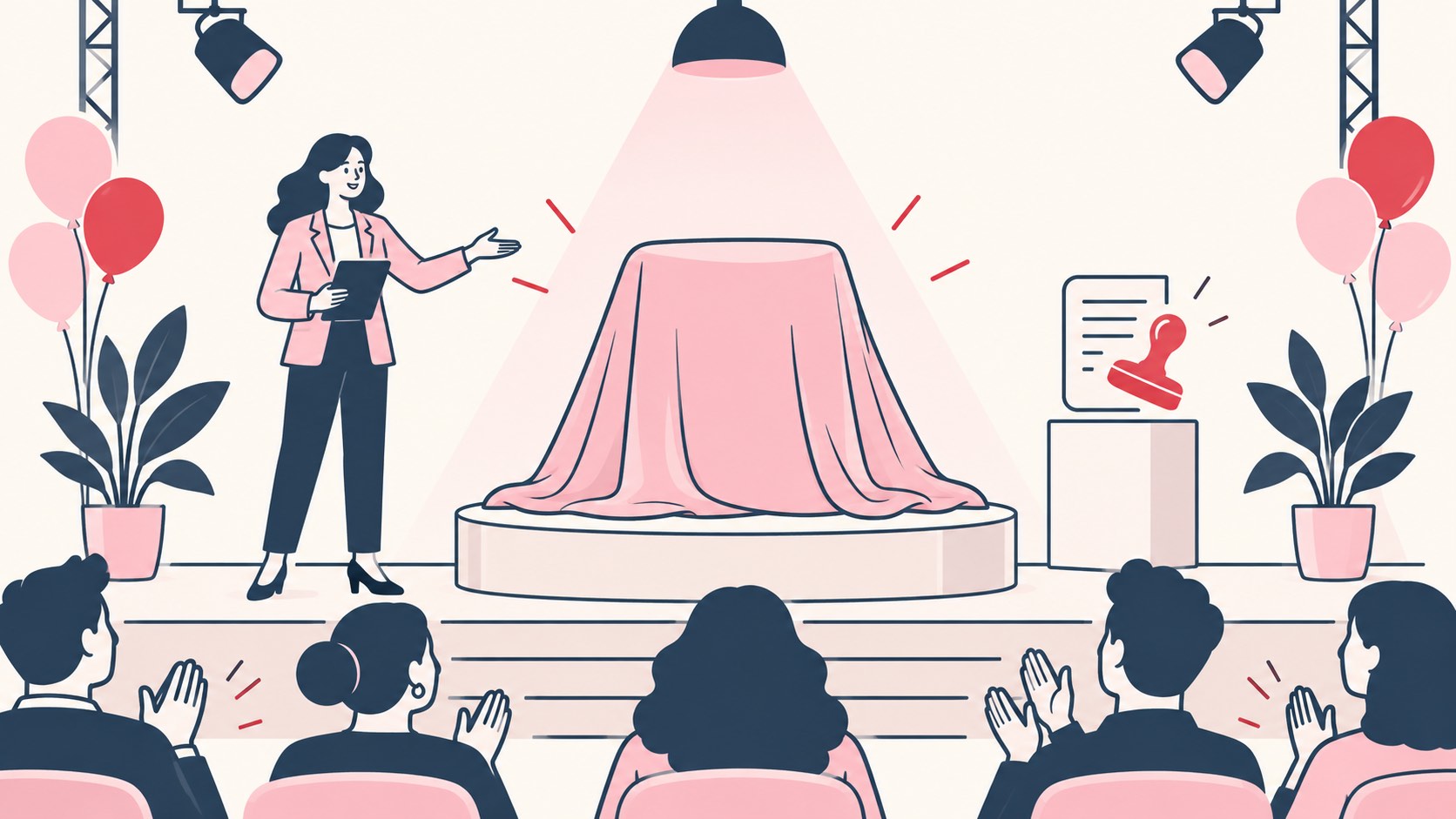
Because once a name is public, anyone who spots it can file it before you do. Announcing a product name before filing is a bit like telling everyone at a party which empty chair you’re about to sit in, then popping to the bar first. Most people won’t care. It only takes one who does.
Before the announcement, your name is a secret. After it, anyone can see it: competitors, opportunists, and companies in completely different sectors who spot the gap before you do. In the UK, once an application has passed examination it is published for two months, during which anyone may oppose it. Once you’ve filed, that system works in your favour, because you’re the one holding the earlier date.
My background before trademarks was in marketing, so I understand the pull. The announcement is the exciting part. The trademark application feels like admin. But changing a name after the world has seen it isn’t just a legal problem. It’s a branding problem, a marketing problem and a commercial one, and sometimes a very expensive one.
What does the padel boom tell us about timing?
Padel is a good example of a whole sector racing for names at once. Research by IP firm Mathys & Squire, reported by World IP Review in June 2026, found that UK trademark filings for padel-related brands rose by 148% in a year, to 270.
When a sector grows that quickly, clubs, academies, clothing brands, racket makers, tournaments and venues all start competing for names in the same space. If you wait until the business has grown before protecting the brand, someone may already have filed something close. That can make expansion harder, create disputes you could have avoided, or force a rebrand just as you’re building momentum.
The same logic applies to any fast-moving market. The best time to check and protect the name is before it gets crowded.
What does the Cybercab dispute mean if you’re about to launch?
In short: search, file, then announce. The lesson doesn’t need a Tesla-sized budget to apply. The order I’d suggest:
- Search before you settle on the name, not after the designer has finished the logo.
- File before you announce. The UK IPO’s official fee starts from £205 for one class, and your rights date back to the day you file. You don’t need to wait for registration to launch.
- Think about overseas markets straight away. You have six months from your first filing to file in other Paris Convention countries and keep that earlier date, which is exactly the window Unibev used. Our international trademark registration service can plan those filings for you.
- Watch the register once you’ve filed, so you see anything similar in time to oppose it. If something does turn up, our trademark opposition service can file and run the opposition for you.
If you’re weighing up timing more generally, including whether it’s ever too late, we cover the trade-off between filing first and trading first in our piece on first to file versus first to use.
How can we help you get the timing right?
A lot of what holds business owners back is fear of the unknown. They don’t know what the process involves or what could go wrong, so the trademark gets left until after launch. That’s why we carry out a full brand clearance audit before we apply for anything. The aim isn’t just to get an application sent. It’s to give your name the best chance of registration, so you know what you can safely build around before you spend on the launch. Our trademark consultation and clearance audit starts from £99, and the first consultation is free for new clients.
If you’ve got a name you’re about to announce, start with our free trademark search, book a free call, email enquiries@thetrademarkhelpline.com or call us on 0161 833 5400 before the launch date is set in stone.
Related questions
- Can someone steal my business name?
- What happens if someone copies my logo? Can I sue?
- Someone in another country is using my brand. Can I stop them?
This article is for information purposes only and does not constitute trademark advice or guidance. Last reviewed 25 September 2026. First shared as a LinkedIn post.