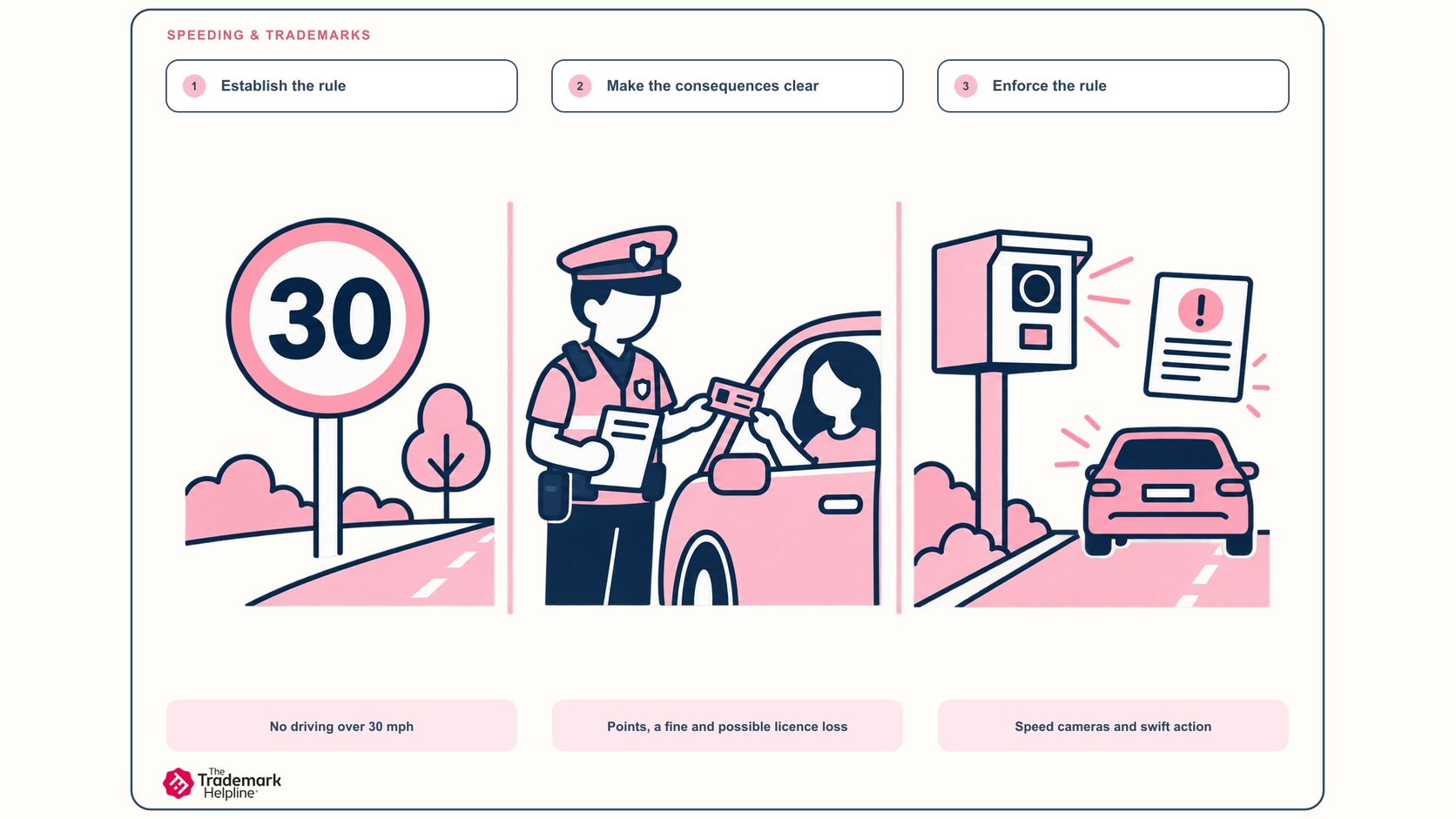

Can a bigger brand force you to change your business name? Sometimes yes, sometimes no, and what decides it is rarely who’s bigger. It comes down to who holds the registered right, for which goods and services, and in which country. If a larger business owns a trademark that covers what you sell where you sell it, and your name is close enough to confuse, it can usually stop you, however long you’ve been trading. If it doesn’t, the size of its legal team counts for a lot less than most people assume.
That’s the short answer. The longer one is worth having before a letter arrives, not after, because that letter is usually where these disputes start. Dealing with third-party approaches like that, along with objections and oppositions, is a big part of what our trademark representation and protection service does.
What do the Patagonia and TickTickTrader disputes show?
Two disputes this year show the question from both ends.
In the United States, Patagonia filed a lawsuit on 21 January 2026 against Wyn Wiley, the drag performer and environmental activist known as Pattie Gonia, and the company behind the Pattie Gonia brand. The court docket in the Central District of California lists it as a trademark infringement claim. Patagonia’s own statement says the trigger was a move from activism into branded apparel, and a trademark application filed in September 2025 for the Pattie Gonia name. Pattie Gonia disputes Patagonia’s account. The case hasn’t been decided.
Update, September 2026: since this was first written, the court has referred the case to private mediation, due by the end of November 2026, and set a jury trial for January 2027. When we last checked the public docket in September 2026, we could find no settlement or decision on it.
I’m not going to tell you who’s right, partly because no court has decided it and partly because that isn’t the interesting bit. What struck me is that a brand built on telling people to buy less, repair what they own and care more than the next company found itself cast by some as the bully the moment it enforced its trademark against somebody smaller. Patagonia’s position, broadly, is that if it doesn’t police its marks consistently it weakens its ability to stop anyone else. That’s a genuine commercial concern. It’s also a reminder that what used to happen quietly between lawyers now happens in public, on the same social platforms where a smaller brand’s followers can be far more loyal than a big brand’s customers.
The second dispute is closer to home, and it ended the other way.
TickTickTrader v TikTok: what happened at the UKIPO?
In short, TikTok opposed a small business’s UK trademark application and lost, with costs. TickTickTrader is a small Isle of Man business that trains people to trade futures. The name comes from the trading floor, where a tick is the smallest price movement a futures contract can make. It applied to register TICKTICKTRADER in the UK in 2023 for financial trading education and training.
TikTok opposed the application, arguing the name was confusingly similar to its own and would take unfair advantage of its reputation. In February 2026 the UKIPO hearing officer disagreed. The marks were found to share some visual and aural similarity but to be conceptually different, and there was no likelihood of confusion. The opposition was dismissed in full, the application went forward, and TikTok was ordered to pay £1,700 as a contribution to TickTickTrader’s costs (decision O/0133/26, reported by Trademark Lawyer Magazine). No appeal followed. For the record, TickTickTrader was represented by a small London firm of trademark attorneys that counts Lord Sugar among its directors, which I suspect didn’t hurt.
I thought this was an opposition that didn’t really need filing. Classes and specifications, the categories of goods and services a trademark is registered for, exist precisely to stop a brand monopolising a word across markets it has no intention of entering. A trading education platform and a video sharing app aren’t competing for the same customer. The size of the opponent does not equal the strength of the case. If you’re facing an opposition from either side, bringing one or defending one, our trademark opposition service covers both.
When can a bigger brand force you to change your business name?
In the UK, the answer sits mostly in section 10 of the Trade Marks Act 1994. Broadly, a registered owner can stop someone using a sign that is identical or similar to its mark, for identical or similar goods or services, where the public is likely to be confused. There is a wider rule for marks with a reputation, where use that takes unfair advantage of that reputation can infringe even for unrelated goods, and that is the ground big brands tend to lean on when the products don’t overlap. TikTok relied on both the confusion ground and the reputation ground. Both failed.
Three things tend to decide these cases in practice.
What each side actually owns
A registration is a property right in a name, logo or tagline, for a defined list of goods and services. A big brand’s protection is wide, but it isn’t unlimited, and the specification is where the argument usually starts.
How close the names really are
Sounding a bit similar isn’t the test. The question is whether the average customer for those goods or services would think the two businesses were connected. TickTickTrader turned on exactly that.
Where you trade
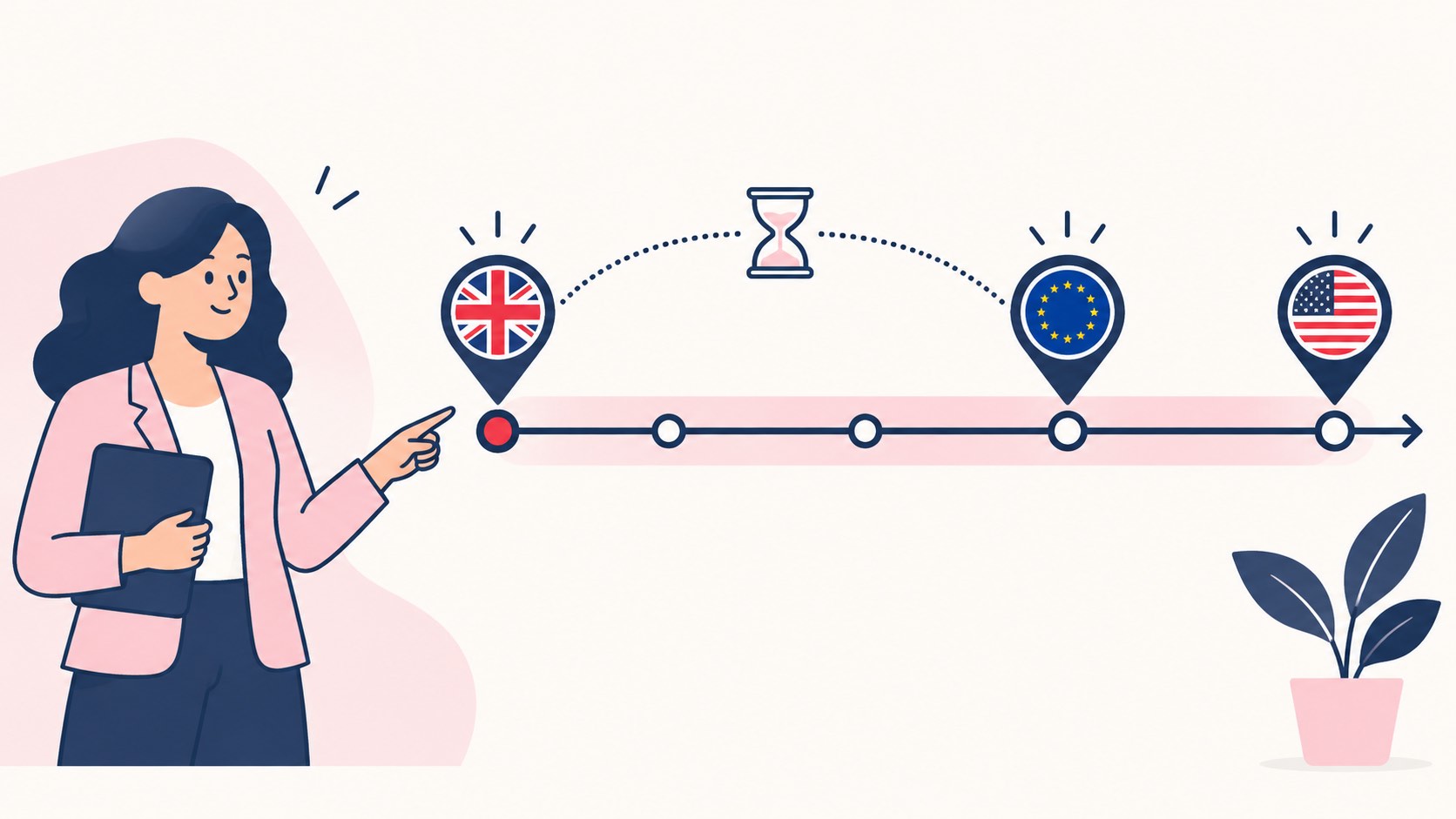
Trademarks are territorial. A UK registration protects you in the UK and the Isle of Man and no further, and a US registration does nothing for a brand trading only in the UK. Patagonia’s case is a US matter under US law. The lesson travels in both directions, but the detail doesn’t.
Doesn’t trading under the name for years count for something?
It counts, but less than people hope, and it’s much harder to use. Without a registration you’re relying on passing off, which means proving goodwill in the name, a misrepresentation and damage, from scratch and with evidence. There’s also a narrow defence for an earlier right used continuously in a particular locality, which rarely helps a business trading nationally or online.
Here’s the part I’d pay attention to. The law gives real weight to time only where you hold your own registration. Under section 48 of the Act, if the owner of an earlier right knowingly puts up with your use of a registered trademark for five continuous years, it loses the ability to challenge that registration or stop that use, unless you applied in bad faith. Five years of trading with no registration doesn’t give you the same position.
Companies House doesn’t help either. A name can be free to register as a company and still sit on top of someone else’s trademark, because the two registers don’t check each other. Using a sign as a company or trading name is one of the ways the Act says a trademark can be infringed. Our article on whether someone can steal your business name goes through the first-to-file side of this in more detail.
What if you’re the smaller business on the receiving end?
A letter isn’t a verdict. It’s an opening position.
People see a giant logo at the top of the page and assume they’re already in a fight. Often they aren’t, yet. There are usually options: push back, narrow your use, agree a coexistence. Which one makes sense depends on what each side actually owns and where. The easyGroup v Easyfeetstore ruling is another UK example of a well-funded claimant losing because the shared element was a common word.
I’d also say this honestly. Sometimes the bigger brand is right, and the cheapest outcome is an orderly change of name on your own timetable rather than a fight you can’t afford. A £30,000 dispute might be irritating to a large corporation. It might fundamentally damage a small company. Litigation is a tool, not an objective, and the aim is the best achievable outcome at a proportionate cost.
If you’re the one doing the enforcing, the flip side applies. Going in hard is a commercial decision, not just a legal one. Sometimes the reputational cost of being seen to be obstructive of a smaller name outweighs anything you win on paper, and when an opposition fails, costs follow.
How do you avoid being in the firing line?
Get your own intellectual property in order before anyone else takes an interest. Check the name against the trademark register, not just Companies House and a domain search, in the classes you trade in today and the ones you’re heading towards, and in the countries you currently trade or plan to trade. If it’s clear, register the elements that genuinely matter to you. Every application through our UK trademark registration service starts with a pre-application clearance audit, so you know the risks before any official fee is paid. If it isn’t, you’ve found out before the signage, packaging and website were paid for.
Our free trademark search is a sensible first look and costs nothing. If a letter has already landed, our trademark cease and desist service starts with an honest read of who owns what, and you can book a free 15-minute call or ring 0161 833 5400. The consultation is free for new clients.
If your brand matters to you, protect it before somebody else decides it matters to them.
Related questions
- Does owning the domain name protect my brand?
- I got a trademark renewal letter or invoice. Is it a scam?
- What would it cost me to rebrand if I am forced to change my name?
This article is for information purposes only and does not constitute trademark advice or guidance. Last reviewed 25 September 2026. First shared as a LinkedIn post.