When somebody buys a business, they are rarely buying its equipment, website and customer list alone. They may be buying the name customers recognise, the reputation attached to it and the trust the business has built.
That value sits in the brand, but a buyer needs to know that the seller owns it and has the right to transfer it.
I’ve seen businesses reach the point of sale only to discover that their trademark is registered to the wrong company, owned personally by a founder, shared with a former partner or does not cover the goods, services or territories that matter to the buyer.
These problems do not necessarily end a transaction, but they can delay it, reduce its value or give the buyer grounds to renegotiate.
A trademark should help make a business easier to sell. It should not become a problem discovered during due diligence.
Is a trademark a business asset?
Yes. A registered trademark is an intellectual property asset that can be sold, transferred, licensed or, in some circumstances, used as security.
This distinguishes it from expenditure such as advertising, signage or website design. Those costs may help build the brand, but the trademark is an asset capable of continuing under new ownership.
For many businesses, the question I find more revealing is this one:
What would the business be worth if it could not retain its brand?
If losing the name would create customer confusion, interrupt sales, damage search visibility or force an expensive rebrand, the trademark may carry a significant part of the business’s commercial value.
What will a buyer investigate?
A sensible buyer will not simply check whether a trademark number exists. Their advisers may want to establish:
- Who owns the trademark.
- Whether the registered owner matches the business being sold.
- Whether the trademark can be transferred.
- Whether any founders, partners or third parties could claim an interest in it.
- Whether the business has appropriate assignments or licensing agreements.
- Which names, logos and taglines are protected.
- Which goods and services the registration covers.
- Which countries are protected.
- Whether renewals and official records are up to date.
- Whether the trademark is being used and whether evidence of that use is available.
- Whether there are current or threatened disputes, oppositions or cancellation proceedings.
- Whether similar brands could restrict future growth.
- Whether the business is actively monitoring and defending the brand.
A registration that does not reflect how the business actually operates may be less useful than the owner assumes.
Does the trademark automatically transfer with the business?
That depends on how the transaction is structured.
In a share sale, the company itself usually remains the registered trademark owner. The shareholders change, but the company continues to own its assets.
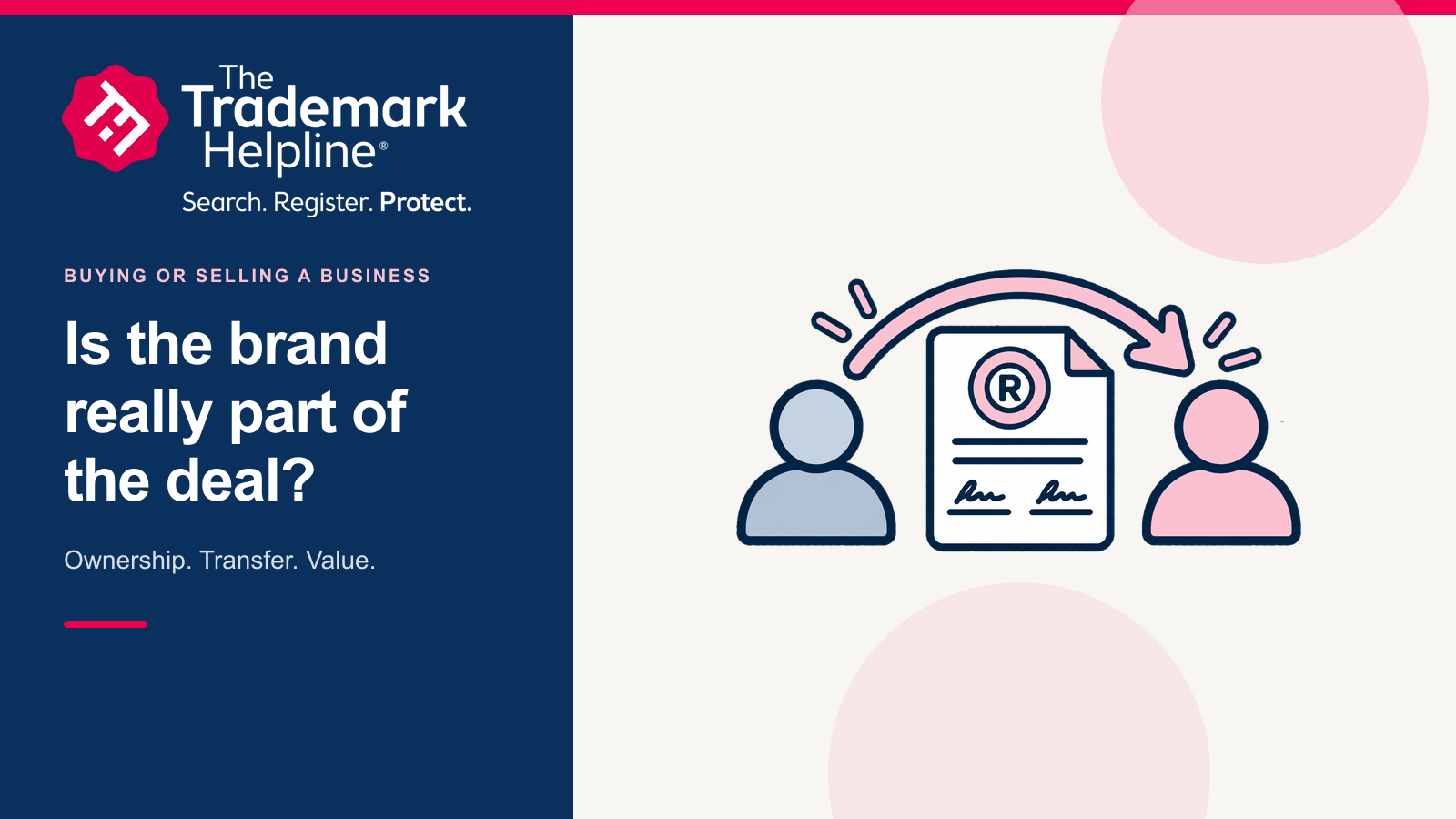
In an asset sale, the trademark may need to be expressly transferred to the buyer. The legal term for that transfer is an assignment. The transaction documents should identify what is being transferred, and the change of ownership should be recorded with the relevant trademark registry.
The register records the registered owner, but it does not necessarily reveal every agreement or commercial interest connected to the brand.
A trademark may, for example, be personally owned by a founder or held in a separate holding company and licensed to the trading business. This can create a strong commercial ownership structure when it is properly documented.
Problems arise when the registration says one thing, the investment has been made by somebody else and there is no written agreement explaining who owns what.
Our article, If Your Business Partner Walked Tomorrow, Who Owns the Brand Name?, explains why the name on the register is only part of the ownership picture.
What if the business has never registered its name?
An unregistered brand can still have rights through its trading history and goodwill. However, those rights can be harder and more expensive to demonstrate.
A buyer may have to examine when the name was first used, where the business trades, how widely it is known and what evidence exists to support that history.
A registered trademark provides a clearer starting point. It identifies the registered owner, the protected mark, the relevant goods and services and the territories covered.
Registration does not guarantee that a dispute can never occur, but it can make ownership and enforceable rights considerably easier to demonstrate. If you are not sure what is already registered in your name, or whether the name is clear in the first place, our free trademark search is a sensible starting point and costs nothing.
The cautionary story of Paul Dell’s dispute with Dell Inc. illustrates how disruptive a conflict over a business identity can become, even where the business owner believes they have a legitimate reason to use the name.
Can a trademark increase the value of a business?
A trademark does not acquire a fixed value simply because it has been registered.
Its value can be influenced by:
- The revenue and profit associated with the brand.
- Customer recognition and loyalty.
- The strength and distinctiveness of the name.
- The goods, services and territories protected.
- The business’s ability to prevent confusingly similar use.
- Licensing or franchising income.
- Growth potential.
- The remaining term and renewal position.
- Disputes or restrictions affecting the trademark.
- The financial effect of losing the brand.
I can put you in touch with qualified company and intellectual property valuation specialists.
Large corporate transactions may require work from major audit and advisory firms. Within the SME market, suitably qualified valuation specialists and chartered professionals can often provide the necessary independent work at a substantially more proportionate cost.
The appropriate valuation route will depend upon why the valuation is required, who will rely upon it and the scale and complexity of the transaction.
What should a buyer do before purchasing a trademark?
A buyer should establish that they are acquiring what they believe they are acquiring.
That normally means confirming:
- The identity of the legal owner.
- The chain of ownership leading to that owner.
- The registrations and applications included in the transaction.
- The goods, services and territories covered.
- Any licences, security interests or coexistence agreements.
- Any disputes, threats or unresolved correspondence.
- The brand’s actual commercial use.
- The rights retained by the seller.
- How and when ownership will be transferred.
- Who will update the trademark registers after completion.
Where the business depends heavily upon the brand, I wouldn’t leave trademark due diligence until the final stages of the transaction.
What should a seller do before putting the business on the market?
The best time to resolve a trademark ownership problem is before a buyer discovers it.
A seller should review the portfolio, correct outdated information, locate assignments and licences, collect evidence of use and identify gaps in protection.
If important names, logos or territories are not covered, there may still be time to improve the position before formal buyer due diligence begins.
Our Trademark Consultation and Audit examines the registrations, ownership, commercial use and wider risks surrounding the brand.
We can then help organise the trademark position, manage registry administration and work alongside your solicitor, accountant, corporate adviser or valuation specialist.
Where regulated legal advice is required, we can coordinate with our trusted panel of regulated partners.
That gives you one central UK point of contact, and avoids paying twice for the same professional work.
The lesson from Polo
A trademark does not always have to be created from nothing. Sometimes buying an existing trademark asset is the most commercially effective route.
In our podcast discussion about Polo and Polo Ralph Lauren, we examine what happens when trademark ownership, business history and commercial opportunity intersect.
How we help
I believe a trademark should make a business safer, more valuable and easier to transfer.
We help sellers identify problems before they interrupt a transaction, and we help buyers understand whether the brand they’re acquiring is properly owned, suitably protected and capable of supporting their future plans.
By resolving ownership, registration and administrative issues early, we help deliver a clearer transaction, fewer unwelcome surprises and a trademark asset that can continue protecting the business after ownership changes.
Buying or selling a business where the brand matters
Arrange a Trademark Consultation and Audit before ownership, value or transfer issues begin affecting the transaction.
You can book a free 15-minute call, email enquiries@thetrademarkhelpline.com, or call 0161 833 5400.
This article is for information purposes only and does not constitute trademark advice or guidance.