There’s a trademark case unfolding right now that tells you everything you need to know about why protecting your brand early matters. It’s not a story about someone registering a confusingly similar name. It’s a story about a competitor copying your logo while competing in the exact same market, and then refusing to stop.
It’s also a textbook example of logo trademark infringement, and of how expensive it becomes when you leave trademark registration too late.
The case is Anthropic PBC v Abnormal AI Inc. And the lesson is urgent.
The Timeline: Four Years of Vulnerability
Anthropic started using the name “Anthropic” in May 2021. It took them until November 2025 to file a trademark application. That’s a four-year gap.
In that gap, Abnormal Security (a cybersecurity company operating in the same market) rebranded itself on March 28, 2025. As part of that rebrand, Abnormal didn’t just choose a similar name.
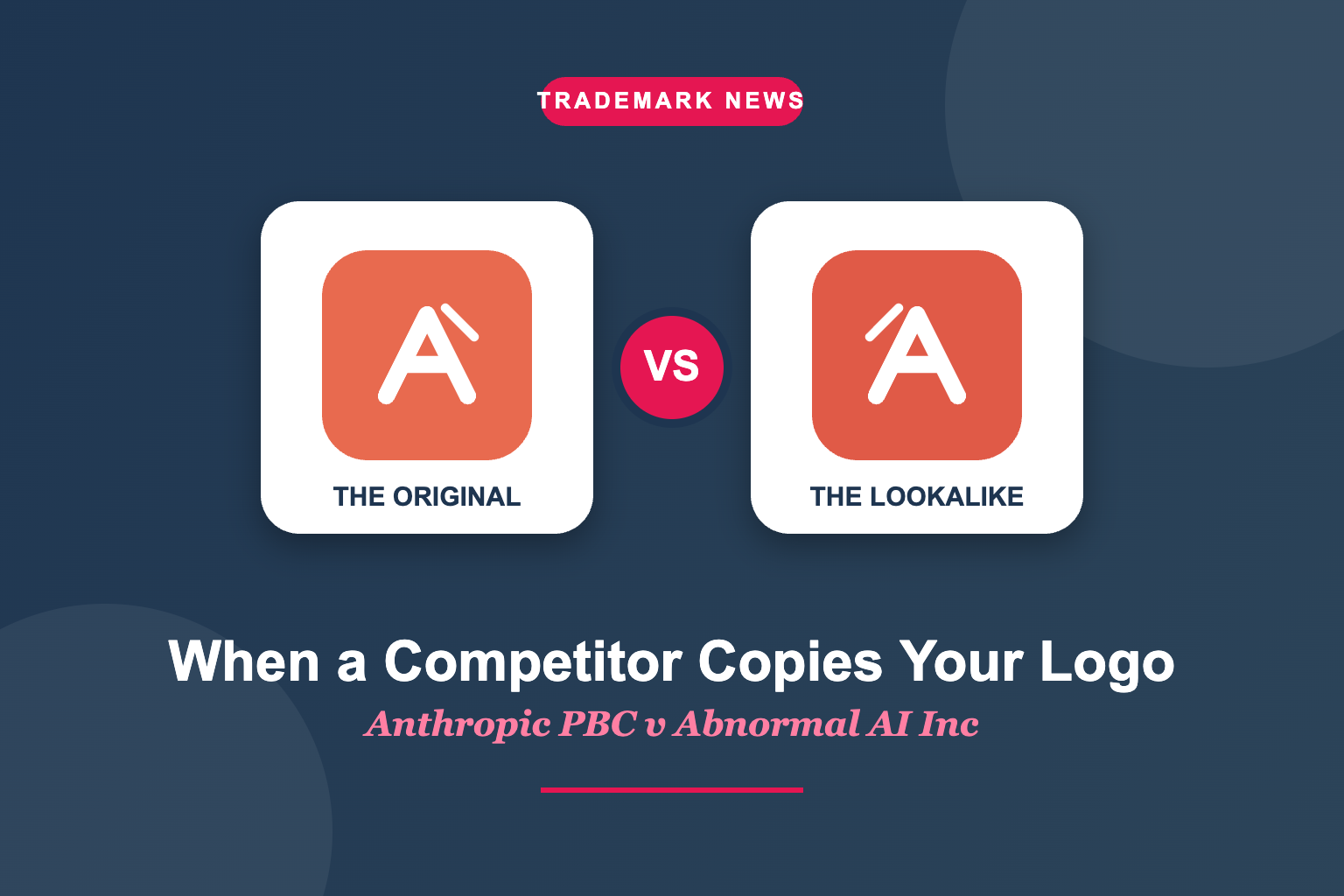
They copied Anthropic’s distinctive logo (a bold letter “A” inside a coral-coloured box with a starburst slash design) and replaced it with their own version. They also copied Anthropic’s animated logo transitions, the motion sequences that Anthropic uses to animate its mark.
Then Abnormal filed for a trademark on March 12, 2025. They got to the trademark office first.
Now Anthropic is in federal court (Northern District of California, case 3:26-cv-0675) trying to overturn a registration that should never have been granted in the first place.
This Isn’t Trademark Trolling. This Is Bad Faith.
Let me be clear about what we’re looking at here. This isn’t a case of someone registering a name with no intention of using it, purely to sell it back or block competitors. That’s trademark trolling.
This is something different. This is intentional copying by a direct competitor.
The evidence of bad faith is substantial:
Knowledge. By March 2025, Anthropic wasn’t a secret. The company had already built substantial goodwill. More than 300,000 businesses were using Claude (Anthropic’s AI product). Nine of the Fortune 10 companies were customers.
Anthropic’s annualized run-rate had grown from $100 million in January 2024 to over $47 billion by May 2026. TIME magazine named them one of the most influential companies in the world. Abnormal knew exactly who they were copying.
Same market. Both companies sell AI-powered enterprise security software to the same customers: security leaders, developers, procurement teams. They attend the same conferences. They appear in the same partner ecosystems and software-governance workflows.
This isn’t a case of unrelated businesses happening to choose similar marks. This is direct competition.
Visual similarity that’s not subtle. When Abnormal announced its rebrand on LinkedIn, members of the cybersecurity community immediately noticed. One person asked: “Does Abnormal’s new logo look like Anthropic’s, or am I seeing double?” Another agreed: the marks look the same.
That’s not accidental similarity. That’s observable copying.
Refusal to cooperate. In August 2025, Anthropic reached out to Abnormal and offered a 60-day transition period for them to change their logo. Abnormal refused. That’s not how someone acts if they didn’t realise the similarity or if they’d made an innocent mistake.
Aggressive expansion after refusal. After refusing to change their logo in March 2026, Abnormal didn’t back down. They opened a San Francisco storefront bearing the infringing logo, less than half a mile from Anthropic’s headquarters. They pursued trademark protection not just in the US, but internationally.
When faced with an opposition filing from Anthropic at the Trademark Trial and Appeal Board, Abnormal’s answer (March 23, 2026) was: no, we’re not changing it.
Using Anthropic’s own technology. Perhaps most tellingly: Abnormal’s platform is powered in part by Anthropic’s Claude. They’re building their product on top of Anthropic’s technology while simultaneously copying their brand identity.
Put it all together and bad faith is the only reasonable conclusion. This is a competitor who saw a successful brand, copied its visual identity, and then doubled down when confronted.
The Legal Issue: First-to-Use vs. First-to-File
This case hinges on a distinction that trips up far too many founders.
There’s a difference between being first to use a brand and being first to file a trademark.
Anthropic was first to use. They’ve been trading under the name “Anthropic” since May 2021. They have genuine use of the mark, customer goodwill, and commercial history.
Abnormal was first to file. They submitted their trademark application to the US Patent and Trademark Office in March 2025, before Anthropic filed.
The trademark register operates on first-to-file. It doesn’t matter if you’ve been using a name for ten years. If someone else files a trademark application before you do, the register gives priority to the filing date.
You own use; they own the right. This is why timing matters so much in trademark registration.
The Real Cost: What a Four-Year Gap Enables
For Anthropic, that four-year gap between starting to use the name and protecting it created an opportunity for Abnormal. Here’s what became possible during that window:
- A competitor could file a trademark application before you. ✓ That happened.
- A rival could adopt a confusingly similar logo while competing in your exact market. ✓ That happened.
- Someone could copy your animated brand sequences and promotional materials. ✓ That happened.
- A business could open a physical location near your headquarters bearing an infringing mark. ✓ That happened.
- A company could pursue international trademark protection in multiple jurisdictions. ✓ That happened.
The four-year gap didn’t just create a legal problem. It created a business problem.
Anthropic now has to go to federal court, hire Morrison Foerster (one of the top IP law firms in the world), and fight for a mark they should have protected years ago. That’s not inexpensive.
What Happens Next?
Anthropic’s case looks strong. The facts support them on several grounds:
Likelihood of confusion. Both companies operate in the same market, with overlapping customers and complementary (in Abnormal’s case) or competing offerings. The logos are visually similar. The animated transitions are copied. Consumer confusion is likely.
Bad faith registration. Abnormal’s timeline, refusal to cooperate, and aggressive post-refusal expansion all point to intentional registration in bad faith. Under trademark law, bad faith registration can be grounds for cancellation.
Dilution. Anthropic’s mark is famous: 300K+ users, Fortune 10 adoption, international recognition. When a famous mark is used by a competitor in a way that blurs the distinctiveness or tarnishes the reputation, that’s dilution. Anthropic likely has claims here too.
Will Abnormal eventually change their logo? Possibly. Will they settle? That’s a commercial question, not a legal one.
But on the legal merits, Anthropic appears to have a clear path to a win in this logo trademark infringement dispute.
The Lesson for Every Business Owner
Here’s what this case teaches:
File early. Not next quarter. Not after your Series A. Not when you’ve “got enough customers.” File the moment you’ve decided on a name and you’re confident it’s the one you’re keeping.
The official fee in the US is modest (around $350 per class). The cost of fighting someone who registered it first is considerably more. For UK businesses, our UK trademark registration service handles the whole process for you.
Protect your visual brand, not just your name. Anthropic’s distinctive logo, that coral box with the starburst slash, is what made the copying obvious and indefensible. If you have a distinctive visual identity, register it. Don’t assume that because your name is unique, your logo doesn’t need trademark protection.
Act quickly when you see copying. Anthropic reached out to Abnormal in August 2025. Abnormal refused. Anthropic filed an opposition in November 2025. They didn’t wait around hoping the problem would resolve itself.
If you spot trademark infringement, document it, contact the copier (often starting with a formal cease and desist letter), and prepare to file a trademark opposition or take legal action. Delay strengthens the other party’s position.
Understand first-to-file. Your use of a name doesn’t automatically give you the right to stop someone else from registering it. The trademark register cares about who filed first, not who used first. That’s why timing is everything.
The Cost of Waiting
For most founders, trademarking feels like a later-stage problem. You’re heads-down building the product. The brand feels abstract. A trademark feels like something for when you’ve “made it.”
That’s backwards.
The moment your name starts generating revenue, it’s on other people’s radar. The window to protect it doesn’t stay open forever. Every month you wait is a month someone else could register it. Every month you wait is a month a competitor could copy your visual identity.
Anthropic learned that the hard way. They waited four years. Now they’re in federal court.
You don’t have to make that mistake.
What to Do Now
If you’ve got a brand name you’re confident in, register it as a trademark. Don’t wait for funding. Don’t wait for a “more stable” moment. The fee is modest. The protection is invaluable.
If you’ve got a distinctive visual identity (a logo, a colour, a design element), protect that too. Registration is jurisdiction-by-jurisdiction, so start with your home market (for UK businesses, that’s the UK), then expand to the territories where you actually trade.
If you’re selling globally or planning to, don’t assume a UK registration covers you everywhere. File in the US, the EU, Australia, Canada, and anywhere else your customers are. Territory-by-territory is the standard.
And if you spot someone copying your brand? Don’t wait. Document it. Contact them. Prepare to fight.
An active trademark monitoring service means you find out about copycats and conflicting applications the moment they appear, not months later.
The Anthropic case is a reminder that bad faith copying happens. It happens to companies with resources and high-profile brands. It can happen to you.
The difference between a quick resolution and a four-year federal court battle is often just one thing: getting there first.
File your trademark early. Protect your visual brand. Act fast if you spot copying. That’s the playbook for brand protection.
Think Someone Is Copying Your Logo or Brand?
Don’t wait for it to become a court battle. The Trademark Helpline team will tell you honestly where you stand and what protection you need, with representation and protection from just £14/month.
Book a free consultation with our trademark specialists, or call us on 0161 833 5400.
The Trademark Helpline helps businesses protect their brands from the start. If you’re unsure whether your brand name is clear to use, or you want to understand what protection you need, the free trademark search is a good place to start.
This article is based on publicly available court documents from Anthropic PBC v Abnormal AI Inc., case number 3:26-cv-0675, United States District Court for the Northern District of California, filed July 2, 2026.
Questions about this
What does Anthropic say Abnormal AI copied from its branding?
Anthropic alleges that Abnormal Security, a cybersecurity company in the same market, rebranded in March 2025 with a logo closely resembling its own, a bold letter A inside a coral-coloured box with a starburst slash design, and copied its animated logo transitions. Abnormal had filed its own trademark application first, on 12 March 2025, and Anthropic is asking a US federal court to overturn that registration.
 Answered by Jonathan Paton, Founder & CEO
Why does a four-year gap between using a brand and filing for it matter?
Because trademark registers generally give priority to the filing date, not the date you started trading. Anthropic used its name from May 2021 but did not file until November 2025, and in that gap a competitor in the same market filed first. A business that has used a name for years can still find someone else holding the earlier application, which is why filing soon after launch matters so much.
Answered by Jonathan Paton, Founder & CEODoes a registered trademark help if a competitor copies my logo?
Yes, it makes a real difference. If you hold a registration covering your logo, you have a clear route to act: a letter, a platform takedown and court action if needed. Without one, you are relying on passing off or copyright, which are harder to prove and more expensive to run. Anthropic’s experience shows how much harder things get when a competitor files before you do.
Answered by Jonathan Paton, Founder & CEO