Somebody asked me yesterday, “should I register my company name as a trademark?” You might imagine my immediate answer would be a straight yes. It wasn’t.
When it is worth trademarking your name
My answer was that you should definitely look at whether you can trademark your name if:
- You have a name, logo or tagline that is genuinely distinctive.
- Having to rebrand would be detrimental to your business.
- Nobody has trademarked the name already.
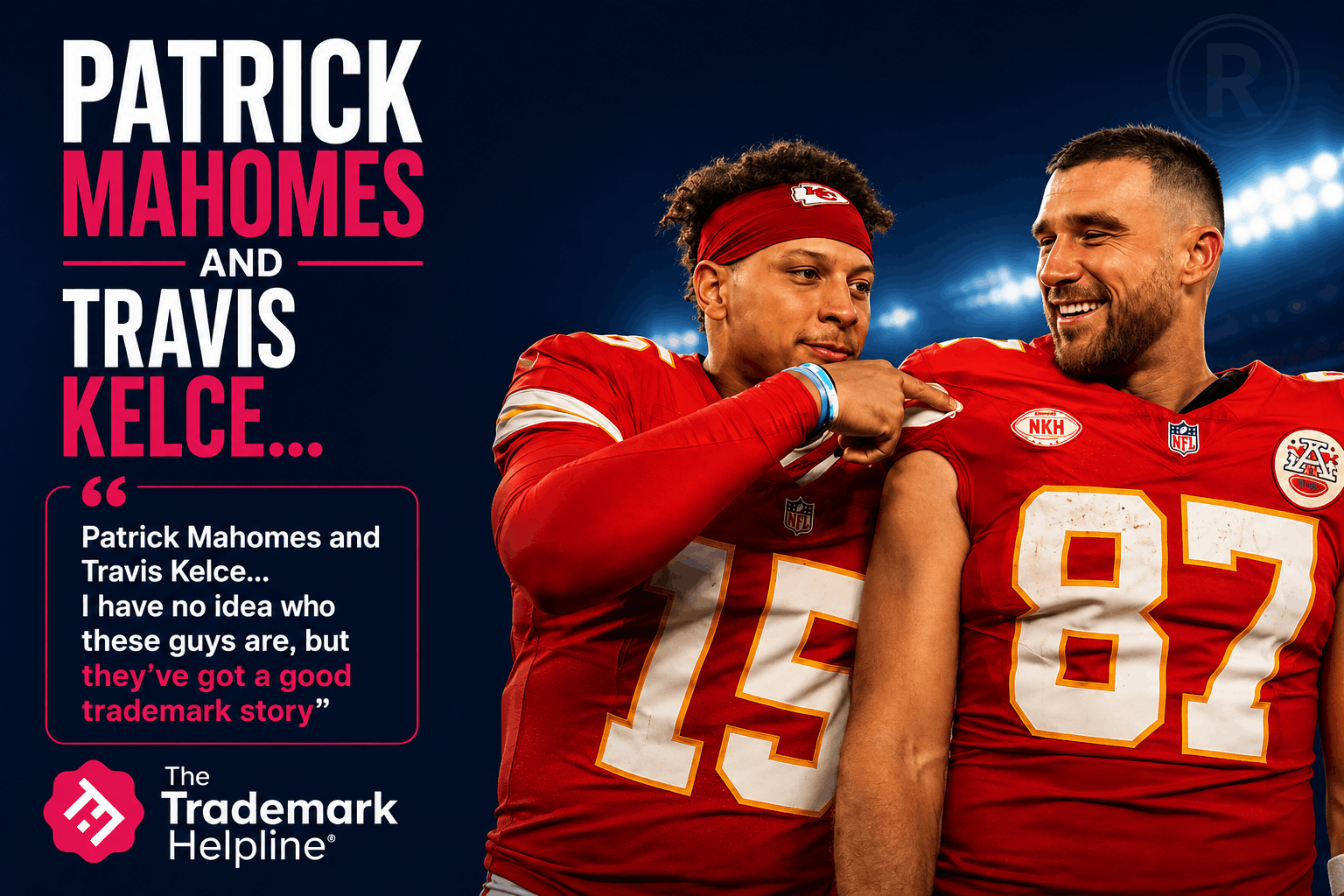
I’m covering points one and three with a story about a couple of American footballers, Patrick Mahomes and Travis Kelce. Being English, I had never heard of them, but they named their steakhouse after their shirt numbers, 15 and 87. Then a sneaker brand (that’s trainers, in the Queen’s English), which they had probably never heard of, sued them over those four digits.
The “1587 Prime” story
So you have two of the biggest names in American sport (allegedly), and a steakhouse called 1587 Prime, the numbers chosen because Mahomes wears 15 and Kelce wears 87.
The issue is that “1587” already meant something to somebody else. 1587 Sneakers, an Asian-American owned brand, had been selling under that number since 2023, named after the year Filipino sailors first landed in what is now the USA. They say they got there first, and they have taken the dispute on.
A name meaning something to you is not the same as it being free
So the point is this: a name meaning something to you is not the same as it being free to use. Those numbers were personal to two NFL stars. It didn’t matter. What matters is who holds prior rights, and in which class of goods.
This would not be an issue if the restaurant only did food and drink, but 1587 Prime sells apparel too, and it is that overlap that has created the dispute.
The most avoidable dispute there is
In my experience this is the most avoidable kind of dispute there is. A proper search and audit before you commit to a name, across the classes you will actually trade in, tells you whether you are walking into someone else’s rights. It is far cheaper to find that out now than in a lawyer’s letter later, and you can even begin with a free trademark search to get an early sense of the position.
And don’t think that using your own first name, surname or anything else personal makes a difference, because it doesn’t, as Paul Dell learned when he took on Dell Computing many years ago.
The question worth asking before you commit
If you sat down to name a business tomorrow, would you just check Companies House and domain names? Or would you check that the name is not already trademarked in the countries you hope to trade in, before you spent money developing it? If your brand matters, a UK trademark registration is how you lock it down, but the first step is always making sure the name is actually yours to use.
Questions about this
What is the 1587 Prime trademark dispute about?
1587 Prime is a steakhouse named after the shirt numbers of NFL players Patrick Mahomes, who wears 15, and Travis Kelce, who wears 87. 1587 Sneakers, an Asian-American owned brand, had been selling under that number since 2023 and has taken the dispute on, saying it got there first. The overlap is apparel: the restaurant also sells clothing, and that is what created the conflict.
 Answered by Jonathan Paton, Founder & CEO
Should I trademark my company name?
It is worth looking at whether you can if your name, logo or tagline is genuinely distinctive, if having to rebrand would harm your business, and if nobody has trademarked the name already. A name meaning something to you is not the same as it being free to use. What matters is who holds prior rights, and in which class of goods or services.
Answered by Jonathan Paton, Founder & CEODoes using my own name or a personal number make a business name safe to use?
No. Using your own first name, surname or something personal, such as a meaningful number, does not make a name free to use. If someone else already holds prior rights in the classes you trade in, the personal connection does not change that. A proper search and audit before committing to a name, across the classes you will actually trade in, is far cheaper than finding out from a lawyer’s letter later.
Answered by Jonathan Paton, Founder & CEO