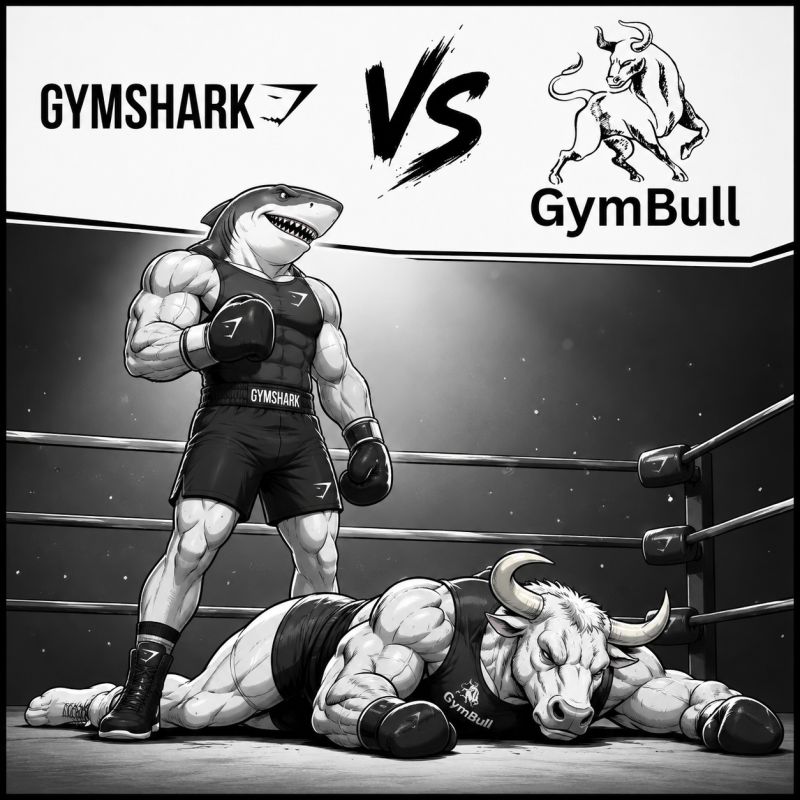
Gymshark started life in a garage in Solihull, and this month it blocked a copycat trademark called ‘GymBull’. The garage bit is the part everyone loves, because Ben Francis was screen printing gym kit in his parents’ garage while working shifts at Pizza Hut, and Gymshark is now one of the biggest brand stories this country has produced in years. It is a brilliant origin story, but imagine for a moment if he had never secured the Gymshark trademarks. The romance only counts for so much if you cannot defend it.
Why the refusal is more interesting than the win
What actually caught my attention was not that Gymshark saw off the ‘GymBull’ application, but why the UK Intellectual Property Office refused it. The examiner did not simply look at the one mark in isolation. They looked at the applicant’s wider track record, including a pattern of other lookalike filings in the same spirit, names such as ‘The South Face’ and ‘Upper Armour’, and concluded that the pattern pointed to bad faith rather than a genuine attempt to build an honest brand.
That is worth understanding, because bad faith is one of the stronger grounds for knocking out an application. It is not about whether two marks look similar on a given day. It is about the intention behind the filing, and when somebody appears to make a habit of riding on the back of well known brands, that history can be used against them. The lesson for the rest of us is that the register is not a passive list. It is a live system where conduct and patterns genuinely matter.
Registration plus monitoring is the real combination
Here is what I would take from this as a smaller brand owner. Gymshark could act for two reasons. First, it had registered, so it held a clear right to enforce. Second, somebody was watching the register closely enough to catch ‘GymBull’ before it ever slipped through. That is not luck. That is a registered right and active monitoring doing exactly what they are designed to do, together.
A name you have simply been using, with nothing registered behind it, leaves you arguing about reputation, and that route is slower, more expensive and far less certain. A registration is the lever that turns a complaint into a clear legal position. So the foundation is a UK trademark, and the early warning system is proper monitoring and alerts that tell you when a conflicting application or lookalike appears, while it is still cheap and easy to deal with rather than after it has gained traction.
It runs in both directions
It is also worth remembering that this works both ways. A global brand selling into the UK still needs a UK registration to act here, exactly as a UK brand needs local protection wherever it trades. Rights are territorial, and being huge somewhere else does not automatically give you teeth in this market. Whether you are a household name or a one person business, the register is where your ability to defend your brand actually lives.
The garage origin story is the romantic bit, and it deserves to be told. The registration is the unglamorous bit that lets you defend everything you build on top of it. Gymshark got both right, and that is precisely why it could stop ‘GymBull’ in its tracks rather than simply watching it happen.
Questions about this
Why was the GymBull trademark application refused?
The UK Intellectual Property Office refused it on bad faith grounds. The examiner looked beyond the single application at the applicant’s wider filing history, which included lookalike names such as ‘The South Face’ and ‘Upper Armour’, and concluded the pattern pointed to bad faith rather than a genuine attempt to build an honest brand. The decision turned on the intention behind the filing, not simply on how similar the marks looked.
 Answered by Jonathan Paton, Founder & CEO
What does bad faith mean in a trademark application?
Bad faith concerns the intention behind a filing rather than whether two marks look alike on a given day. If an applicant appears to make a habit of riding on the back of well known brands, that history can be used against them. It is one of the stronger grounds for knocking out an application in the UK, and it shows the register is a live system where conduct and patterns genuinely matter.
Answered by Jonathan Paton, Founder & CEODoes a well known overseas brand need a UK trademark to act in the UK?
Yes. Trademark rights are territorial, so a global brand selling into the UK still needs a UK registration to act here, just as a UK brand needs local protection wherever it trades. Being large elsewhere does not automatically give a business teeth in this market. Gymshark could stop GymBull because it held a UK registration and someone was watching the register closely enough to catch the application early.
Answered by Jonathan Paton, Founder & CEO