Here is a question that tends to stop people in their tracks. Did you know that Umbro, the company behind one of the most recognised logos in British sport, lost a case at the UK Supreme Court last summer? Most people quietly assume that once you are big enough to own a famous logo, and once that logo has been registered for decades, you are essentially untouchable. The Umbro story is a useful reminder that it does not quite work like that, and that even a brand with a forty year head start can walk out of the highest court in the land with nothing to show for the fight.
The case, and how the answer kept changing on the way up
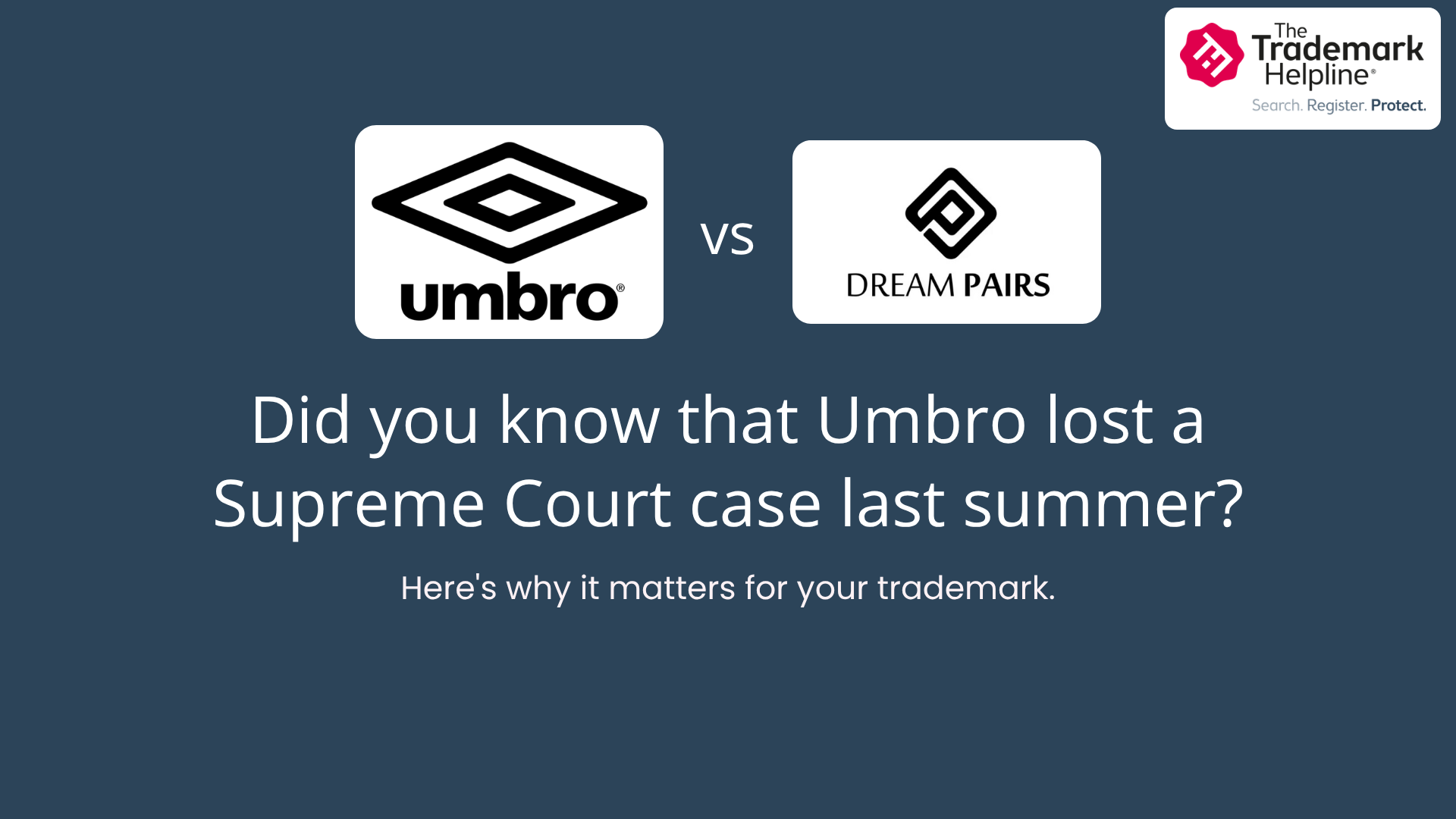
The dispute was between Iconix, the group that owns Umbro, and a footwear company called Dream Pairs. Iconix argued that the logo Dream Pairs was using on its footwear, a stylised D and P sitting inside a nested square shape, infringed the famous Umbro double diamond that has been sitting on boots and shirts since the 1980s. What makes the case unusual is not simply who won, but how many times the answer changed before anyone got there.
At the first stage, in the High Court, the judge looked at the two marks and decided they were only faintly similar, and that the average person was not going to be confused between them, so there was no infringement. Iconix appealed, and the Court of Appeal took almost the opposite view, describing the original assessment as rationally insupportable, deciding the marks were actually moderately similar once you looked at them the way people genuinely see footwear, and concluding that there was a likelihood of confusion after all. Then, in June 2025, the Supreme Court had the final word in Iconix v Dream Pairs, and it handed the win back to Dream Pairs, restoring the original finding that the marks were only a little alike and that there was no infringement.
The part that actually matters, which is post-sale confusion
So why am I, as a trademark person, so interested in all of this? Because buried inside the judgment is a principle that every brand owner should understand, and it is the idea of post-sale confusion. In plain terms, that is whether people are confused when they see your logo out in the world, rather than only when they are stood at the till comparing two products side by side.
Your logo does not live neatly next to a copycat on some tidy comparison chart that I have thrown together on Canva. It lives small, moving and half seen, on a label, in a slightly grainy resale photo, or on someone’s feet as they walk across a car park. The Supreme Court confirmed that this real-world view counts, and that you can assess how similar two marks are based on realistic and representative conditions, including the angle from which someone would normally see the mark, such as looking down on a pair of boots being worn rather than studying them head on. It also confirmed that confusion which only happens after the sale, out in the wild, can be enough to amount to infringement on its own.
The twist: Umbro won the argument and still lost the case
Here is the part that matters most for brand owners. On the law, Umbro essentially won. The court agreed that post-sale confusion is real, that it counts, and that you should look at marks the way they are actually encountered rather than in a side-by-side comparison. And yet Umbro still lost, because when the trial judge applied that exact thinking to these two particular logos, he found they simply were not similar enough, and the Supreme Court decided there was no good reason to overturn that finding. The lesson sitting in there is a simple one. A long established, well known figurative trademark was taken all the way to the top, and the conclusion was that, in the real world, it was not distinctive enough to hold its own against a broadly similar mark on a rival’s shoes.
It is also worth noting why the Supreme Court would not simply pick its own preferred answer. The judges made the point that an appeal court should not overturn a trial judge’s findings on similarity and confusion just because it might have decided differently, but only where those findings are clearly wrong. In other words, the fight is really won or lost at the first hearing, in front of the first judge, which is worth bearing in mind when you consider how much time and money had already been spent by the time this reached the final court.
What I would take from this if it were my brand
If your logo plays a major part in your brand identity, the Umbro case is a good prompt to look at it honestly through a third party’s eyes rather than your own. Go and look around at what is already out there in your space, and ask yourself whether your mark is genuinely distinctive enough to hold up if somebody turned up with something broadly similar, not just when the two are sat neatly next to each other, but in the messy, half glimpsed way that customers actually experience brands every single day.
This is also where proper brand clearance earns its keep, because a low level of similarity in a tidy comparison does not automatically mean a low risk of a problem once you factor in real-world use. Sometimes the smartest money you can spend is on design, on creating something genuinely disruptive and distinctive in the first place, rather than thousands of pounds on litigation several years later that achieves precisely nothing. This is exactly why almost a third of our trademark consultations end with us advising people not to proceed to registration with their word, logo or tagline in its current format, because we would far rather have an honest conversation early than watch somebody spend thousands on litigation later that achieves nothing.
One important caveat before you read too much into it
It is worth remembering that this was a UK ruling, decided under UK law, so if you sell beyond these shores I cannot tell you whether a court in another jurisdiction would land in the same place. Trademark rights are territorial, and what holds in London will not always hold elsewhere, which is one of the reasons that international protection needs to be thought about deliberately rather than assumed.
The headline, though, is simple enough. A famous logo is not the same thing as a bulletproof one, and the real strength of a mark is decided out in the world, on real feet and in real photographs, not in the comfort of your own brand guidelines.
Written by
Jonathan Paton
LinkedIn Profile